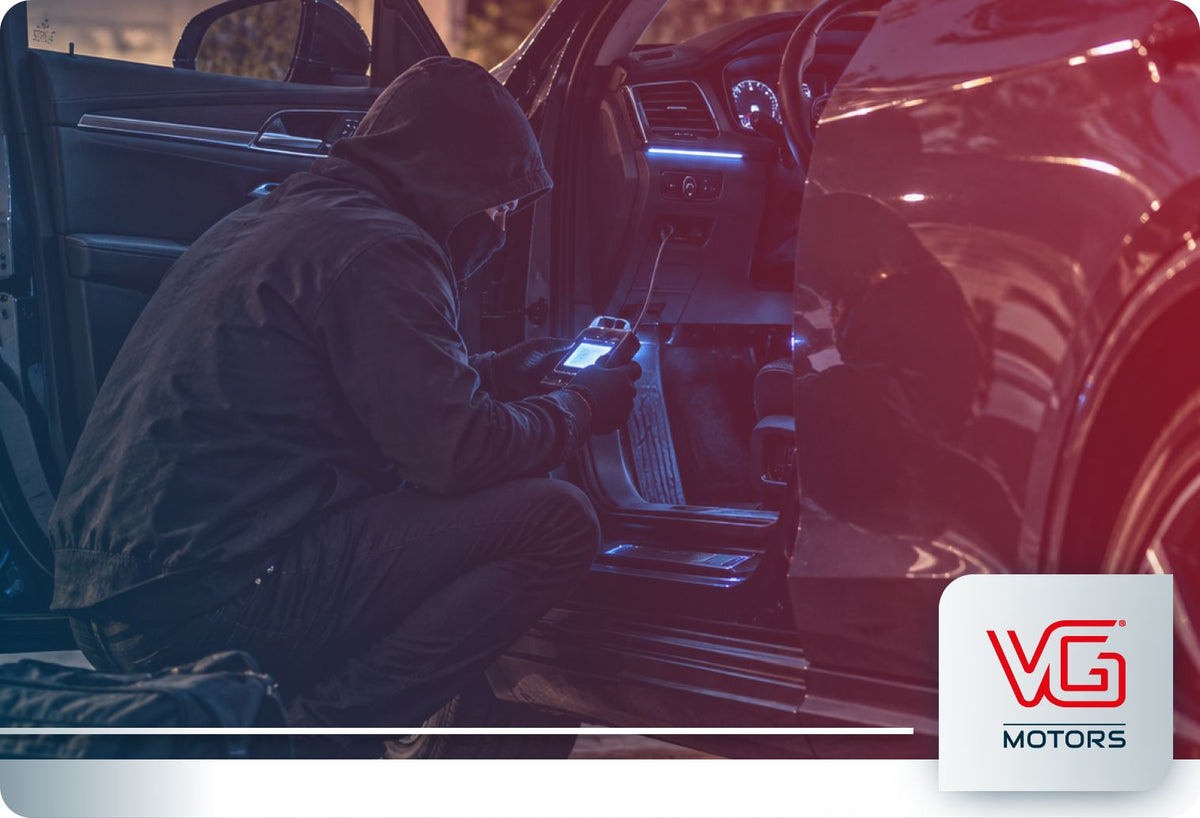
Cars have become increasingly electronic.
A modern vehicle may electronically recognize a key, authorize starting, communicate with connected services and use diagnostic systems for legitimate maintenance and repair.
So can those electronic systems also become relevant to vehicle theft?
Yes, in some scenarios. But “electronic vehicle theft” is not one technique, and a connected car should not be treated as one computer with one vulnerability.
Different electronic systems perform different jobs.
Understanding those differences is the first step toward understanding what “electronic theft” actually means.
What Does “Electronic Vehicle Theft” Actually Mean?
Electronic vehicle theft is better understood as a category of theft methods in which electronic systems play some role in access, authentication or authorization.
That distinction matters.
A thief does not necessarily “hack the whole car.”
And one electronic feature should not be assumed to provide control over every other function.
For example:

These functions can exist within the same vehicle while performing very different jobs.
So the better question is not simply “Was the car hacked?”.
It is “Which electronic function was involved, and what role did it play?”
What Is a Vehicle’s Electronic Attack Surface?
In cybersecurity, an attack surface broadly describes the potential points through which a system could be accessed or interacted with.
That concept has become increasingly relevant to vehicles because a modern car contains software, communication networks and multiple electronic functions.
NHTSA defines automotive cybersecurity around protecting electronic systems, communication networks, software and data from malicious attacks, unauthorized access or manipulation.
The agency recommends layered cybersecurity that considers different vehicle entry points, including wired and wireless pathways.
That does not mean every electronic feature is vulnerable.
It means vehicle security now has to account for more than physical locks alone.
More electronic functionality creates more functions that need to be secured. It does not mean every function can be used to steal the vehicle.
Electronic Authorization Is Different From a Traditional Metal Key
Traditional vehicle security makes the physical key easy to understand.
Modern authorization can work differently.
NHTSA explains that keyless ignition systems electronically verify the correct device when the driver attempts to start the vehicle.
That matters because some electronic theft scenarios concern what the vehicle recognizes or authorizes, not simply whether someone physically possesses the owner’s original key.
We explore that distinction separately here:
Related: Can a Car Be Stolen Without the Key?

Where Does a Relay Attack Fit?
Relay attack is one specific example within the broader electronic-theft category.
It involves communication associated with a proximity-based keyless system.
But that is the important boundary for this article.
Relay attack is an electronic theft method. Electronic theft is not synonymous with relay attack.
The mechanics, limitations and defensive considerations of relay theft belong in the dedicated article.
Related: What Is a Relay Attack and How Can It Lead to Car Theft?
Why Are Diagnostic Systems Part of the Cybersecurity Conversation?
Vehicle diagnostic functionality exists for legitimate reasons.
It helps support vehicle service and maintenance. But legitimate electronic functionality still needs appropriate cybersecurity protection.
NHTSA’s Cybersecurity Best Practices specifically addresses vehicle diagnostic functionality and recommends designing and protecting diagnostic features against misuse outside their intended purposes.
That gives us another useful distinction:
A legitimate electronic function and an unauthorized use of that function are two different things.
The existence of diagnostic functionality should therefore not be interpreted as evidence that every diagnostic system can be used to steal a vehicle.
For this article, the important point is simply that diagnostics represents a different electronic function from keyless access, authorization or infotainment.
Is Infotainment the Same Thing as Vehicle Security?
No.
Infotainment, connectivity, diagnostics, access and authorization perform different jobs.
A vehicle having a touchscreen, smartphone integration, Wi-Fi or another connected feature does not by itself establish that the feature can authorize vehicle operation.
This is why statements such as “They hacked the car” often explain less than they appear to.
Which system was involved?
What function did it perform?
Without that distinction, “electronic theft” remains a broad description rather than an explanation of what happened.
Does Electronic Theft Always Leave No Physical Damage?
No.
Electronic involvement and visible damage are separate questions.
A theft involving electronic systems may still involve physical actions, while the absence of broken glass or other visible damage does not prove that electronics were involved.
Does More Technology Automatically Make a Vehicle Easier to Steal?
No.
Connectivity and electronic functionality can create additional cybersecurity considerations.
But modern technology can also provide additional security layers through authentication, electronic credentials, immobilization and other protections.
NHTSA’s approach to automotive cybersecurity reflects that complexity. Rather than treating connectivity itself as inherently unsafe, the agency emphasizes layered protection and cybersecurity throughout vehicle systems.
So: Connected vehicle ≠ automatically vulnerable vehicle.
The more accurate conclusion is that as vehicle functions become increasingly electronic, vehicle security increasingly includes cybersecurity alongside physical security.
Electronic Theft Is One Part of Modern Vehicle Theft
Cars have changed.
The systems controlling access and authorization have changed with them.
That means electronic systems can become relevant to some vehicle theft methods.
But “electronic theft” is not one technique, and a connected vehicle should not be treated as one computer with one vulnerability.
The useful question remains: Which electronic function was involved, and what role did it play?
Without that distinction, saying “the car was hacked” explains much less than it appears to.
FAQ - Can Thieves Steal a Car Through Its Electronic Systems?
Can a car really be stolen electronically?
Electronic systems can be involved in some vehicle theft methods, particularly systems related to access, authentication or authorization. That does not mean every vehicle can be stolen electronically or that electronic theft is one specific technique.
Does electronic car theft mean someone hacked the whole car?
No. A vehicle contains multiple electronic systems that perform different functions. Electronic involvement in one function does not mean every system in the vehicle was compromised.
Why are vehicle diagnostic systems relevant to cybersecurity?
Vehicle diagnostic functions provide legitimate access for service and maintenance, which is why NHTSA recommends appropriate cybersecurity protections for diagnostic functionality and tools. Their existence does not mean every diagnostic system can be used to steal a vehicle.
Is a relay attack a type of electronic vehicle theft?
Yes. Relay attacks involve electronic communication associated with proximity-based keyless systems. They are one specific category rather than a general explanation for electronic vehicle theft.
Does having push-button start mean my car can be stolen electronically?
Push-button start alone does not establish vulnerability to a particular theft method. Keyless systems and security architectures vary by vehicle and manufacturer.
Does no broken glass mean my car was stolen electronically?
No. The absence of visible forced entry does not establish which theft method was used.




Leave a comment
This site is protected by hCaptcha and the hCaptcha Privacy Policy and Terms of Service apply.