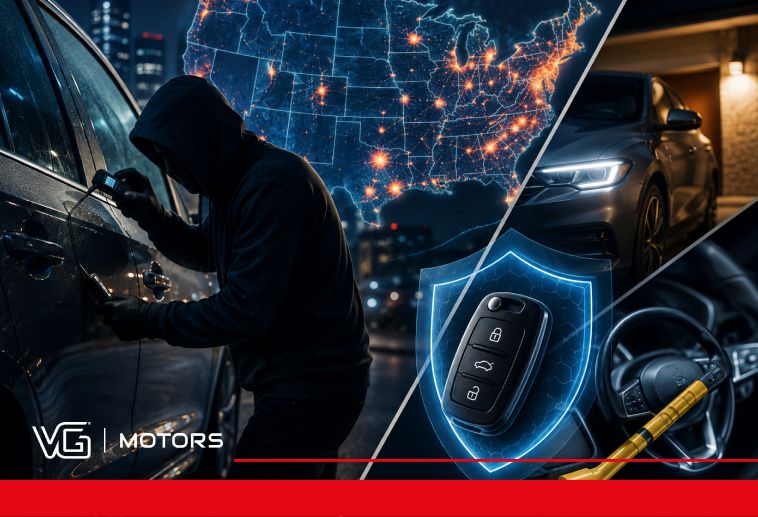
Car Theft in America Is No Longer What Most Drivers Think
For many drivers, car theft still feels like an old-school crime.
A broken window.
A punched ignition.
Someone lurking in a dark parking lot.
But modern vehicle theft in the United States looks very different now.
In many cases:
- the owner still has the keys;
- there’s no broken glass;
- the car unlocks silently;
- and the vehicle disappears in under two minutes.
Sometimes directly from:
- suburban driveways;
- apartment garages;
- airport parking lots;
- hotel valet areas;
- shopping centers;
- office parking structures.
And according to the National Insurance Crime Bureau (NICB), a vehicle is stolen in the U.S. roughly every 30 to 40 seconds depending on the reporting period.
That number alone changes the conversation.
Because car theft is no longer just about force. It’s about speed, technology, opportunity, and behavior.
Modern Car Theft Is Increasingly Digital
Today’s thieves are not always carrying screwdrivers.
Sometimes they’re carrying:
- signal amplifiers;
- key programmers;
- wireless relay devices;
- diagnostic tools.
Modern vehicles became more connected.
Modern theft evolved with them.
Recent reporting from organizations like the National Highway Traffic Safety Administration (NHTSA) and NICB continues to show growing concern around:
- keyless-entry theft;
- relay attacks;
- organized vehicle theft rings;
- electronic theft methods.
Especially involving:
- SUVs;
- pickup trucks;
- high-demand commuter vehicles;
- luxury vehicles with push-button start systems.
The Vehicles Most Commonly Targeted in the U.S.
Some vehicles consistently appear in U.S. theft reports because:
- they are extremely common;
- parts are valuable;
- resale demand is high;
- they are easier to move through illegal channels.
Historically common targets include:
- Ford F-Series
- Chevrolet Silverado
- Honda Accord
- Honda Civic
- Hyundai Elantra
- Hyundai Sonata
- Kia models with known vulnerabilities
But modern theft trends show something important:
Thieves increasingly prioritize accessibility and speed over luxury alone.
A vehicle that is easy to move quickly may become more attractive than an expensive vehicle that creates complications.

How Modern Car Theft Actually Happens
Most drivers still imagine theft as loud and chaotic.
Modern theft is often quiet.
Sometimes almost invisible.
Keyless Entry Theft and Relay Attacks
One of the fastest-growing concerns in vehicle security is relay attack theft.
Here’s the simplified version:
- Your key fob constantly emits a wireless signal.
- Thieves use devices to amplify that signal.
- The car believes the key is nearby.
- The vehicle unlocks and starts.
No forced entry.
No broken ignition.
No smashed window.
The owner may still be asleep inside the house while the car is driven away outside.
That’s what makes modern car theft psychologically different.
Drivers often feel blindsided because the vehicle never looked vulnerable.
Airport Parking Lots Became Attractive Theft Targets
Airport parking creates a perfect environment for organized theft groups.
Vehicles remain unattended for:
- days;
- sometimes weeks;
- often with predictable routines.
Which means thieves have:
- time;
- reduced owner interruption risk;
- easier observation patterns.
The same logic increasingly applies to:
- hotel garages;
- apartment complexes;
- commuter parking structures.
Especially in large metro regions.

The Human Behavior Behind Many Car Thefts
This is the uncomfortable part many drivers do not like hearing:
A large percentage of theft opportunities begin with predictable human behavior.
And thieves understand human behavior extremely well.
“I’ll Only Be Gone for a Minute”
It happens during ordinary moments.
Someone runs inside for coffee.
Leaves the key nearby.
Comes back two minutes later.
The car is gone.
Many thefts happen during:
- gas station stops;
- food pickups;
- driveway unloading;
- convenience store runs;
- warming up the vehicle.
Nothing attracts thieves faster than:
“I’ll be quick.”
Because speed matters to them too.
The False Confidence Problem
Modern drivers often assume:
- cameras are enough;
- bright lighting is enough;
- apps are enough;
- factory security is enough.
Sometimes they help. But confidence itself can become a vulnerability.
Especially when drivers stop thinking proactively about vehicle security.
Why Organized Vehicle Theft Became Big Business
Vehicle theft today is often connected to organized criminal operations.
Not random joyriding.
Stolen vehicles may be:
- dismantled for parts;
- shipped overseas;
- used for VIN fraud;
- hidden temporarily in “cool down” locations;
- resold through illegal channels.
Some theft operations specifically target:
- high-demand replacement parts;
- export markets;
- rapidly movable vehicles.
This is one reason recovery speed matters so much.
Because once a vehicle enters organized theft pipelines, recovery becomes significantly more difficult.

How to Prevent Car Theft in 2026
The reality is simple:
No single anti theft device guarantees protection.
Modern vehicle security works best in layers.
The goal is not only making theft harder.
It’s also improving the odds of fast recovery if theft occurs.
Basic Car Theft Prevention Still Matters
Some prevention habits remain surprisingly effective:
- lock the vehicle consistently;
- never leave keys inside;
- avoid visible valuables;
- park in monitored areas;
- avoid leaving the engine running unattended;
- use additional deterrents when possible.
Simple habits still stop many theft opportunities before they begin.
Because many thieves look for convenience first.
Physical Anti Theft Devices Still Create Friction
Steering wheel locks still matter. Not because they are impossible to bypass.
But because friction matters.
Many opportunistic thieves prioritize:
- speed;
- low visibility;
- minimal effort.
If one vehicle looks harder to steal than the one parked beside it, they may simply move on.
That psychological interruption still has value in modern auto theft prevention.
Are Car Alarms Still Effective?
Car alarms still play a role in vehicle security. But modern reality changed their effectiveness.
Most drivers hear alarms so frequently that many ignore them completely.
Experienced thieves also understand:
- response delays;
- public desensitization;
- how quickly theft windows happen.
An alarm may create attention.
But attention alone does not necessarily create recovery.
GPS Trackers vs Vehicle Recovery Systems
This is where many drivers confuse visibility with protection.
A GPS tracker primarily focuses on location visibility.
A vehicle recovery system focuses on stolen vehicle recovery workflows.
That difference matters more than most people realize.
The Limitations of Basic GPS Tracking
Some tracking systems provide:
- location visibility;
- route history;
- app monitoring.
But modern theft situations expose several limitations:
- battery failure;
- delayed updates;
- device discoverability;
- passive monitoring;
- lack of recovery infrastructure.
Many tracking products were originally designed for:
- fleet management;
- logistics;
- driver monitoring.
Not rapid theft recovery.
And after a vehicle disappears, operational response becomes everything.
Why Recovery Systems Think Differently
Recovery-focused vehicle protection systems are designed around a different question:
Not:
“Can you see the vehicle?”
But:
“How quickly can the vehicle actually be recovered?”
That changes the structure entirely.
Modern recovery systems increasingly focus on:
- active theft response;
- owner-triggered alerts;
- real-time tracking access;
- recovery coordination;
- rapid location sharing.
Because once theft happens, every minute matters.
Why Recovery Speed Matters More Than Most Drivers Realize
Many drivers focus entirely on prevention.
But modern vehicle security increasingly depends on what happens after the theft occurs.
Recovery time can affect:
- vehicle condition;
- insurance complexity;
- financial loss;
- emotional stress;
- transportation disruption.
A vehicle recovered quickly may avoid:
- dismantling;
- resale fraud;
- export movement;
- severe damage.
The longer a stolen vehicle remains missing, the more complicated recovery often becomes.
That’s why stolen vehicle recovery systems became such an important category within modern vehicle security technology.

The Emotional Reality of Vehicle Theft
Most theft conversations focus on:
- statistics;
- technology;
- insurance.
But theft affects routine in ways people underestimate.
Drivers suddenly deal with:
- missed work;
- insurance calls;
- rental logistics;
- transportation stress;
- uncertainty.
For families, vehicle theft can disrupt:
- school schedules;
- childcare;
- travel plans;
- daily life entirely.
And many drivers discover something frustrating afterward:
Insurance may help financially. But it does not instantly restore normal life.
The Future of Vehicle Security
Vehicle theft prevention is shifting toward:
- layered protection;
- recovery-first thinking;
- connected security systems;
- faster response workflows.
Because modern theft evolved beyond traditional deterrence.
The question is no longer:
“Can someone steal this car?”
The real question now is:
“What happens if they do?”
And increasingly, that answer depends on recovery capability.
Car Theft Prevention and Vehicle Recovery — FAQ
Can keyless cars be stolen without the keys?
Yes. Some modern vehicles may be vulnerable to relay attacks, where thieves amplify the wireless signal from a nearby key fob.
How do relay attacks work?
Relay attacks use signal amplification devices that trick the vehicle into believing the key is physically nearby, allowing the car to unlock and start.
What happens after a car is stolen?
Stolen vehicles may be:
- hidden temporarily;
- dismantled for parts;
- resold fraudulently;
- exported overseas;
- or moved quickly between locations.
How fast are stolen vehicles moved?
Many organized theft groups move vehicles very quickly after theft to reduce recovery chances.
Can GPS trackers stop car theft?
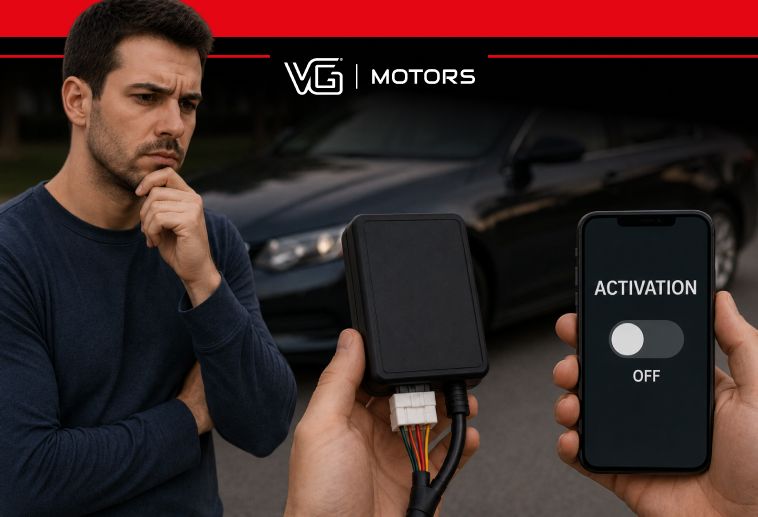
Most GPS trackers do not physically stop theft. They primarily provide location visibility after the vehicle is moved.
What is the difference between GPS tracking and vehicle recovery systems?
GPS tracking focuses on showing location.
Vehicle recovery systems are designed specifically around stolen vehicle recovery workflows and recovery speed.
Are steering wheel locks still useful?
Yes. Physical anti theft devices still create friction and visible deterrence that may discourage opportunistic thieves.
Why does recovery speed matter?
Faster recovery may reduce:
- financial loss;
- damage severity;
- insurance complications;
- and the likelihood of dismantling or export.



Leave a comment
This site is protected by hCaptcha and the hCaptcha Privacy Policy and Terms of Service apply.