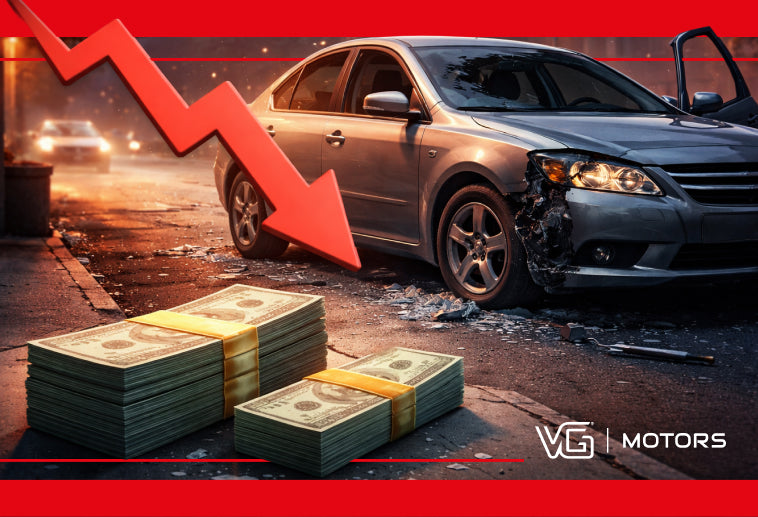
Most drivers assume that if their car is stolen, insurance will simply replace it.
But when the claim is finalized, many owners are surprised to discover that the payout is lower than expected.
The reason is something called vehicle depreciation, which directly affects how insurance companies calculate compensation after a theft.
Understanding how depreciation works, and how it affects the actual cash value insurance payout, can help drivers better understand the financial outcome of a stolen vehicle claim.
What Insurance Actually Pays After a Car Theft
When a stolen vehicle is not recovered, insurance companies typically issue a payout based on Actual Cash Value (ACV).
Actual cash value represents the estimated market value of the vehicle at the moment it was stolen.
Insurance companies determine this value using several factors, including:
- Vehicle age
- Mileage
- Condition
- Market demand
- Depreciation
This means the payout is not based on the original purchase price of the vehicle.
Instead, it reflects what the vehicle was worth in the used car market when the theft occurred.

Why Vehicles Lose Value Over Time
Depreciation is one of the biggest hidden costs of vehicle ownership. Most vehicles begin losing value the moment they leave the dealership.
In many cases:
- A new vehicle can lose 10% to 20% of its value in the first year
- After three to five years, depreciation may reach 40% to 60% of the original price
Because insurance payouts rely on current market value rather than purchase price, this depreciation significantly influences the final claim amount.
An Example of Depreciation in a Theft Claim
Imagine a driver who purchased a vehicle for $40,000.
After four years of ownership, the vehicle’s market value might have dropped to around $24,000 depending on condition and mileage.
If the vehicle is stolen and never recovered, the insurance payout would likely be based on the $24,000 market value, not the original purchase price.
For drivers with an outstanding loan balance, this can create a financial gap.
Unless the driver has GAP insurance, the payout may not fully cover the remaining loan.
Why Some Drivers Are Surprised by the Payout
Many drivers only learn about actual cash value insurance payouts after experiencing a theft claim.
This can be frustrating because drivers may expect insurance to replace the vehicle entirely.
Instead, they may face additional challenges such as:
- Covering the difference between payout and loan balance
- Paying for a new down payment
- Searching for a replacement vehicle in the current market
These financial realities explain why theft claims can feel more complicated than expected.

Insurance Protects the Financial Value
Insurance still plays a critical role in protecting drivers financially. Without insurance, the financial loss from a stolen vehicle could be significant.
However, insurance is designed to compensate for financial value, not necessarily restore the exact situation the driver had before the theft.
For many drivers, that distinction becomes clearer once they go through the claims process.
Why Recovery Can Change the Outcome
One way to avoid the financial impact of depreciation is simple: recover the vehicle before the insurance process reaches a payout stage.
Vehicle recovery systems are designed to help locate stolen vehicles quickly after the theft occurs.
For example, LoJack vehicle recovery technology allows the owner to report theft through a mobile app and generate a real-time tracking link that can be shared with law enforcement.
Vehicles equipped with LoJack report an average recovery time of about 26 minutes and a recovery rate exceeding 98% nationwide.
In states with higher theft rates such as California, Texas, Florida, Illinois, and Washington, recovery speed can significantly affect whether a vehicle is found.
Recovering the vehicle quickly may help drivers avoid the depreciation-based payout scenario entirely.
Vehicle Theft Is a Nationwide Risk
Vehicle theft incidents occur in communities across all 50 states, from large metropolitan areas to suburban neighborhoods.
Cities such as Los Angeles, Chicago, Houston, Atlanta, and Miami frequently report theft cases, but smaller cities across states like Arizona, Georgia, North Carolina, and Michigan also experience vehicle theft.
Because of this widespread risk, many drivers are exploring additional ways to protect their vehicles beyond traditional insurance coverage.
FAQ — Depreciation and Insurance Payouts
What is actual cash value in car insurance?
Actual Cash Value (ACV) represents the estimated market value of a vehicle at the time of a claim, taking depreciation into account.
Why does insurance pay less than the car’s purchase price?
Insurance payouts reflect the current market value of the vehicle rather than the original purchase price.
What is vehicle depreciation?
Vehicle depreciation refers to the gradual loss of value that occurs as a vehicle ages and accumulates mileage.
Can depreciation affect a stolen car insurance claim?
Yes. Insurance companies calculate payouts based on the vehicle’s depreciated value at the time of theft.
Can recovering the vehicle avoid depreciation loss?
If a stolen vehicle is recovered quickly and the claim does not reach the payout stage, the driver may avoid the financial impact of depreciation.
Vehicle Recovery Technology Through VG Motors
Drivers across the United States can install LoJack vehicle recovery technology through VG Motors, an Official LoJack Dealer offering nationwide installation.
LoJack plans start at $895 with no monthly subscription, and the system includes a $5,000 recovery guarantee if the vehicle is not recovered.
Learn more about LoJack protection VGMotorsDirect.com


Leave a comment
This site is protected by hCaptcha and the hCaptcha Privacy Policy and Terms of Service apply.