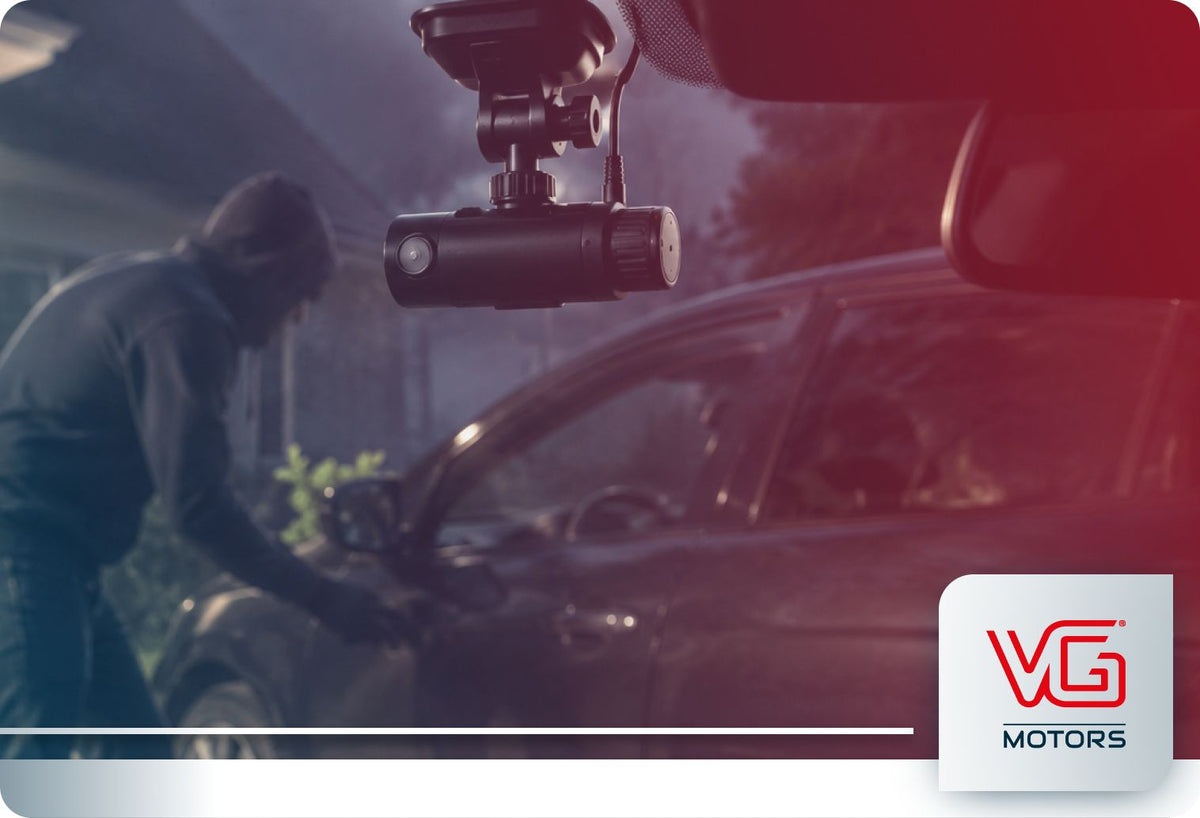
You walk back to where you parked.
The space is empty.
Your car is gone.
Then you remember something:
There's a dash cam inside it.
Maybe it was operating in Parking Mode. Maybe it recorded something. Maybe the camera has connectivity features.
So the immediate question is understandable:
Can the dash cam actually help now?
Potentially, but what “help” means matters.
A dash cam may preserve useful evidence or context surrounding a theft. Depending on the system and circumstances, other features may provide additional information.
But recording an event, locating a stolen vehicle and supporting its recovery are different jobs.
Understanding those differences can help you use each tool for what it was actually designed to do.
What Can a Dash Cam Do After a Car Is Stolen?
A dash cam may help by preserving footage or other information related to a vehicle theft if the relevant event was recorded and the footage remains accessible. It could provide context about what happened, when it happened or what was visible around the vehicle. But a recording alone does not necessarily tell you where the vehicle is now or recover it.
Evidence is information. Recovery is a different job.
What Might a Dash Cam Record During a Vehicle Theft?
That depends heavily on the camera, its configuration and what happened within its field of view.
If the dash cam was operating while the vehicle was parked, footage could potentially capture part of the incident or activity around it.
For example, the recording might preserve visible activity near the vehicle, another vehicle in the area, the approximate sequence of events or conditions around the time the car disappeared.
But expectations need to remain realistic.
The relevant activity may happen outside the camera's view. Lighting may limit visible detail. A person or license plate may appear without being identifiable. And the camera may not have been recording at the relevant moment.
The useful question isn't “Did my dash cam catch the thieves?”
It's:
“What information did the camera actually preserve?”
That keeps the focus on evidence rather than assumptions.

Parking Mode Can Matter, But It Doesn't Guarantee Footage
If a vehicle is stolen while parked, Parking Mode may increase the chance that a compatible dash cam records something relevant.
But whether footage exists still depends on the camera's capabilities, power configuration, recording mode, coverage and circumstances of the incident.
A second camera may add another viewing direction, but neither front-only nor front-and-rear coverage makes a parked vehicle fully observable.
Here, the takeaway is simpler: Parking Mode creates another opportunity to record an event. It doesn't guarantee that the relevant event will be captured.
What Should You Do If Your Dash Cam Recorded Something?
If you can access relevant footage after discovering that your vehicle is missing, preserve it.
Keep the original recording when possible and create a backup. Retain relevant surrounding footage, timestamps and any accessible information produced by legitimate connected-camera features that may relate to the incident.
Then provide relevant information through the appropriate reporting channels.
If you are reporting the vehicle stolen to law enforcement, tell them that dash cam footage or related information exists and follow their instructions for providing it.
If an insurance claim follows, preserve the material for that process as well.
Most importantly, do not use footage or location information as a reason to confront or pursue anyone yourself.
The purpose of the information is to support the appropriate response, not to turn the vehicle owner into the recovery team.

Can a Dash Cam Tell You Where Your Stolen Car Is?
This depends on the specific system and its features.
A basic dash cam is primarily a recording device.
Some connected dash cam systems may offer features such as cloud connectivity, GPS information, notifications or remote access when the required hardware, service, power and network conditions are available.
Those capabilities can provide more information than locally stored video alone.
But they should not be treated as interchangeable.
Recording an event is not the same capability as providing location information. And knowing a possible location raises a different question:
What happens after that information exists?
Evidence, Location and Recovery Are Different Jobs
This is the central distinction.
A dash cam primarily belongs in the first category.
Some connected systems may also provide location-related information depending on their capabilities and configuration.
Recovery is a different job involving the appropriate response after a vehicle has been reported stolen.
Recording tells you something about the incident. Location tells you something about the vehicle. Recovery addresses what happens next.
If You Can See a Location, Should You Go Get the Car?
No.
If technology provides information suggesting where a stolen vehicle may be, don't attempt to recover it yourself.
A location on a map doesn't tell you everything about the situation around the vehicle. The vehicle may also have moved, and you may not know who or what is at that location.
Provide relevant information to law enforcement and follow their instructions.
Information should support a safer response, not encourage self-recovery.
Can Dash Cam Footage Help Police After a Vehicle Is Stolen?
Potentially.
If relevant footage exists, preserve it and tell law enforcement that you have it.
They can determine whether the recording contributes useful information to the theft report or investigation and advise you on how it should be provided.
The owner's role is to preserve and report the information—not to conduct the investigation personally.
What If the Dash Cam Is Still Inside the Stolen Vehicle?
This creates an important practical limitation.
If footage exists only on a memory card inside the camera, you may not be able to access it while the vehicle remains missing.
Connected systems can work differently.
Depending on the camera, hardware, service, power and network availability, some footage or information may be accessible remotely or through cloud-related features.
But remote access should never be assumed simply because a camera has Wi-Fi, GPS or an app.
Local recording, cloud access and vehicle location are separate capabilities.
Drivers should understand what their specific system and configuration actually support before relying on any of them.
Can a Dash Cam Prevent Your Car From Being Stolen?
A dash cam should primarily be understood as a documentation tool.
Its presence does not make a vehicle theft-proof, and any potential deterrent effect should not be treated as guaranteed.
The distinction is simple:
Documentation ≠ Deterrence ≠ Recovery
Different tools can contribute to different parts of vehicle protection without replacing one another.
Where Does a Stolen Vehicle Recovery System Fit?
A dash cam may document part of a theft.
A stolen-vehicle recovery system is built for what happens after the vehicle is reported stolen.
LoJack's current GPS-based stolen-vehicle recovery platform is designed to support law enforcement during that recovery process.
Evidence can help explain what happened. Recovery addresses what happens next.
Useful Footage Answers a Question
After a theft, useful footage doesn't have to solve the entire incident.
It may simply answer:
When did something happen?
What was visible around the vehicle?
What happened immediately around the time it disappeared?
That information may still matter.
Useful evidence doesn't have to solve the case. It has to preserve information that matters.
FAQ - Can a Dash Cam Help If Your Car Is Stolen?
Can a dash cam record someone stealing my car?
Potentially. If the camera is powered, operating in an appropriate recording mode and the relevant activity occurs within its field of view, it may capture footage related to the theft. Recording is not guaranteed.
Can a dash cam track a stolen car?
Some connected dash cam systems may provide GPS, cloud or remote-access features depending on their hardware, service and connectivity. A basic dash cam should not automatically be treated as a stolen-vehicle tracking or recovery system.
Can police use dash cam footage from a stolen vehicle?
Law enforcement may review relevant footage depending on what it contains and the circumstances of the theft. Preserve accessible footage and tell police that it exists.
Can I use dash cam footage to find the person who stole my car?
Footage may contain useful information, but drivers should not use it to identify, pursue or confront someone themselves. Provide relevant recordings to law enforcement.
What happens if the footage is stored on the dash cam inside the stolen car?
If the recording exists only on local storage inside the vehicle, you may not be able to access it while the vehicle is missing. Remote or cloud availability depends on the specific camera and configuration.
Is a dash cam a replacement for a stolen-vehicle recovery system?
No. Dash cams are primarily designed for recording and documentation. A stolen-vehicle recovery system is designed around supporting the recovery process after a vehicle is reported stolen.
A Dash Cam Can Preserve Evidence. Recovery Requires Something Different.
When a vehicle disappears, any available information can feel important.
Sometimes dash cam footage may preserve a useful part of what happened.
Connected camera features may provide additional information in some configurations.
But the important thing is to understand what each capability actually gives you.
Evidence can help explain the incident.
Location can indicate where the vehicle may be.
Recovery addresses what happens after that information exists.
They can complement one another. They are not the same job.
If your dash cam recorded something after your vehicle was stolen, preserve it and provide the relevant information through the appropriate channels.
But don't expect the recording to do a job it was never designed to do.
Evidence is information. Recovery is a different job.




Leave a comment
This site is protected by hCaptcha and the hCaptcha Privacy Policy and Terms of Service apply.