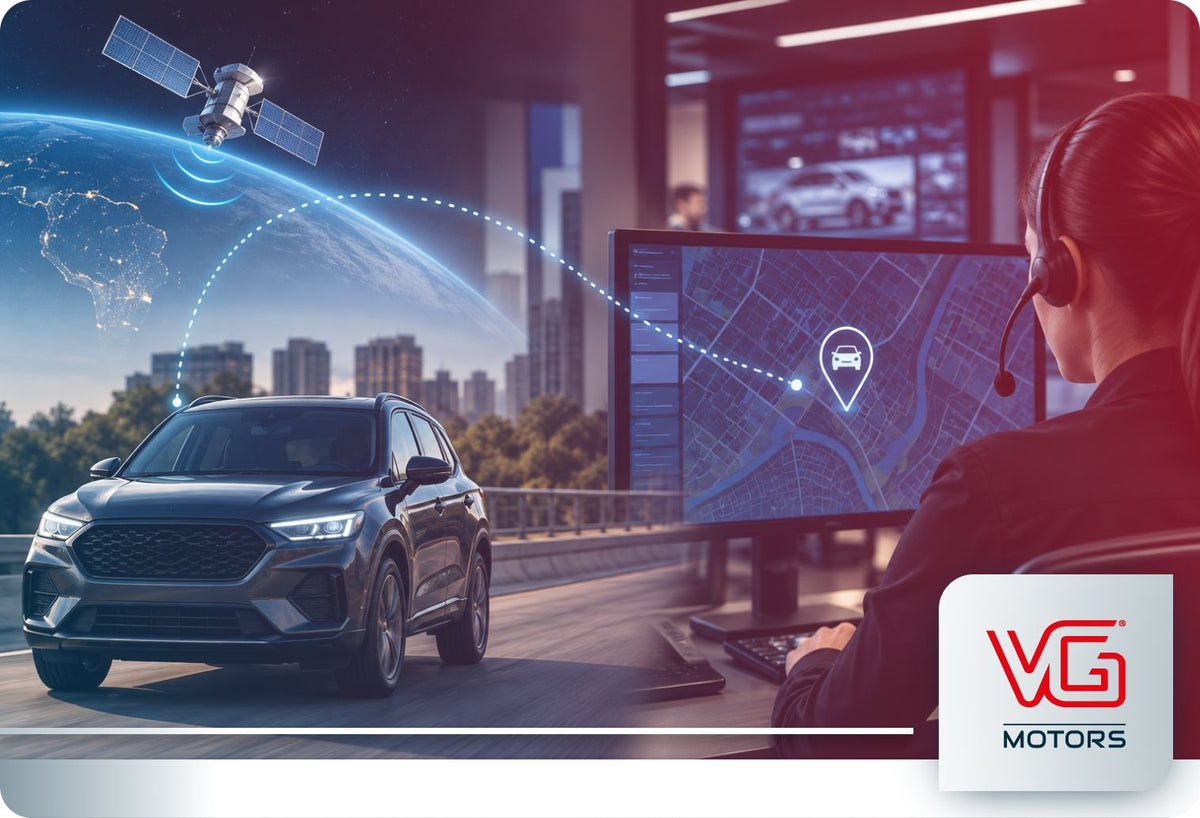
Your car disappears.
It has GPS. It has an app. It may even send information to the manufacturer.
So a natural question comes next:
Can the manufacturer track it?
For some vehicles, the answer is yes.
Several automakers offer connected services specifically designed to help locate a vehicle after it has been reported stolen. But that capability is not universal, and it should not be assumed simply because a vehicle has navigation, an app or built-in connectivity.
What happens depends on the manufacturer, the specific vehicle, model year, connected-service eligibility, activation status, connectivity and the procedures required after a theft.
Can a Car Manufacturer Locate a Stolen Vehicle?
Some automakers can assist with locating a stolen vehicle through connected services, but capabilities and requirements vary significantly by manufacturer, vehicle and service status.
In many documented OEM programs, the general sequence looks something like this:
Vehicle is reported stolen → police report is filed → owner contacts the manufacturer’s connected-service or response center → the service verifies the case → location or recovery assistance is provided according to the system’s capabilities.
The details matter.
Some services use GPS data to help law enforcement locate the vehicle.
Some include additional capabilities such as remote immobilization or ignition blocking under specific conditions.
Others may provide connected convenience or location features without offering a dedicated stolen-vehicle recovery workflow.
A manufacturer knowing that a vehicle can generate location data is not the same thing as every owner having access to stolen-vehicle tracking.
Why Built-In GPS Does Not Answer the Question by Itself
Before looking at individual manufacturers, one distinction is essential.
A vehicle may use GPS for navigation without giving the owner or manufacturer a theft-specific tracking service.
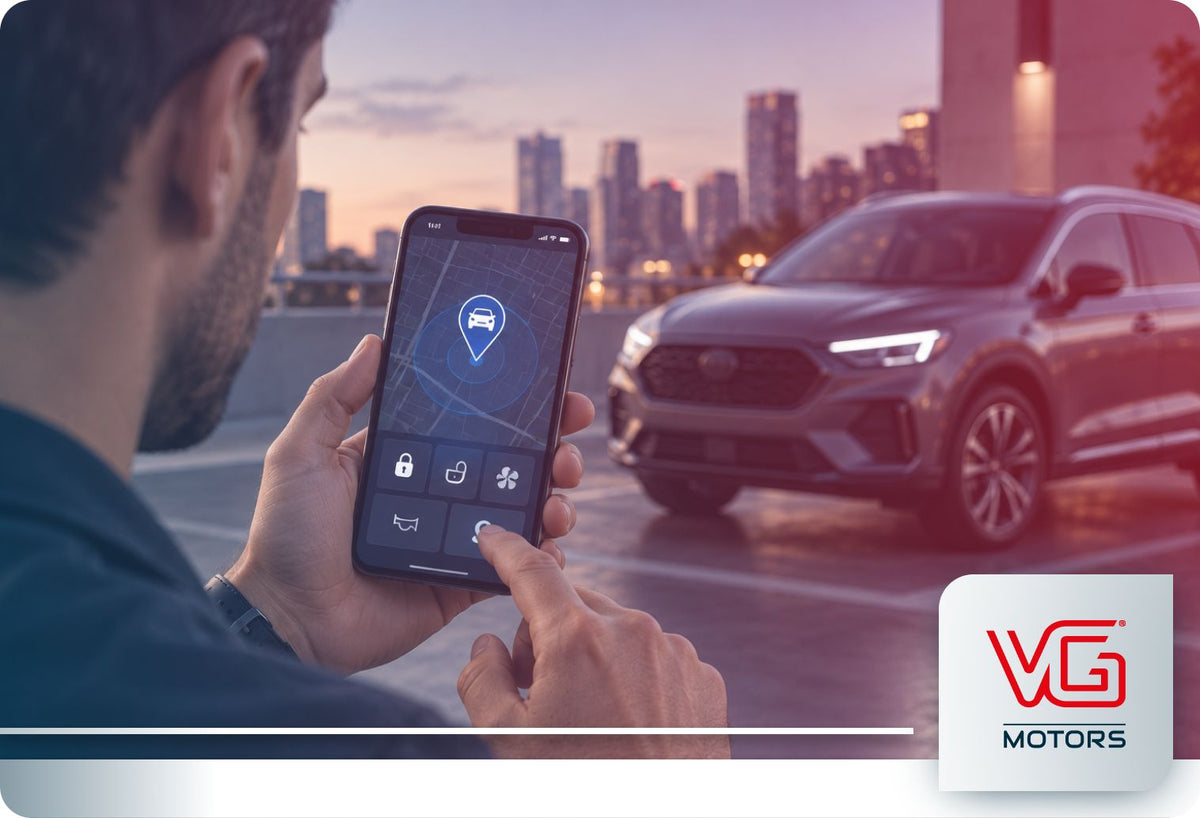
It may have a connected app that shows where the car was parked without providing a dedicated stolen-vehicle locator.
And it may collect or transmit location data for certain connected services while requiring a separate process before that information can be used during a theft.
That's why asking: “Does this car have GPS?” is not enough.
The more useful question is:
“Does this manufacturer offer a stolen-vehicle assistance service for this specific vehicle, and what has to happen before that service can be used?”
If you're still trying to determine what technology your own vehicle has, see:
Related: Does My Car Have Built-In GPS Tracking? How to Find Out
How Manufacturer Stolen Vehicle Assistance Usually Works
There is no single procedure shared by every automaker. But the official programs reviewed for this article show a recurring pattern.
1. The owner reports the theft
Manufacturer assistance generally does not begin simply because a car appears to be missing.
The first step in the documented OEM programs reviewed here is to involve law enforcement.
2. A police report or case information may be required
The manufacturer or connected-service provider may request the police report number or verify that the vehicle has actually been reported stolen.
This separates ordinary owner-facing location features from a theft-specific response.
3. The connected-service provider becomes involved
Some OEM programs use a response center, advisor or dedicated stolen-vehicle team rather than leaving the owner to manage location information alone.
4. Location information may be used to assist law enforcement
If the vehicle, service and connectivity support it, the OEM may use GPS or other connected-vehicle information to assist authorities.
Additional capabilities depend on the manufacturer and vehicle.
The common element is not simply GPS. It is a defined process for what happens after theft is reported.
Can Toyota Track a Stolen Vehicle?
Toyota currently offers Stolen Vehicle Locator through Safety Connect on eligible vehicles.
Toyota instructs owners with an active eligible service to first file a stolen-vehicle police report and obtain the case number. The owner then contacts Toyota's response center, where agents can initiate vehicle tracking and report location information to police using GPS technology.
Toyota's current Connected Services documentation also describes Remote Immobilization on certain equipped vehicles. Under the documented process, Toyota may locate the vehicle and, when directed by law enforcement after verification, remotely prevent it from starting.
That does not mean every Toyota has these capabilities.
Availability can depend on the vehicle, model year, equipment and active Connected Services status.
Toyota takeaway

Can GM or OnStar Track a Stolen Vehicle?
Eligible OnStar-equipped vehicles can receive Stolen Vehicle Assistance.
OnStar says that once law enforcement confirms that the vehicle has been stolen, its Advisors can use GPS to help authorities locate it.
Depending on the vehicle and circumstances, OnStar's theft-assistance capabilities can also include Remote Ignition Block and Stolen Vehicle Slowdown.
The published workflow is straightforward:
File a police report → tell police the vehicle has OnStar → contact OnStar → OnStar works with law enforcement.
This is more than a parked-car location feature.
It is a theft-specific response process.
OnStar takeaway

Can Ford Track a Stolen Vehicle?
Ford offers Stolen Vehicle Services as part of its Security Package on eligible vehicles.
Ford's current process begins with a police report. The owner then contacts Ford Stolen Vehicle Services through the Ford app or dedicated support channel.
Ford says its agent verifies the police report with law enforcement, begins tracking when the required conditions are met and can share updated location information with police while the case is active.
The Ford Security Package also includes other theft-related capabilities on eligible vehicles, including Theft Alerts and Start Inhibit, but those features are separate from the Stolen Vehicle Services recovery workflow.
Ford also notes that tracking and remote functionality depend on GPS and cellular connectivity.
Ford takeaway

Can BMW Track a Stolen Vehicle?
BMW documents a Stolen Vehicle Recovery service through BMW Assist / ConnectedDrive.
BMW instructs owners to first file a police report and then contact BMW Assist. BMW says it can then help police locate the vehicle.
Its ConnectedDrive documentation also makes clear that actual availability can depend on the vehicle, equipment, software and technical conditions.
BMW takeaway

Can Hyundai Track a Stolen Vehicle?
Hyundai's Bluelink and Bluelink+ platforms include Stolen Vehicle Recovery on eligible vehicles.
Hyundai states that Bluelink can assist law enforcement in locating and recovering a stolen vehicle.
Its published process instructs the owner to first file a stolen-vehicle report with local police. A Bluelink Customer Care agent then uses the report information to assist authorities with locating the vehicle.
Again, the relevant capability is not simply that the vehicle has an app.
It is that the connected-service platform includes a theft-specific response function.
Hyundai takeaway

Manufacturer Stolen Vehicle Services at a Glance
These are service-level examples, not promises for every vehicle carrying that manufacturer's badge.
Model year, equipment, region, connected-service status, network availability and other technical conditions can change what is actually available.

Can a Dealership Track My Stolen Car?
Usually, the more useful contact is the manufacturer's connected-service or theft-response program, not an ordinary dealership department.
A dealership may be able to help identify which connected services your vehicle supports or clarify VIN-specific eligibility.
That is different from saying dealership staff can simply open a system and track a customer's stolen vehicle.
Dealer support and stolen-vehicle tracking are different functions.
Can Police Access My Car’s GPS?
Not automatically just because your vehicle has GPS.
OEM theft programs generally use controlled workflows in which the theft is reported and the connected-service provider uses or shares location information in coordination with law enforcement.
That is different from saying police have unrestricted access to every connected vehicle's GPS.
Privacy rules, manufacturer policies, consent and applicable legal process can affect access to vehicle-location data.
Toyota, for example, distinguishes between ordinary location-data privacy and the specific use of vehicle location during an authorized stolen-vehicle assistance process.
Can the Manufacturer See My Car’s Location?
For some connected vehicles, manufacturers can receive or use vehicle-location data under defined circumstances.
That does not mean a person at the manufacturer is continuously watching where every vehicle goes.
Location data may support functions such as navigation-related services, vehicle finding, emergency assistance or stolen-vehicle support, depending on the platform and settings involved.
Some manufacturers can receive or use vehicle-location data through connected systems, but when and why they do so depends on the service, vehicle, privacy settings, consent and applicable legal requirements.
Does the Manufacturer Always Know Where a Stolen Car Is?
No.
Connected stolen-vehicle services have technical and service limitations.
The vehicle may not support the required service.
The service may not be active.
GPS or cellular connectivity may be unavailable.
The relevant hardware may no longer be supported.
Or the capability may differ by model year, equipment or region.
Installed telematics can create a capability. It does not guarantee that capability will be available in every theft situation.
Does the Connected Service Need to Be Active Before the Car Is Stolen?
Sometimes, yes.
The rules depend on the manufacturer and service.
Some stolen-vehicle assistance programs require an active trial, subscription or activated connected service before the theft occurs.
Others structure availability differently depending on model year and service terms.
This is a separate ownership question, so we won't go deeper here.
The key point is: Installed hardware does not automatically mean theft-location assistance is active.
What If My Car’s App Already Shows Its Location?
Seeing the vehicle in an app confirms some kind of location-related capability.
It does not necessarily confirm theft-recovery functionality.
A parked-vehicle feature and a stolen-vehicle assistance service can both use location information while serving different purposes.
FAQ - Can Car Manufacturers Track Stolen Vehicles?
Can car manufacturers track stolen vehicles?
Some can. Several automakers offer connected services that can help locate eligible stolen vehicles after the required reporting and verification process. Availability depends on the manufacturer, vehicle, model year, service status and connectivity.
Can a dealership track my stolen car?
Do not assume so. Manufacturer theft-response programs are generally handled through connected-service or response centers. A dealer may help identify vehicle features or eligibility, but that is different from operating the stolen-vehicle tracking process.
Can police access the GPS in my car?
Not automatically simply because the vehicle has GPS. Some OEM stolen-vehicle services can provide or use location information in coordination with law enforcement after a theft is reported and verified.
Does built-in navigation mean the manufacturer can track my stolen vehicle?
No. Navigation GPS can determine the vehicle's position for maps and routing without providing remote stolen-vehicle location assistance.
Does the connected service need to be active before the car is stolen?
Sometimes. Some OEM programs require an active or activated connected service, while the exact rules vary by manufacturer, vehicle and service terms.
Some Manufacturers Can Help. The Conditions Matter.
Yes, some car manufacturers can help locate a stolen vehicle.
Toyota, OnStar, Ford, BMW, Hyundai and other connected-vehicle platforms show that OEM technology can go well beyond ordinary navigation or parked-car location.
But the capability is never defined by the badge alone.
It may depend on the specific vehicle, model year, equipment, connected-service status, connectivity and the manufacturer’s theft-response process.
So don't assume “My car has GPS, therefore the manufacturer can track it.”
Ask instead:
“What stolen-vehicle service does my specific vehicle have, and what happens after I report the theft?”
The badge on the hood doesn't answer the question. The specific vehicle and service do.



Leave a comment
This site is protected by hCaptcha and the hCaptcha Privacy Policy and Terms of Service apply.