Yes.
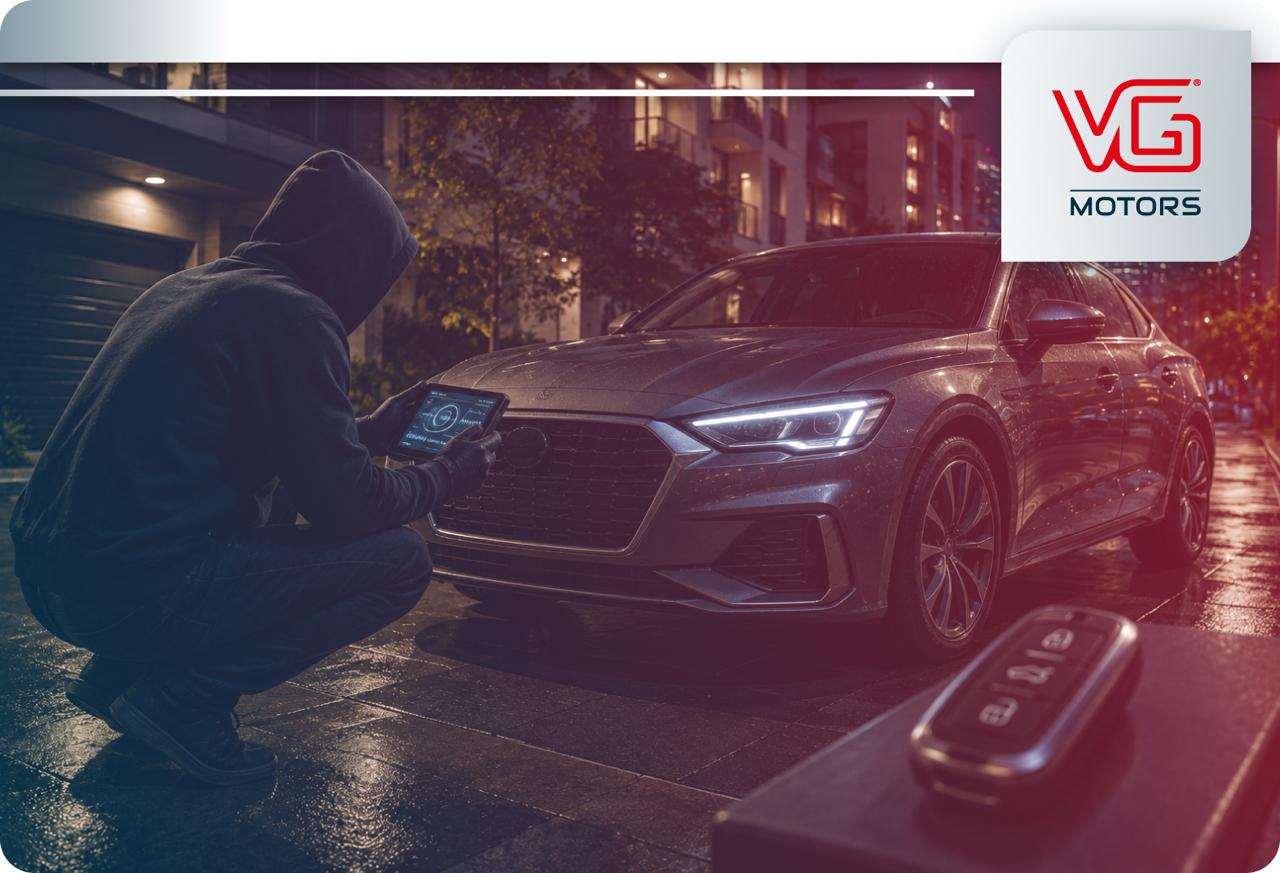
Modern cars can still be stolen. Immobilizers, coded keys, alarms and connected technology have made some traditional theft methods more difficult, but they have not made vehicles theft-proof.
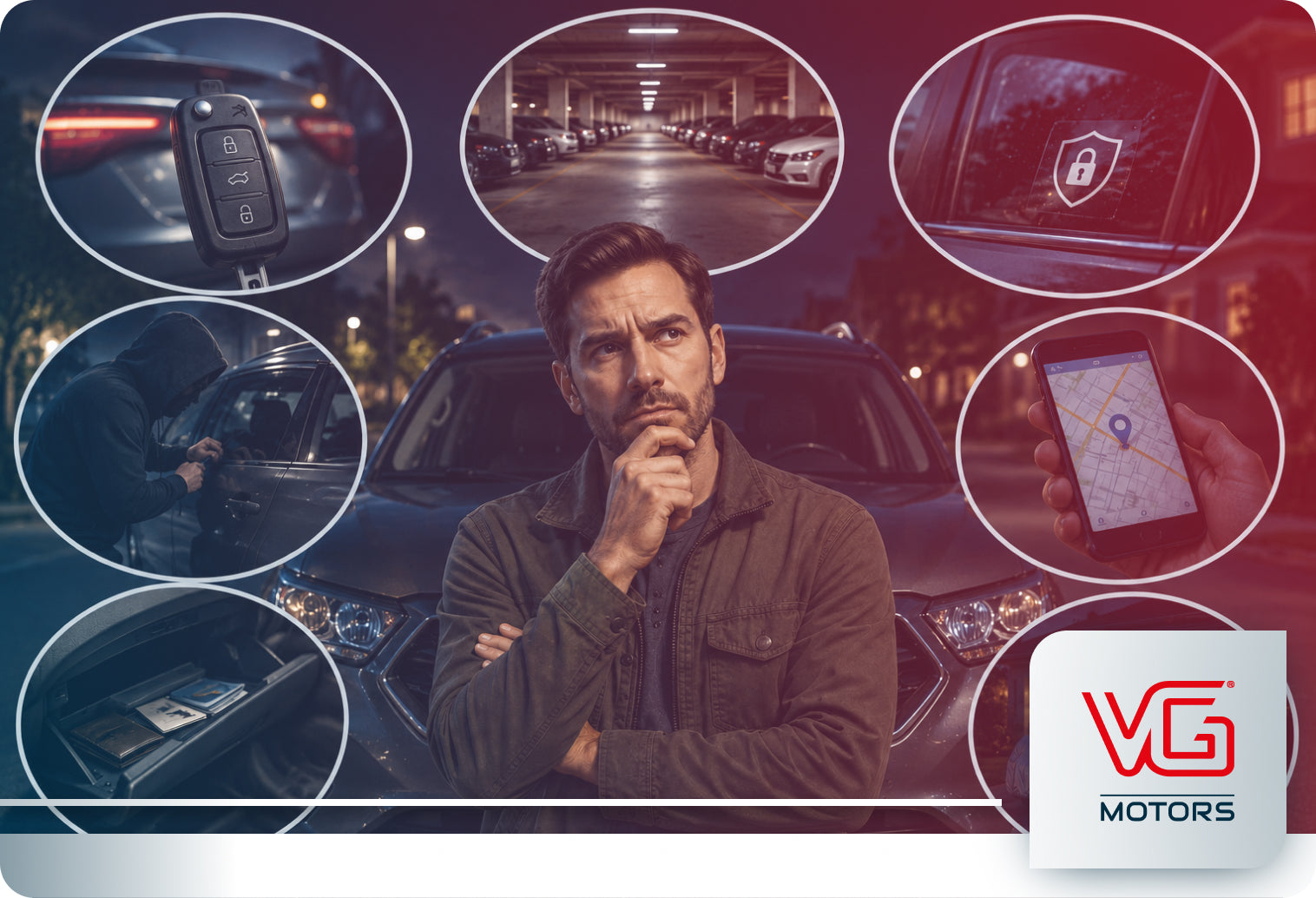
Theft risk can still involve stolen keys or fobs, model-specific vulnerabilities, human behavior and changing theft methods.
You walk away from a new car, hear the locks engage and watch the mirrors fold.
The key never left your pocket.
The vehicle has an alarm. An immobilizer. Maybe connected features and an app on your phone.
Compared with cars built decades ago, modern vehicles can feel dramatically more secure.
So the question is reasonable: Can new cars still be stolen?
Yes.
But that doesn’t mean modern security has failed.
It means something more specific.
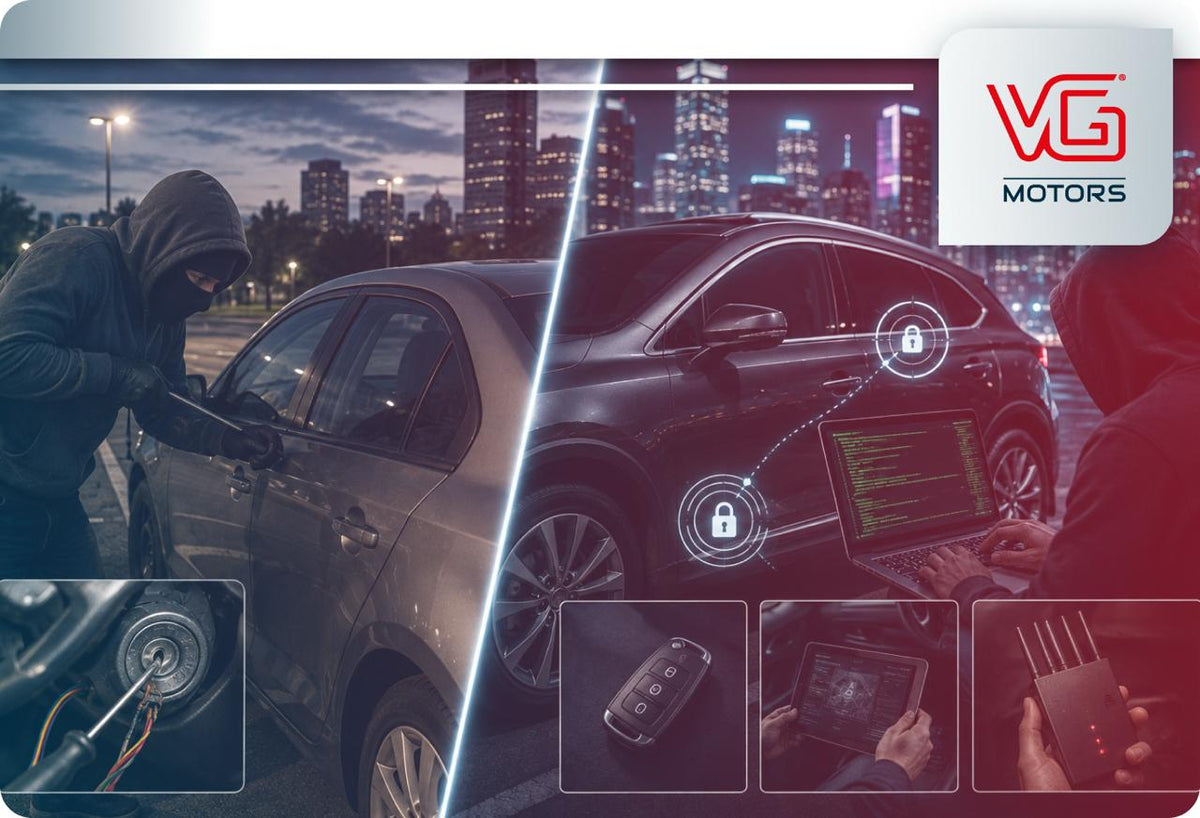
Modern vehicle security changed the barriers involved in theft. It did not eliminate every possible path to theft.
That’s the distinction new-car owners need to understand.
Modern Security Changed Vehicle Theft
One of the biggest changes in modern vehicle security is that starting the car often requires more than a mechanical key turning an ignition cylinder.
Many vehicles use coded credentials, electronic authentication and immobilizers designed to prevent unauthorized operation.
NHTSA describes immobilizers as systems intended to interfere with unauthorized starting or operation of the vehicle.
That is a meaningful improvement.
A theft method that might have worked against an older vehicle may not work against a newer one equipped with modern electronic security.
But an immobilizer performs a specific job.
It creates a barrier.
It does not promise this vehicle can never be stolen.
That is why “newer” and “theft-proof” should never be treated as synonyms.

Keyless Entry Doesn’t Mean Keyless Risk
Push-button start and proximity keys can make vehicle security feel almost invisible.
You unlock the vehicle by touching the handle.
Start it with a button.
Lock it without taking the fob out of your pocket.
But advanced authentication still depends on one important condition: The authorized credential remaining controlled.
If an authorized key or fob is left inside the vehicle, lost or otherwise becomes available to someone who should not have it, the security situation changes.
NICB continues to recommend that owners take keys and fobs with them and avoid leaving vehicles running unattended.
Imagine a new SUV outside a restaurant in Miami, Florida.
It may have sophisticated electronic security.
But if the authorized fob is accidentally left inside, the problem is no longer that the vehicle lacks modern technology.
The problem is that the credential the technology trusts is now available.
New Doesn’t Mean Every Model Has the Same Security
A model year tells you when a vehicle was built.
It doesn’t tell you everything about its security architecture.
Different manufacturers, models and model years can use different combinations of:
- immobilizers;
- ignition systems;
- software;
- security features;
- electronic controls.
The Hyundai and Kia theft trend is one of the clearest recent examples.
NHTSA documented theft-deterrent software and hardware responses for millions of affected Hyundai and Kia vehicles that lacked certain immobilizer protections.
NICB later reported that Hyundai and Kia represented a smaller share of national vehicle thefts in 2025 than in 2023 and 2024, alongside software updates and broader prevention efforts.
The broader lesson is not about one manufacturer.
It is: Security can vary materially between vehicles that consumers may think of simply as “modern cars.”
That is why manufacturer communications matter.
If you own a newer vehicle, it is worth checking whether there are security updates, campaigns or other information tied to your specific VIN.
Connected features may also add useful capabilities, but owners should not assume that having an app automatically means the vehicle has a particular theft-prevention or recovery function.
Different systems do different jobs.

Sometimes the Security Technology Isn’t the Weakest Point
Modern vehicle theft can sound highly technical.
That can create another misconception: If my car has sophisticated security, only a sophisticated attack could result in theft.
Not necessarily.
Sometimes the opportunity is extremely ordinary.
A vehicle is left running.
A key or fob is left inside.
Doors are left unlocked.
NICB continues to warn about these basic situations because sophisticated security cannot compensate for every human decision around the vehicle.
Picture a new crossover outside a convenience store in Phoenix, Arizona.
The owner leaves the engine running while going inside for a quick purchase.
The vehicle may have modern electronics, an immobilizer and connected features.
Those technologies are not necessarily being defeated.
A different opportunity has been created.
That is an important reality:
A vehicle can have advanced security and still be exposed by a very ordinary circumstance.
Modern vehicle theft is not automatically synonymous with sophisticated electronic theft.
Sometimes the oldest prevention advice still matters for the newest car.
My Car Is Brand-New. Should I Be Worried?
Not automatically.
Learning that new cars can still be stolen shouldn’t make new-car ownership feel unsafe.
A better response is curiosity rather than panic.
If you recently bought a vehicle, understand three things:
- What security equipment does my vehicle actually have?
- Are there manufacturer updates or campaigns relevant to my VIN?
- What do my key/fob and connected features actually do?
Those questions are far more useful than relying on: “It’s new, so I don’t need to think about theft.”
Or the equally unhelpful: “Modern security doesn’t matter because theft still exists.”
Neither is accurate.
Security improvements can matter substantially without eliminating every possible scenario.
NICB reported national vehicle theft declining 17% in 2024 and another 23.2% in 2025. Those declines reflect many factors, including law enforcement, manufacturer action, prevention efforts and public awareness.
The useful takeaway is not that theft has disappeared. It is that risk can change, and security improvements can matter.
Bottom Line
Yes, new cars can still be stolen.
But that doesn’t make modern vehicle security meaningless.
Immobilizers, coded credentials, alarms, software and connected technologies have changed vehicle security and made some theft scenarios more difficult.
They simply have not created immunity. Newer can mean better protected. It never means impossible to steal.
The most useful thing a new-car owner can do is understand the security features actually present in the vehicle, stay current on manufacturer information and avoid assuming that technology removes every form of risk.
FAQ - Can New Cars Still Be Stolen?
Can a brand-new car be stolen?
Yes. Modern security can make certain theft methods more difficult, but no vehicle should be assumed to be theft-proof simply because it is new.
What does an immobilizer do?
An immobilizer is designed to interfere with unauthorized starting or operation when the correct authorized credential is not detected.
Can a push-button-start car still be stolen?
Yes. Push-button start is part of a vehicle’s security and convenience architecture, but it does not guarantee that the vehicle cannot be stolen.
Do manufacturer software updates matter for vehicle security?
They can. When a manufacturer identifies a security issue, software or hardware updates may be used to address it. Owners should review manufacturer communications relevant to their specific vehicle.
What should a new-car owner check about vehicle security?
Start by understanding what security equipment the vehicle actually has, whether any manufacturer updates apply to its VIN and how its key/fob and connected features are designed to work.


Leave a comment
This site is protected by hCaptcha and the hCaptcha Privacy Policy and Terms of Service apply.