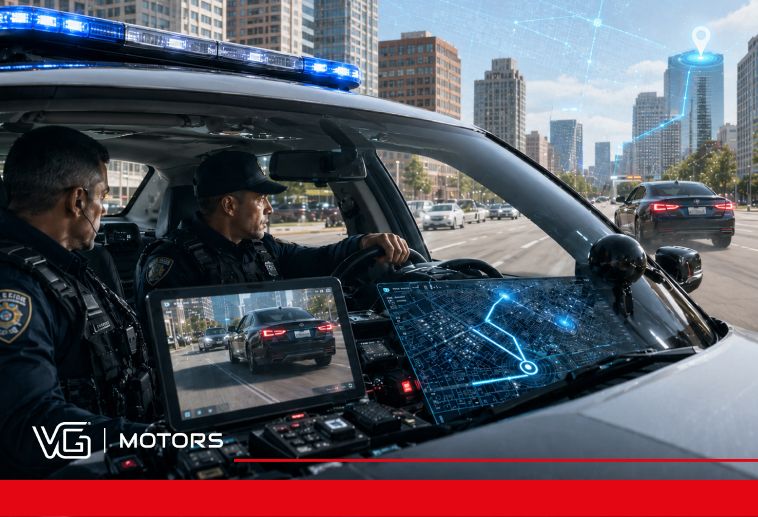
Modern stolen vehicle investigations look very different than they did 20 years ago.
Today, vehicle recovery increasingly depends on a combination of:
- license plate recognition systems;
- traffic surveillance infrastructure;
- GPS recovery technology;
- investigative visibility tools;
- recovery coordination platforms.
Because vehicle theft evolved.
And investigations evolved with it.
According to discussions referenced by the National Insurance Crime Bureau (NICB), organized theft groups increasingly use:
- electronic theft methods;
- temporary cooling lots;
- interstate relocation;
- dismantling operations.
Which means modern recovery investigations increasingly depend on:
- timing;
- visibility;
- cross-agency coordination;
- technology-assisted investigation workflows.
Not simply:
“looking for the car.”
Quick Answer: How Do Police Track Stolen Cars?
Law enforcement agencies may use combinations of:
- license plate readers;
- surveillance systems;
- GPS recovery platforms;
- traffic camera infrastructure;
- toll-road monitoring;
- investigative recovery technology.
Modern stolen vehicle investigations increasingly depend on technology-assisted visibility and coordinated investigative workflows.
Vehicle Recovery Investigation Timeline

How Vehicle Theft Investigations Begin
Most stolen vehicle investigations begin with a theft report. But operationally, the process starts much earlier than many drivers realize.
The quality and speed of the first report often affect:
- investigative visibility;
- recovery timing;
- coordination opportunities.
If possible, drivers should immediately provide:
- VIN number;
- license plate information;
- last known location;
- approximate theft timeframe;
- tracking information if available.
Some drivers still wait hours before reporting a theft because they assume:
- the car was towed;
- someone borrowed it;
- they parked somewhere else.
Sometimes people genuinely believe the vehicle will suddenly reappear in another section of the parking garage.
And honestly, that confusion is extremely common.
Especially in:
- apartment complexes;
- airport garages;
- hotel valet areas;
- shopping center parking lots.
But modern theft operations increasingly move vehicles quickly after theft occurs.
Which means reporting delays can significantly reduce recovery opportunities.
License Plate Readers and Surveillance Systems
One of the most important technologies in modern stolen vehicle investigations is:
Automatic License Plate Recognition (ALPR).
These systems help scan and compare plate numbers against:
- stolen vehicle databases;
- active investigations;
- law enforcement watchlists.
ALPR infrastructure may appear in:
- patrol vehicles;
- toll roads;
- highway systems;
- parking infrastructure;
- traffic camera networks.
The goal is simple:
help investigators identify stolen vehicles during normal traffic movement.
And operationally, that changed vehicle recovery dramatically.
How Traffic Cameras Help Investigators
Modern traffic surveillance infrastructure increasingly helps investigators reconstruct vehicle movement after theft occurs.
This may include:
- timestamp mapping;
- route reconstruction;
- interstate movement analysis;
- toll-road visibility;
- parking garage footage review.
Investigators can sometimes identify:
- where a vehicle traveled;
- how quickly it moved;
- whether it crossed jurisdictions;
- possible relocation patterns.
That matters because organized theft operations increasingly rely on rapid movement immediately after theft occurs.

GPS and Vehicle Recovery Technologies
GPS recovery technology increasingly plays an important role in modern stolen vehicle investigations.
Integrated recovery infrastructure can help provide:
- real-time location visibility;
- movement updates;
- investigative coordination support;
- post-theft monitoring.
But operationally, vehicle recovery is much more complex than simply:
“seeing the car on a map.”
Because successful recovery depends on:
- signal availability;
- investigative timing;
- vehicle movement patterns;
- jurisdiction coordination;
- recovery response speed.
Modern recovery systems increasingly combine:
- encrypted GPS positioning;
- app-based visibility;
- hidden onboard hardware;
- integrated recovery architecture.
That layered design exists because modern theft operations evolved significantly over time.
Why Hidden Recovery Hardware Matters
Some organized theft groups immediately search stolen vehicles for visible tracking devices.
Which is one reason recovery-oriented systems increasingly use concealed installation approaches designed to reduce discoverability.
That operational difference separates many:
- temporary GPS trackers;
- consumer tracking devices;
- exposed monitoring hardware;
from integrated recovery systems designed specifically for stolen vehicle situations.
Why Recovery Technology Became More Sophisticated
Years ago, many stolen vehicles were recovered relatively close to where they disappeared.
Modern theft patterns changed dramatically.
Today, organized theft operations increasingly involve:
- rapid relocation;
- interstate movement;
- underground storage;
- dismantling facilities;
- export logistics.
Which forced investigative technology to evolve alongside modern theft behavior.
How LoJack Assists Law Enforcement
Modern LoJack systems increasingly help support investigative recovery workflows through:
- GPS visibility;
- app-based monitoring;
- investigative coordination support;
- recovery-oriented infrastructure.
Historically, many people associated LoJack with older RF recovery systems and television news stories involving police helicopters tracking stolen vehicles through radio signals.
That cultural memory still exists surprisingly strongly online.
But modern recovery investigations are now much more connected, mobile, and GPS-oriented than the original RF-only era many drivers still remember.
Today, investigative recovery workflows increasingly depend on:
- integrated visibility systems;
- GPS-based positioning;
- information sharing;
- coordinated recovery infrastructure.
Because modern vehicle theft increasingly operates across multiple jurisdictions very quickly.
Why Fast Reporting Improves Recovery Chances
Modern theft groups increasingly prioritize movement immediately after theft occurs.
According to NICB theft trend discussions, stolen vehicles are increasingly relocated to:
- underground garages;
- temporary holding lots;
- parking structures;
- shipping containers;
- interstate transportation routes.
Which means timing matters enormously.
The faster investigators receive:
- vehicle details;
- movement visibility;
- tracking updates;
The better the chances of improving recovery coordination.
In many cases, stolen vehicles cross:
- cities;
- counties;
- and even state lines
Within hours after theft occurs.
That jurisdiction complexity is one reason rapid reporting became so operationally important in modern vehicle recovery.

Challenges Police Face During Vehicle Recovery
Modern vehicle recovery investigations are not always straightforward.
Investigators may face operational challenges involving:
- underground parking structures;
- signal interruptions;
- rapidly changing vehicle locations;
- VIN switching;
- dismantling operations;
- multi-state jurisdiction coordination.
Some organized theft operations are highly sophisticated.
And in many cases, recovery efforts require coordination between:
- local agencies;
- regional investigators;
- state jurisdictions;
- recovery infrastructure systems.
That operational complexity is one reason investigative recovery technology became increasingly important over the last decade.
Why Modern Vehicle Recovery Became More Technological
Connected cars changed.
Organized theft evolved.
Investigations became more complex.
And vehicle recovery technology evolved alongside all of it.
Today, successful recovery increasingly depends on:
- investigative visibility;
- technology-assisted coordination;
- surveillance infrastructure;
- integrated recovery systems;
- cross-agency communication.
Because modern vehicle theft increasingly behaves more like organized logistics than random opportunistic crime.

How Police Track Stolen Cars — FAQ
Can police track stolen cars in real time?
In some situations, yes. Modern investigations may use GPS recovery platforms, surveillance systems, and license plate recognition infrastructure to support real-time visibility.
How long does it take police to recover stolen vehicles?
Recovery timing varies depending on reporting speed, tracking visibility, investigative coordination, and vehicle movement patterns.
Can stolen cars be tracked without GPS?
Yes. Investigations may also involve:
- surveillance systems;
- license plate readers;
- toll-road infrastructure;
- traffic cameras;
- witness reports.
What information helps police recover a stolen vehicle?
Helpful information includes:
- VIN number;
- license plate;
- last known location;
- theft timeframe;
- tracking visibility;
- recovery screenshots.
What are license plate readers?
Automatic License Plate Recognition (ALPR) systems scan vehicle plates and compare them against investigative databases during recovery operations.
Can stolen vehicles be hidden underground?
Yes. Underground garages, parking structures, and shielded environments may temporarily affect signal visibility during investigations.
Why does fast reporting matter so much?
Modern theft groups often relocate vehicles rapidly after theft occurs, sometimes across multiple jurisdictions within hours.




Leave a comment
This site is protected by hCaptcha and the hCaptcha Privacy Policy and Terms of Service apply.