
Car theft does not have one method.
A vehicle can be taken because someone gained physical access, obtained or exploited a key or electronic credential, targeted an electronic authorization system, physically removed the vehicle, used force against the driver or gained possession through deception.
Some of those paths are old. Others exist because the way vehicles control access and authorization has changed.
That is why understanding modern vehicle theft starts with a different question: What kind of access did the theft depend on?
How Are Modern Vehicles Stolen?
Modern vehicles can be stolen through physical access, key or keyless compromise, electronic exploitation, physical removal, force or fraud.
Those categories describe different paths to the same outcome: someone gains unauthorized possession of a vehicle.

These categories can overlap. They are a way to understand the method of access, not a claim that every theft fits perfectly into one box.
They also answer only one part of the story.
How a vehicle was stolen is different from why it was targeted, what happened to it afterward and how recovery may occur.
That distinction matters even as U.S. vehicle theft declines from its recent peak. The National Insurance Crime Bureau reported 268,415 vehicle thefts during the first half of 2026, a 21% decrease from the same period in 2025.
Hundreds of thousands of thefts still mean hundreds of thousands of individual events, and they do not all begin the same way.
1. Physical Access Still Matters
The conversation around modern vehicle theft often starts with sophisticated technology.
But not every theft does.
Sometimes the opportunity is much simpler.
A vehicle may be left running while the driver steps away. A legitimate key may be left inside or become accessible to someone else. Doors or windows may be unsecured.
That is one reason basic precautions have not become obsolete as vehicles have become more advanced.
NHTSA still advises drivers to take their keys, close and lock windows and doors, avoid leaving valuables visible and never leave a vehicle running unattended.
Modern theft methods did not make old opportunities disappear.
And vehicle technology does not change that fundamental principle: access can sometimes begin with the owner’s legitimate key or with an opportunity around the vehicle rather than with a technical attack.
2. The Original Key Does Not Always Have to Be Physically Taken
Traditional car theft is easy to picture.
Someone gets the key, forces the ignition or otherwise gains physical access.
Keyless vehicles changed that picture because authorization can depend on electronic credentials rather than a mechanical key being inserted into an ignition.
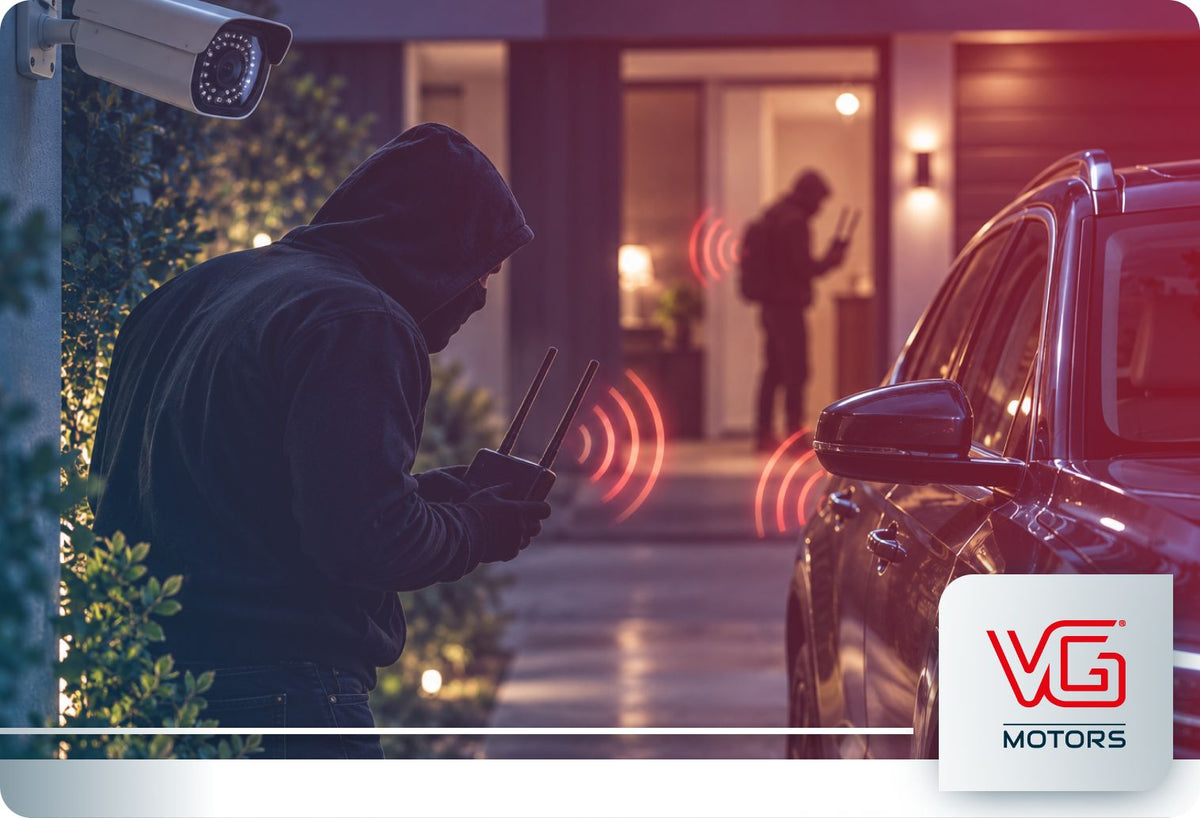
One example is a relay attack.
At a high level, this type of attack involves relaying signals associated with a legitimate keyless credential so that the vehicle may interpret the authorized key as being sufficiently nearby.
The important lesson for the vehicle owner is not how that process is performed.
It is this: Having the original keys in your possession does not, by itself, prove that a vehicle could not have been stolen.
It also does not prove that a relay attack occurred.
Different vehicles use different keyless architectures and security systems, and there are multiple possible ways a vehicle can be taken without the owner discovering a missing original key.
This is exactly why keyless theft deserves to be treated as a category rather than used as the automatic explanation for every unexplained theft.
3. Electronic Systems Can Become Part of the Theft Surface
Modern vehicles rely on electronic systems for functions that were once predominantly mechanical.
Access, ignition authorization, immobilization and communication between vehicle systems can all involve electronics.
That changes the security landscape.
In cybersecurity, an attack surface broadly describes the systems or access points that could potentially be targeted. As more vehicle functions become electronic, some theft methods can target authorization or access systems rather than relying exclusively on physical locks.
That does not mean someone can simply “hack any modern car.”
Vehicle architectures differ. Security controls differ. Vulnerabilities may be specific to particular models, generations or systems.
NICB noted in July 2026 that organized theft networks continue to adapt and specifically identified key programming and relay-attack devices among emerging threats facing investigators and claims professionals.
The larger point is simpler: Physical locks are no longer the only systems involved in controlling access to a modern vehicle.
Electronic vehicle theft deserves deeper explanation of its own, but understanding that principle is enough for this map of modern theft methods.

4. A Vehicle Does Not Always Have to Be Started to Be Stolen
There is an important category that can disappear when vehicle-theft conversations become too focused on keys, software and electronics.
A vehicle can potentially be physically removed.
Tow-away theft illustrates the distinction.
The thief does not necessarily need to solve the same authorization problem required to drive the vehicle away under its own power.
That also explains why one security feature cannot logically address every theft method.
An immobilizer, for example, is designed to interfere with unauthorized vehicle operation. That does not make the entire vehicle physically immovable.
This does not mean owners should assume a missing vehicle was towed, nor does it establish how common that method is in any particular area.
It simply reveals another important distinction: Starting a vehicle and taking possession of a vehicle are not always the same problem.
5. Carjacking Changes the Access Problem Completely
Some vehicle theft begins with an unattended car.
Carjacking does not.
The FBI distinguishes motor vehicle theft as a property crime from carjacking, which involves taking a motor vehicle from a person or their presence through force, violence or intimidation and is treated as a violent crime under federal law.
That distinction changes the immediate priority.
When the offender confronts a person directly, personal safety comes before protecting the vehicle.
The precise legal definition, offense and procedure can depend on jurisdiction and circumstances, so carjacking should not be reduced to one universal state-level legal definition.
But it belongs on the map of vehicle theft because the access method is fundamentally different.
Instead of defeating a physical or electronic vehicle control, the offender gains possession through force or intimidation directed at a person.
6. Sometimes Possession Is Gained Through Deception
Not every vehicle loss looks like theft at the moment possession changes.
Sometimes a person or business voluntarily hands over a vehicle because a transaction, identity or request appears legitimate.
The deception is discovered later.
That can matter particularly in vehicle sales and dealership environments, where fraudulent buyers, false identities and other forms of fraud can create a different path to vehicle loss.
For this article, however, the distinction is all we need: Unauthorized possession does not always begin with forced access. It can also begin with deceptive access.
The mechanics of automotive fraud are a separate subject and should not be confused with the physical, keyless or electronic theft methods used against a privately owned parked vehicle.
No Broken Glass Does Not Tell You How the Vehicle Was Stolen
Broken glass is evidence.
A damaged lock is evidence.
A missing key is evidence.
But the absence of those things is not a diagnosis.
If a driver returns to a parking space and discovers the vehicle gone while still possessing both keys, several explanations may be possible depending on the vehicle and circumstances.
What cannot be responsibly concluded from those facts alone is the specific method used.
No broken window does not prove electronic theft.
Keys still in the owner’s possession do not prove a relay attack.
No obvious ignition damage does not tell us whether the vehicle was driven away or removed another way.
This creates a useful rule for understanding modern vehicle theft:
- Separate what is known from what is inferred.
- The visible evidence can narrow questions.
- It does not always answer them.
Theft Method and Theft Objective Are Different Questions
Imagine two stolen vehicles.
One was taken after a key-related compromise.
Another was physically removed.
Those descriptions tell us something about how possession changed.
They do not tell us why either vehicle was wanted.
That distinction is fundamental to understanding the broader vehicle-theft ecosystem.
Theft method: How was the vehicle taken?
Theft objective: Why was it wanted?
Post-theft destination: What happened after it disappeared?
Recovery: How can the vehicle be located and returned?
A vehicle’s value, parts, demand, vulnerabilities and intended criminal use can all influence theft risk without being the theft method itself.
That is why a vehicle being an attractive target and the technique used to steal it should not be treated as the same question.
Related: Why Some Vehicles Are Stolen More Than Others
The same boundary applies after the theft.
Whether a vehicle remains nearby, moves across jurisdictions, is resold, dismantled or used for another purpose is another stage of the story.
This article maps how vehicles can be taken. What happens after they are stolen deserves its own analysis.
- Modern Does Not Always Mean Sophisticated
- Modern vehicle theft includes sophisticated methods.
- It also includes remarkably ordinary ones.
Keyless credentials and electronic authorization systems created new considerations, but they did not eliminate unlocked doors, accessible keys, unattended running vehicles, physical removal, force or deception.
Put simply: The vehicle became more technologically sophisticated. Vehicle theft did not become exclusively technological.
That is why understanding the category of risk matters more than searching for one universal explanation of how “modern thieves” operate.
What Should Drivers Take From This?
Different theft paths call for layered thinking rather than confidence in one feature.
Baseline precautions still matter. NHTSA recommends taking your keys, locking doors and windows, parking in well-lit areas when possible and keeping valuables out of sight.
Beyond those basics, drivers should understand what the security equipment in their particular vehicle is actually designed to do.
An alarm, immobilizer, physical deterrent and recovery system do not necessarily address the same problem.
That does not mean owners need every possible device. It means one layer of security should not be mistaken for immunity from every theft method.
For a deeper look at that distinction, see Why Some Anti-Theft Measures Deter Thieves but Don’t Eliminate Risk.
Prevention and Recovery Are Different Problems
There is one final boundary this Pillar needs to establish. Understanding how a vehicle can be stolen is primarily a risk and prevention question.
What happens once the vehicle is gone becomes a recovery question.
Those functions should not be collapsed.
A security measure may make one theft pathway more difficult without guaranteeing that a vehicle cannot be taken another way.
Likewise, a technology or service designed to assist after a vehicle is stolen does not necessarily prevent the original theft.
This is why the broader vehicle-theft conversation becomes clearer when the questions remain separate:
- Why was the vehicle targeted?
- How was it taken?
- What happened after it disappeared?
- How does recovery work?
Each question deserves its own answer.
Understanding the Method Starts With Understanding the Access
There is no single technique that explains modern vehicle theft.
- Some thefts depend on physical opportunity.
- Some involve keys or electronic credentials.
- Some may target electronic authorization systems.
- Some involve physically removing the vehicle.
- Others involve force or deception.
Understanding those categories gives drivers a more accurate mental model than imagining either an old-fashioned thief breaking a window or a sophisticated hacker defeating every modern security system.
Both extremes are incomplete.
The better question is: What kind of access did this theft require?
And when the evidence is incomplete, the answer may simply be unknown. That is better than turning assumptions into facts.
FAQ - How Vehicle Thieves Really Work: Modern Vehicle Theft Methods Explained
How are modern cars stolen?
Modern vehicles can be stolen through different paths, including physical access, key or keyless compromise, electronic exploitation, physical removal, force and fraud. No single method explains all vehicle theft.
Can a car be stolen without the original key?
Yes, in some scenarios. Possession of the original physical key is not required for every form of vehicle theft. However, having your keys after a theft does not establish which method was used.
Can a keyless car still be stolen?
Yes. Keyless technology changes how vehicle authorization works, but it does not make a vehicle immune to theft. Risks vary by vehicle, model year and security architecture.
Can thieves steal a car through its electronic systems?
Some vehicle-theft methods can involve electronic access or authorization systems. This does not mean every vehicle has the same vulnerabilities or that every unexplained theft involved an electronic compromise.
Can a vehicle be stolen without being started?
Yes. A vehicle can potentially be physically removed rather than driven away under its own power.
Does no broken glass mean the vehicle was electronically stolen?
No. The absence of broken glass or other obvious signs of forced entry does not establish how a vehicle was stolen.
Is carjacking the same as car theft?
Both involve unlawful vehicle taking, but carjacking involves taking a vehicle from a person or their presence through force, violence or intimidation. Specific legal definitions and charges can vary by jurisdiction.


Leave a comment
This site is protected by hCaptcha and the hCaptcha Privacy Policy and Terms of Service apply.