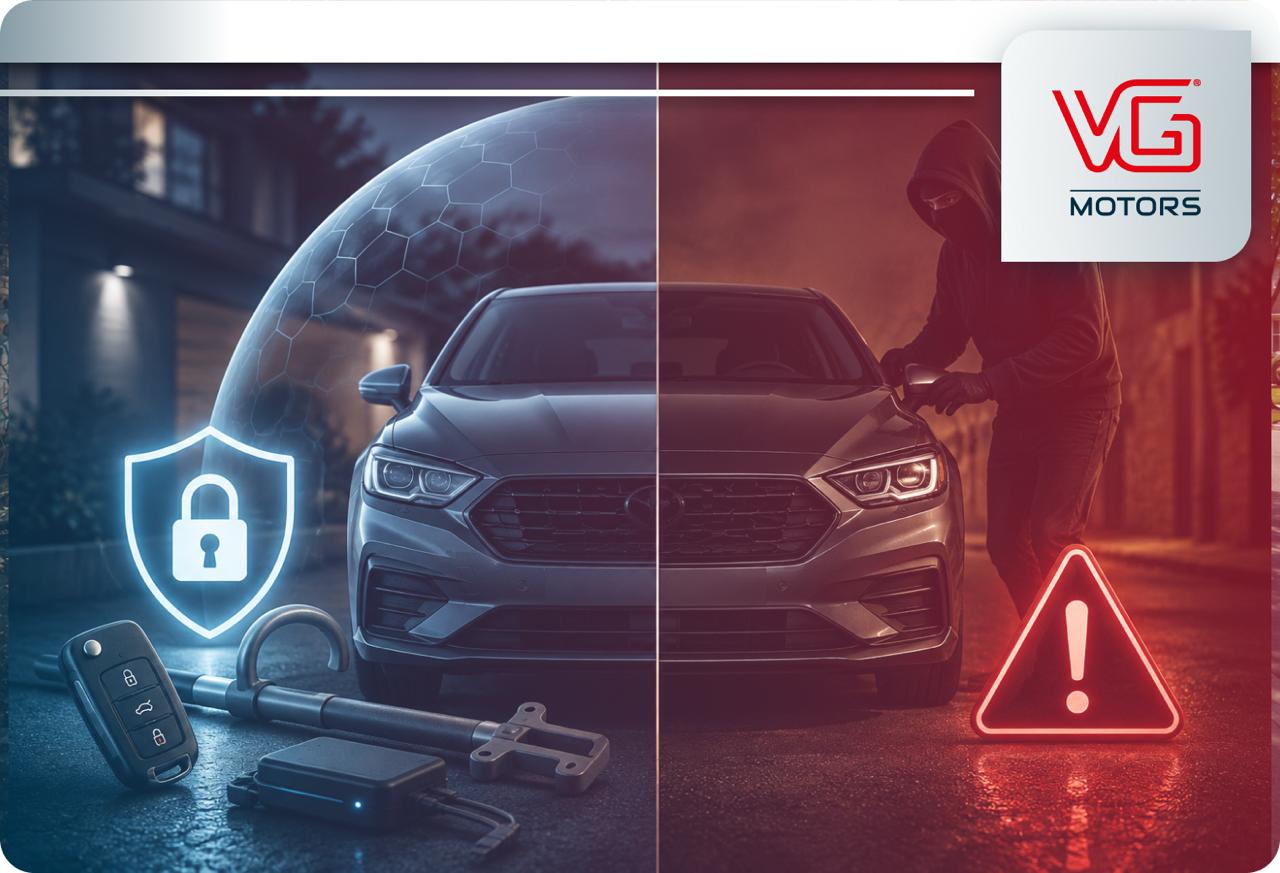
Anti-theft measures can reduce vehicle theft risk by making a target less attractive, increasing the effort required or interfering with a theft attempt. But they cannot control whether someone will try.
Different measures solve different problems, so their value is better understood as risk reduction, not a guarantee that theft cannot happen.
You lock your vehicle.
It has a factory alarm.
Maybe it has an immobilizer.
Maybe you use a steering-wheel lock too.
So a reasonable question follows: Can my car still be stolen?
Yes.
But that does not mean those measures are useless.
This is where vehicle security is often misunderstood.
We tend to evaluate protection as though there are only two possible outcomes: It prevented the theft.
Or: It failed.
Real-world deterrence is more complicated.
A security measure may discourage someone from choosing the vehicle. It may remove an easy opportunity. It may create an additional obstacle during an attempt.
None of those outcomes requires making theft physically impossible.
The better question is: What did this measure change about the theft opportunity?
That is a much more useful way to evaluate vehicle security.
Deterrence Is Not the Same as Making Theft Impossible
Consider two similar vehicles parked near each other.
One presents no obvious obstacle.
The other has a visible steering-wheel lock.
Does that mean the second vehicle cannot be stolen? No.
But something about the decision has changed.
The visible barrier may signal additional effort.
Another available vehicle may now appear easier.
Or the barrier may have relatively little influence on someone who deliberately wants that particular vehicle.
NHTSA distinguishes visible and audible deterrents from immobilizing devices and vehicle recovery systems because these measures perform different functions.
A steering-wheel lock, for example, creates a visible obstacle. An immobilizer is designed to interfere with unauthorized vehicle operation.
The distinction matters because security measures should be evaluated according to the job they are designed to perform.
What Can an Anti-Theft Measure Actually Change?
Instead of asking whether an anti-theft measure simply “works,” ask what it changes.
It might:
Reduce an easy opportunity.
Locking the vehicle and taking the keys removes some of the simplest forms of access.
Change perceived effort.
A visible physical barrier can make one potential target appear more difficult than another.
Create a functional obstacle.
An immobilizing system can interfere with unauthorized operation.
Draw attention to an attempt.
An audible alarm serves a different purpose from a physical barrier.
Support the response after theft.
Recovery technology addresses a later stage if deterrence and prevention were not enough.
These functions can overlap, but they are not interchangeable.
That’s why asking “What’s the best anti-theft device?”
Can be less useful than asking "What problem am I trying to solve?”
Three Moments of Vehicle Security
A simple way to think about these different jobs is:

This is a mental model, not a rigid technical classification.
An alarm, immobilizer or other security feature may affect more than one moment.
The important point is:
Different security measures are designed to solve different problems.
Expecting one device to handle every stage of vehicle theft creates unrealistic expectations.
Sometimes the Simplest Measures Matter
Not every layer of security requires additional technology.
Basic owner behavior can remove easy opportunities before they exist.
NHTSA recommends taking your keys, locking doors and windows, keeping valuables out of sight and avoiding leaving a vehicle running unattended.
Consider someone stopping at a convenience store in Dallas, Texas.
Leaving the vehicle running while going inside doesn’t change the vehicle’s value or underlying theft profile.
It changes the opportunity.
Likewise, leaving keys inside a vehicle parked in a driveway in Phoenix, Arizona removes an obstacle that would otherwise exist.
These behaviors don’t make a vehicle theft-proof. They simply avoid making an opportunity unnecessarily easier.
Visible Deterrents Work Before the Attempt
A steering-wheel lock is useful for understanding deterrence because much of its purpose exists before someone ever touches the vehicle.
It is visible.
NHTSA categorizes steering-wheel locks and similar devices as visible deterrents.
Their presence communicates: There is another obstacle here.
That can matter when someone is evaluating an immediate opportunity.
But can is the important word.
A visible device doesn’t control another person’s decision.
An opportunistic offender comparing several vehicles may respond differently from someone deliberately seeking one particular vehicle.
That’s why visible deterrence should be understood as: Changing the decision before an attempt, not guaranteeing the outcome.

Immobilizers Perform a Different Job
An immobilizer changes something else.
Rather than primarily signaling that a vehicle may be difficult to steal, it is designed to interfere with unauthorized operation.
NHTSA describes immobilizing devices as technologies intended to prevent thieves from bypassing a vehicle’s ignition system or otherwise operating it without authorization.
That distinction became particularly visible during the Hyundai and Kia theft trend, when manufacturers introduced software and hardware countermeasures for millions of affected vehicles.
For our purposes, however, the lesson is simpler:
Visible deterrence influences perception. Immobilization creates a functional barrier.
Neither should be interpreted as a guarantee against every possible theft method.
They perform different jobs.
Layers Make More Sense Than One “Perfect” Device
This is why layered security makes conceptual sense.
One measure doesn’t need to solve the entire theft problem.
Locking the vehicle addresses access.
A visible barrier can affect perceived effort.
An immobilizer can interfere with unauthorized operation.
Other systems may address what happens after theft.
The value of layering is not that combining enough products eventually creates an impenetrable vehicle.
It is that: Different layers can address different problems, reducing dependence on any single measure.
That’s a much more realistic expectation than searching for one “best” device.
Why Something That Deters One Thief May Not Deter Another
Security measures change conditions. They don’t control intent.
Suppose an opportunistic offender encounters several vehicles in a parking area.
One presents an obvious additional obstacle.
Another does not.
That difference may influence the decision.
Now consider someone who deliberately selected a particular vehicle before arriving. The decision is different.
That doesn’t make deterrence irrelevant.
It means the influence of a deterrent can vary depending on the circumstances and the person making the decision.
For this discussion, one principle is enough: Deterrence changes conditions. It doesn’t control intent.
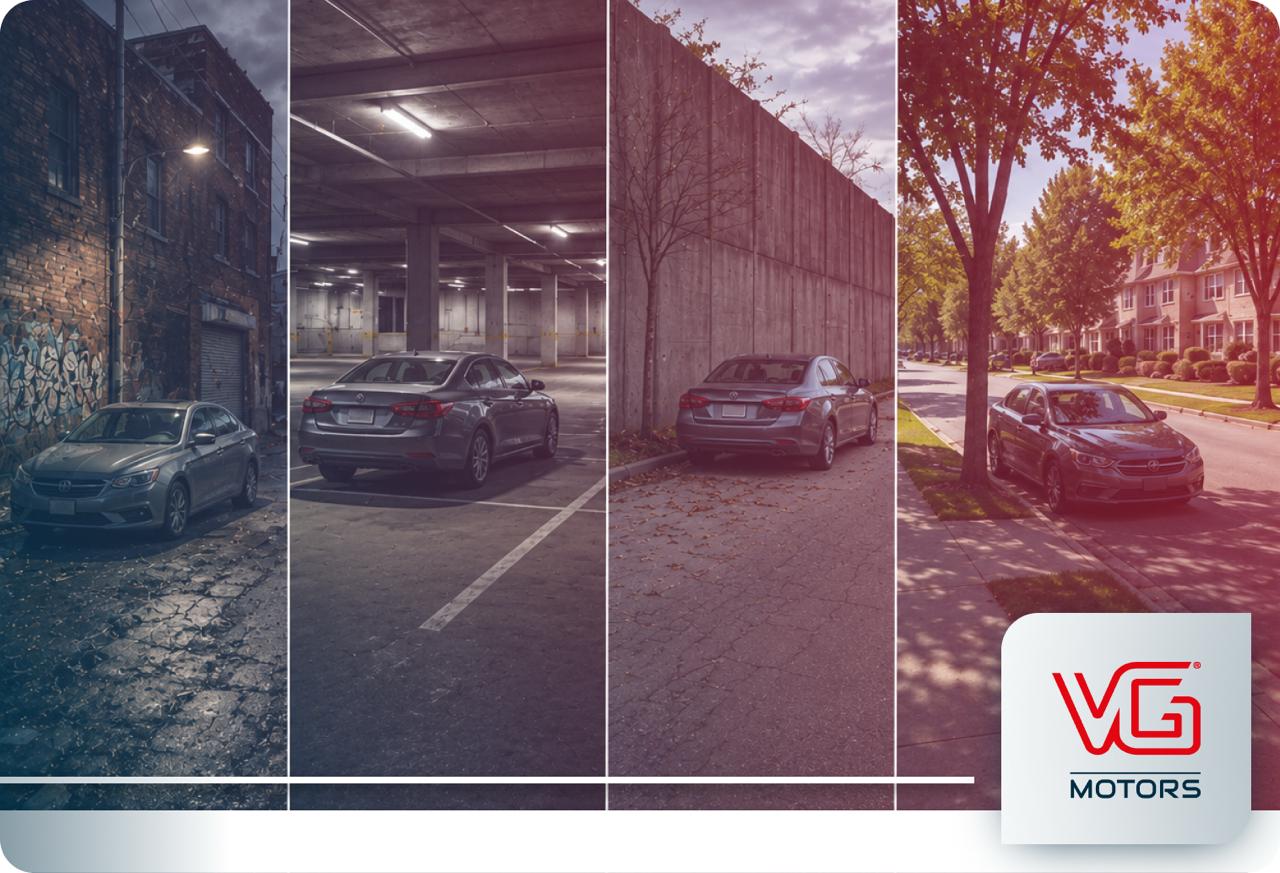
Parking and Security Measures Work Together
A security measure never exists in a vacuum.
The vehicle also exists within a parking environment.
A vehicle left briefly outside a busy business presents different conditions from one sitting unattended for several days.
Gates, cameras, lighting and access controls can also alter the environment without making theft impossible.
Parking changes exposure. Security measures change obstacles within that exposure.
Neither determines the outcome by itself.
Prevention and Recovery Solve Different Problems
There is one additional distinction worth keeping clear.
Deterrents and immobilizing measures primarily address conditions before or during a theft attempt.
Recovery systems address a different problem after a vehicle has been stolen.
NHTSA treats these as distinct categories of vehicle-security technology.
That’s all the distinction needs to mean here.
One is not automatically a substitute for the other because they operate at different stages.
“My Neighbor’s Car Was Stolen Anyway, So It Doesn’t Work”
This is one of the hardest problems when evaluating deterrence.
Suppose someone in Los Angeles, California uses a steering-wheel lock and their vehicle is still stolen.
It is tempting to conclude: “Steering-wheel locks don’t work.”
But that single event doesn’t tell us whether the device changed the difficulty, timing or attractiveness of the target.
Now consider the opposite situation.
Someone uses the same device for ten years and never has a vehicle stolen.
Can we say: “The steering-wheel lock prevented theft for ten years”?
No.
Maybe nobody ever intended to steal the vehicle.
Maybe someone considered it and moved on.
Maybe the device mattered.
Maybe it didn’t.
We usually cannot observe the alternative outcome. And that leads to an important limitation when evaluating deterrence:
Events that don’t happen are difficult to observe.
Successful deterrence often produces nothing.
No theft.
No attempted theft.
No police report.
No story to tell.
That is why anecdotes can be misleading in both directions.
One theft does not necessarily prove a deterrent has no value. Ten theft-free years do not prove that a particular device prevented ten years of crime.
Security measures are better evaluated according to what they are designed to change, not whether one anecdote appears to prove or disprove them.
Does More Security Mean Zero Risk?
No.
Adding obstacles can change the conditions surrounding a theft opportunity.
It cannot remove every possible threat.
A determined offender may respond differently from an opportunistic one.
Different theft methods may bypass different protections.
A vehicle may also be targeted for reasons that a particular security measure wasn’t designed to address.
This is why the realistic goal of anti-theft security is risk reduction.
Not certainty.
A useful security measure doesn’t need to promise: “Your vehicle cannot be stolen.”
It needs to answer: “What does this make harder, less attractive or more manageable?”
So What Should Vehicle Owners Actually Do?
You don’t need to evaluate every possible theft scenario.
Start by removing the obvious opportunities you control.
Take your keys.
Turn the engine off.
Lock the doors and windows.
Keep obvious valuables out of sight.
Those actions align with NHTSA vehicle-theft prevention guidance.
Then understand what security equipment your vehicle already has before considering additional protection.
If you’re evaluating another measure, ask:
Does it deter?
Does it disrupt?
Does it address what happens after theft?
And most importantly: What problem is it actually designed to solve?
That question is much more useful than simply accumulating devices.
Bottom Line
Anti-theft measures can be useful without being perfect.
A visible barrier can change perceived effort.
An immobilizer can interfere with unauthorized operation.
Basic behavior can remove easy opportunities.
Other systems address what happens after prevention has failed.
None of those measures controls whether someone will attempt to steal a vehicle.
And none guarantees the outcome.
Security measures change the conditions of a theft attempt. They do not control whether someone will try.
That’s why vehicle security is better understood as layered risk reduction rather than a promise of absolute protection.
The goal isn’t to make theft theoretically impossible. It’s to avoid making it unnecessarily easy.
FAQ - Why Some Anti-Theft Measures Deter Thieves but Don’t Eliminate Risk
Can anti-theft devices completely prevent a car from being stolen?
No. Anti-theft measures can deter theft, increase difficulty or interfere with an attempt, but no single measure can guarantee that a vehicle will never be stolen.
Do steering-wheel locks actually deter thieves?
They can serve as visible deterrents by signaling an additional obstacle. NHTSA categorizes steering-wheel locks as visible theft-deterrent devices, but their presence cannot guarantee that a vehicle won’t be targeted.
What is the difference between deterrence and immobilization?
Deterrence attempts to make a target less attractive or an attempt less appealing. Immobilization creates a functional barrier intended to interfere with unauthorized vehicle operation.
Is an immobilizer enough to prevent vehicle theft?
No security measure addresses every possible theft method. Immobilizers can interfere with unauthorized operation, but they should not be interpreted as a guarantee against theft.
Is using multiple anti-theft measures better than relying on one?
Different measures can address different stages or problems. Layering reduces dependence on one measure, but adding layers still does not eliminate vehicle theft risk.
If a car is stolen despite an anti-theft device, does that mean the device failed?
Not necessarily. A theft shows that the measure did not prevent that particular outcome, but it does not reveal whether it changed the difficulty or attractiveness of the target. Deterrence is difficult to measure because successful deterrence often produces no observable event.
Is vehicle recovery the same as theft prevention?
No. Deterrence and immobilization primarily address conditions before or during a theft attempt. Vehicle recovery addresses what happens after a vehicle has already been stolen.
Can a car still be stolen from a garage or monitored parking lot?
Yes. Cameras, gates, lighting and other environmental measures can alter exposure or create additional obstacles, but no parking environment guarantees that vehicle theft cannot occur.


Leave a comment
This site is protected by hCaptcha and the hCaptcha Privacy Policy and Terms of Service apply.