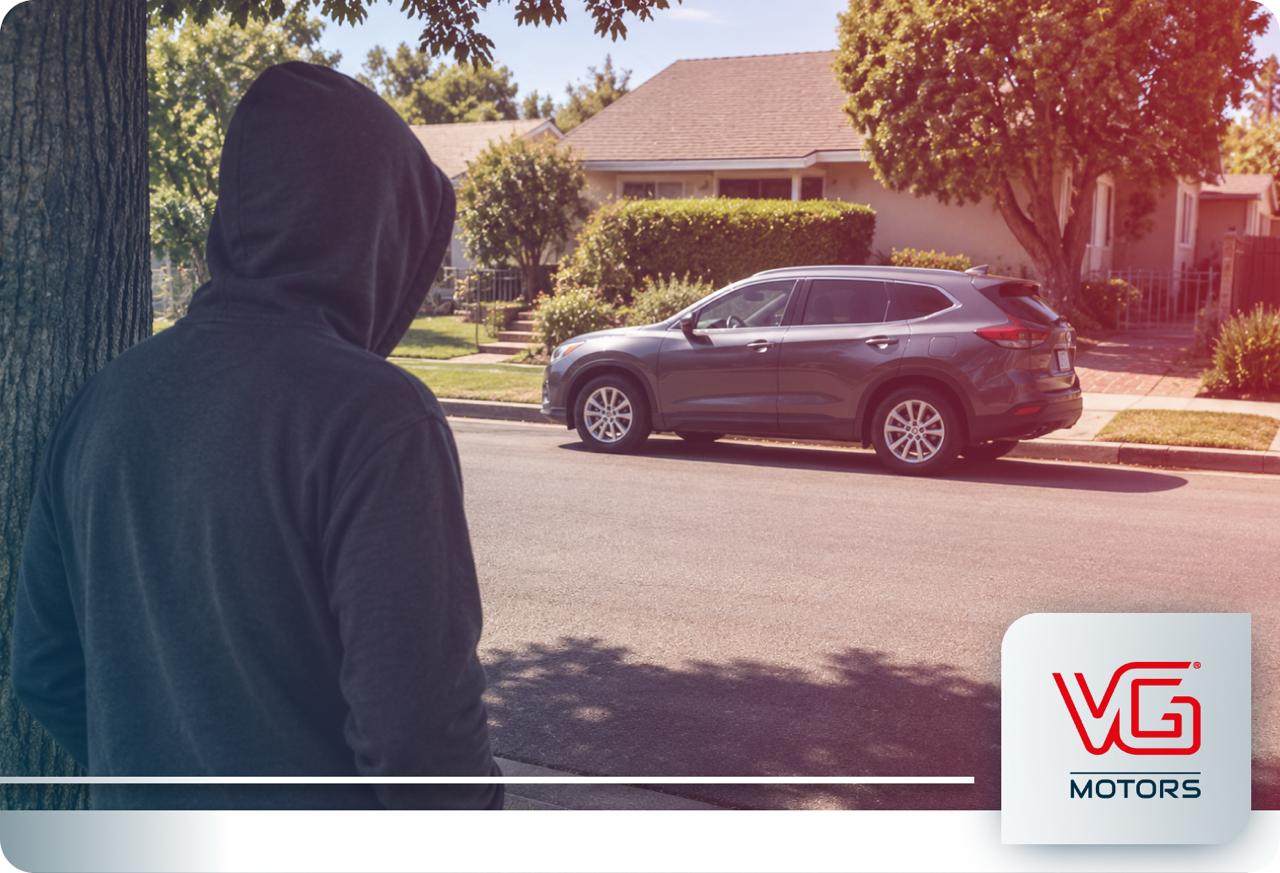
A vehicle can become an attractive target when the potential reward appears worthwhile compared with the effort and risk involved.
Accessibility, visible valuables, valuable equipment and immediate circumstances can all influence that decision.
Target attractiveness is situational: The same vehicle can appear more or less attractive at different moments.
Imagine two vehicles parked next to each other in Houston, Texas.
One is newer and more expensive.
The other is an ordinary pickup.
Which one is more attractive to a thief?
There isn’t enough information to answer.
Maybe tools are visible inside the pickup.
Maybe one vehicle is unlocked.
Maybe keys have been left inside.
Maybe one appears more difficult to access.
Or perhaps the person is looking for something very specific.
A legitimate buyer might ask: Which vehicle is worth more?
Someone choosing a target may be asking: Which vehicle gives me what I want for an acceptable amount of effort and risk?
That’s a very different calculation.
And it explains why target selection isn’t simply about choosing the most expensive vehicle nearby.
The Target Decision: Why One Vehicle Gets Attention
There is no mathematical formula that predicts which vehicle someone will target.
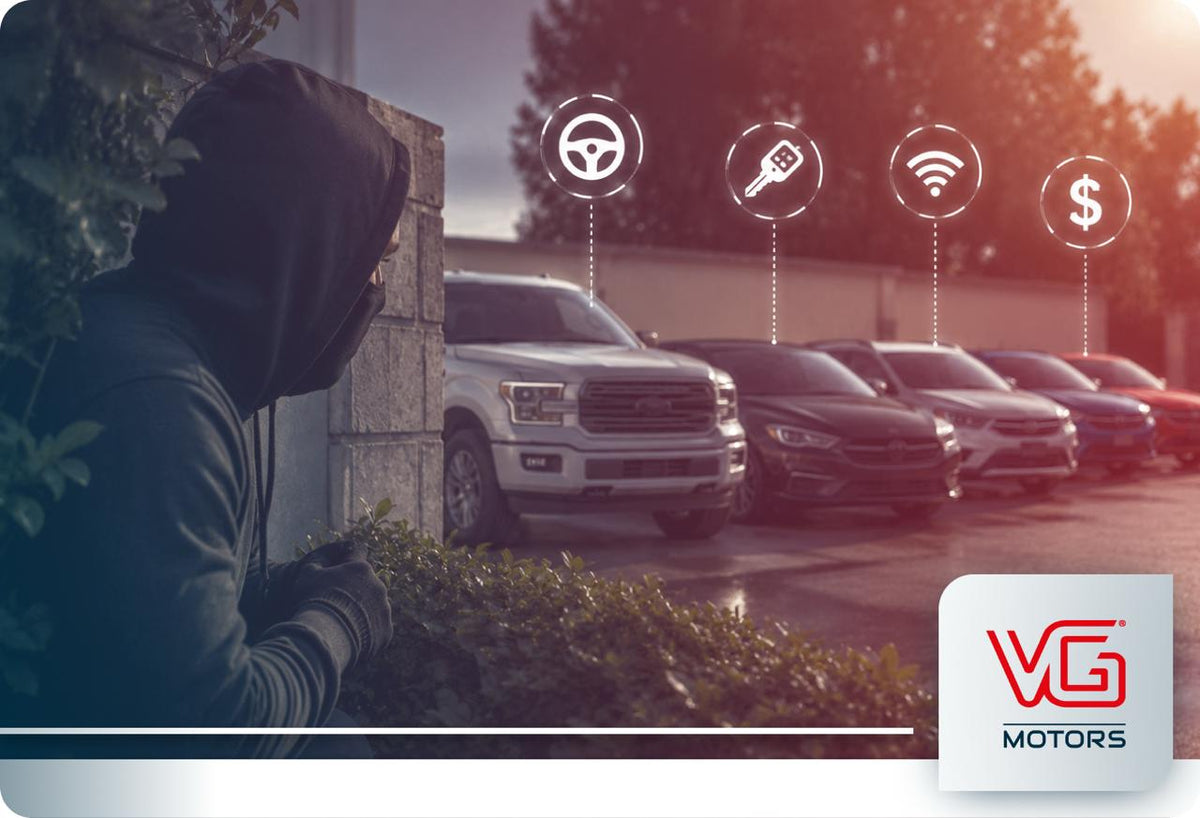
But immediate target selection can be understood through five practical questions:

These factors aren’t fixed.
That’s the important part.
A vehicle can look unattractive at one moment and much more attractive several hours later without its make, model or market value changing at all.
Target attractiveness is contextual.
Attractive for What?
Before evaluating a target, there has to be some perceived reward. And that reward isn’t always the complete vehicle.
NHTSA warns that thieves may target property left inside vehicles as well as automotive components and the vehicles themselves.
For this article, the important distinction isn’t the economics behind each type of theft. We explored those broader forces in Why Some Vehicles Are Stolen More Than Others.
The point here is simpler:
A vehicle becomes attractive in relation to an objective.
A laptop visible through a window can change the perceived reward.
So can equipment in a work vehicle.
For someone specifically seeking the vehicle itself, entirely different cues may matter.
Before we can understand why one target wins someone’s attention, we need to understand what they believe they can gain from it.
Accessibility Can Change the Decision
Now imagine two similar sedans outside a convenience store in Phoenix, Arizona.
Both have comparable value.
One is parked, locked and empty.
The other has been left running while its driver goes inside.
The vehicles may be nearly identical. The opportunities aren’t.
NICB warns against leaving vehicles running unattended and notes that some offenders test vehicle doors looking for easy access. NHTSA similarly recommends taking the key, locking the vehicle and closing the windows whenever you leave.
This gets to one of the most important ideas in target selection:
The vehicle didn’t become more valuable. It became easier to act on.
Accessibility can change the attractiveness of a target almost instantly.
Visible Cues Can Change the Perceived Reward
Sometimes a vehicle attracts attention because of what can be seen.
Imagine an ordinary SUV parked at a shopping center in Miami, Florida.
A laptop bag is clearly visible on the back seat.
The SUV itself may not have been particularly interesting to someone walking through the parking lot.
The visible bag changes that.
NHTSA recommends keeping valuables out of sight and identifies electronics, phones, laptops and purses among property that can attract theft.
The same principle can apply to visible work equipment or certain aftermarket equipment.
Something about the individual vehicle is signaling:
There may be a reward here.
The underlying economics of vehicle parts and component demand belong to the broader theft-risk discussion.
For immediate target selection, what matters is what the offender can perceive.

Perceived Effort Matters
Reward is only half of the decision.
The other question is: How difficult does getting that reward appear?
This is where visible barriers can matter.
NHTSA categorizes steering-wheel locks and similar devices as visible deterrents and distinguishes them from immobilizing devices and other vehicle-security technologies.
We don’t need to compare those technologies here.
Their relevance to target selection is more basic: Visible difficulty can change perceived effort.
Suppose two otherwise similar vehicles offer roughly the same apparent reward.
If one appears significantly more difficult to access or move, an opportunistic offender may evaluate the two differently.
That doesn’t mean visible deterrence guarantees protection. It means effort becomes part of the decision.
Perceived Risk Matters Too
Effort and risk aren’t exactly the same thing.
A vehicle can be physically easy to approach but exist in circumstances that make acting on it feel more exposed.
The opposite can also happen.
This doesn’t mean owners can reliably determine whether a location is “safe” simply by looking around. Nor does it mean every offender evaluates risk in the same way.
It means target selection occurs within a situation.
The person considering the vehicle isn’t necessarily evaluating only:
Can I access it?
They may also be evaluating:
What might happen if I try?
This is one reason the same vehicle can present a different opportunity under different circumstances.
The Same Vehicle Can Become More or Less Attractive in Minutes
Consider the same pickup in Dallas, Texas throughout a normal day.
8:00 a.m.
It is locked, the engine is off and nothing valuable is visible.
12:00 p.m.
Expensive tools can now be seen inside.
5:00 p.m.
The driver leaves it running unattended during a quick stop.
It’s the same pickup.
Same model.
Same year.
Same market value.
But the target has changed.
At noon, the perceived reward may have increased.
At 5:00 p.m., accessibility may have changed dramatically.
NICB specifically warns that unattended running vehicles create opportunities for theft, while NICB and NHTSA recommend removing keys and locking vehicles when leaving them.
This is the central distinction between vehicle theft risk and target attractiveness. The broader risk associated with a particular vehicle may develop over months or years.
Target attractiveness can change in minutes.
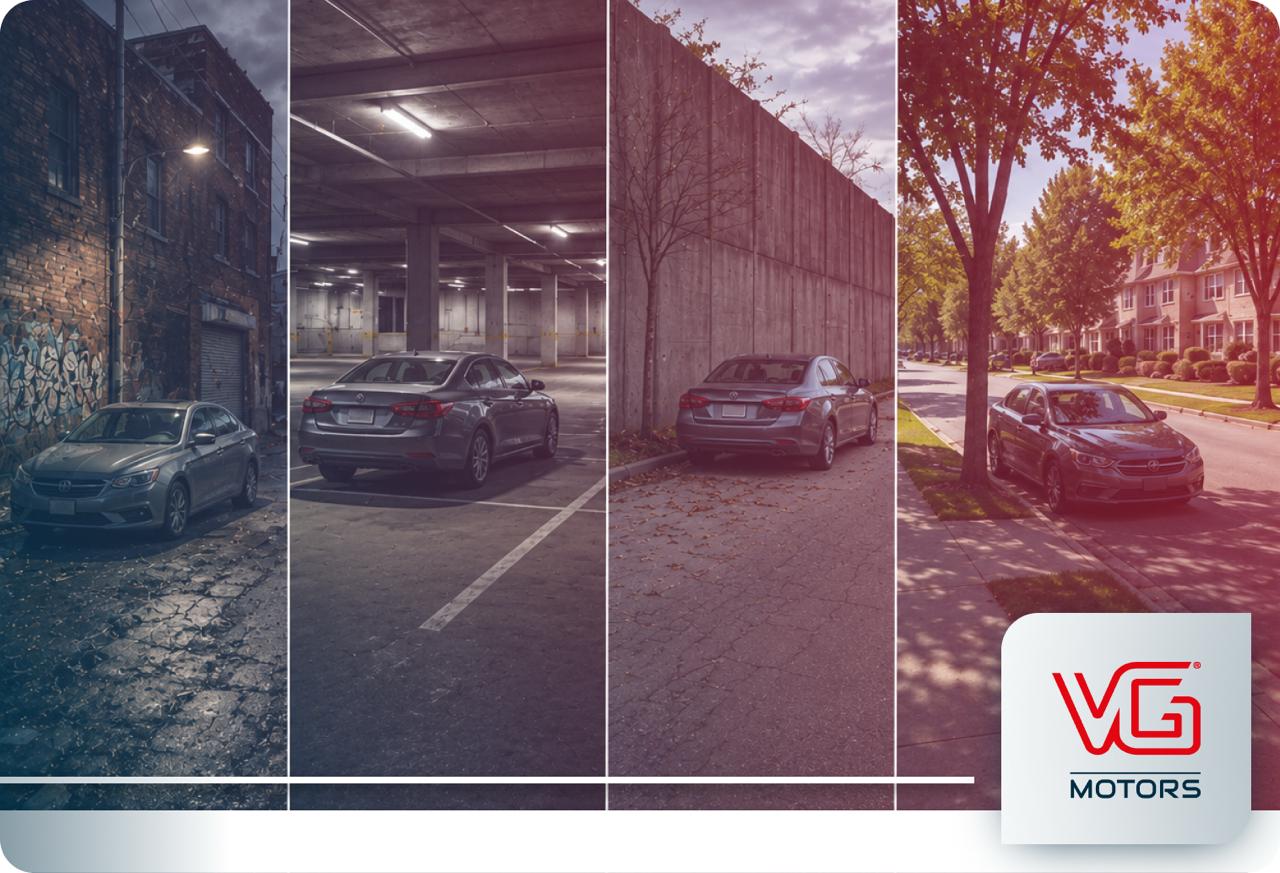
Where the Vehicle Is Parked Adds Context
Parking environment also influences the situation around a target.
The same vehicle on a residential driveway, in an apartment garage or at an airport exists under different conditions.
But that’s a separate question from what we’re answering here.
For target selection, it is enough to understand that the vehicle is evaluated within its surroundings, not in isolation.
Opportunistic Targeting Is Not the Only Kind
The Target Decision framework is particularly useful for understanding immediate, opportunistic choices.
But not every stolen vehicle is selected that way.
Sometimes a particular vehicle may already be sought before the offender encounters it.
That’s an important distinction.
Opportunistic target selection can respond heavily to immediate cues. Deliberate targeting may begin before the vehicle is encountered.
We don’t need to unpack organized theft networks or criminal processes here because that’s a different question.
Does Making Your Vehicle Less Attractive Prevent Theft?
No action can guarantee that a vehicle will not be stolen. But owners can remove some of the obvious cues and opportunities within their control.
Locking doors.
Taking the keys.
Turning the engine off.
Removing visible valuables.
These aren’t guarantees. They’re ways of changing parts of the immediate target decision.
A vehicle that is deliberately being sought may still attract attention.
An offender may also have capabilities or motivations the owner cannot predict.
That’s why the realistic goal isn’t: Make my vehicle impossible to steal.
It’s: Avoid unnecessarily making the target easier or more rewarding.
What Should You Check Before Walking Away?
You don’t need to evaluate every possible theft scenario. Just remove the obvious cues you control.
Before leaving your vehicle, check that:
- the engine is off;
- the keys or fob are with you;
- the doors and windows are secured;
- obvious valuables aren’t visible.
Those basic steps align with current NHTSA and NICB vehicle-theft guidance.
Other questions such as where you park or which security measures make sense belong to other parts of the theft-risk picture.
This one is about the immediate opportunity you leave behind.
Bottom Line
Put two vehicles next to each other and price alone won’t tell you which one might attract attention.
The better questions are:
What’s the perceived reward?
How accessible is it?
How much effort does acting on it appear to require?
How risky does the situation appear?
And does the vehicle provide what the offender wants?
Those answers can change even when the vehicle itself doesn’t.
Target attractiveness isn’t a permanent characteristic of a car. It’s a decision shaped by the vehicle, the objective and the moment.
That is why the same vehicle can be unremarkable at 8:00 a.m. and present a very different opportunity at 5:00 p.m.
FAQ - What Makes a Vehicle an Attractive Target for Thieves?
What makes a vehicle an attractive target for thieves?
Immediate target attractiveness can depend on perceived reward, accessibility, effort, risk and what the offender wants. The same vehicle can become more or less attractive as its circumstances change.
Are expensive cars always more attractive to thieves?
No. Price can matter, particularly in deliberate targeting, but immediate accessibility, visible property and the offender’s objective can make a less expensive vehicle more attractive in a particular situation.
Does leaving valuables visible make a vehicle more attractive?
It can. Visible property can increase the perceived reward associated with approaching a vehicle. NHTSA recommends keeping valuables out of sight.
Does leaving a car running increase the opportunity for theft?
Yes. NICB warns against leaving running vehicles unattended because doing so can create an immediate theft opportunity.
Do thieves look for unlocked vehicles?
Some do. NICB has documented opportunistic behavior involving offenders checking vehicle doors for easy access.
Do visible anti-theft devices make a vehicle less attractive?
They can affect perceived effort and serve as deterrents, but they cannot guarantee that a vehicle will not be targeted. NHTSA identifies devices such as steering-wheel locks as visible deterrents.
Can the same vehicle become a more attractive target later?
Yes. Visible valuables, keys, an unattended running engine or other changing circumstances can alter the immediate opportunity without anything about the vehicle’s make, model or value changing.


Leave a comment
This site is protected by hCaptcha and the hCaptcha Privacy Policy and Terms of Service apply.