Quick Answer
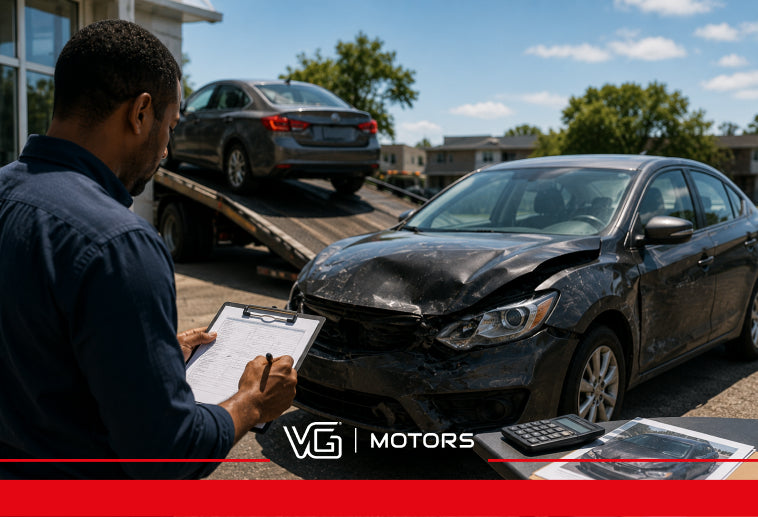
Yes. Recovering a stolen vehicle does not automatically mean it will be repaired and returned to you. After recovery, the insurance company inspects the vehicle to determine the extent of the damage, estimated repair costs and whether it meets the criteria for a total loss under your policy and applicable state laws.
Finding out that your stolen vehicle has been recovered is usually welcome news. But for some owners, that relief is quickly followed by another surprise:
“Why is the insurance company talking about a total loss if my car was found?”
The answer is simple.
Recovery tells you where the vehicle is.
It doesn’t tell you what condition it’s in.
That is why insurers inspect every recovered vehicle before deciding how the claim will be resolved.
Recovery Doesn’t Mean the Vehicle Is Undamaged
A stolen vehicle may be recovered hours after the theft or several weeks later.
Its condition can vary dramatically.
Some vehicles are returned with little more than a broken window.
Others may have extensive damage caused during the theft or while they were missing.
For example, a sedan recovered in San Diego, California, after a single day might only need minor repairs.
By contrast, an SUV recovered outside Phoenix, Arizona, several weeks later could have missing airbags, damaged electronics and significant mechanical wear.
Both vehicles were recovered.
Their insurance outcomes, however, may be completely different.
What Does the Insurance Company Evaluate?
Before deciding whether a recovered vehicle can be repaired or should be declared a total loss, insurers typically review several factors.
The Extent of the Damage
Adjusters inspect both visible and hidden damage.
This may include:
- body damage;
- broken glass;
- mechanical components;
- suspension and steering;
- electrical systems;
- interior damage;
- missing parts.
A vehicle that appears to be in good condition may still require additional inspections to identify problems that are not immediately visible.
The Cost of Repairs
Insurance companies compare the estimated repair costs with the vehicle’s value.
If repairing the vehicle is no longer economically reasonable under applicable state regulations and policy terms, the insurer may determine that it qualifies as a total loss.
The exact thresholds vary by state.
For example, insurers in Florida, Texas and New York may follow different total loss requirements established by state law.
Safety Considerations
Even if a vehicle can technically be repaired, insurers also consider whether it can be restored to a safe operating condition.
Damage affecting structural integrity, safety systems or critical mechanical components often requires a more detailed evaluation before a claim decision is made.

Why Recovered Vehicles Are Sometimes Declared a Total Loss
Several situations may lead to a total loss decision after recovery.
Extensive Mechanical Damage
Vehicles that were driven aggressively, involved in other incidents or operated without proper maintenance during the theft may require major mechanical repairs.
Missing High-Value Components
Some recovered vehicles are found without valuable parts, such as:
- catalytic converters;
- wheels;
- infotainment systems;
- airbags;
- electronic control modules.
Replacing multiple major components can significantly increase repair costs.
Water or Fire Damage
If a recovered vehicle has been exposed to flooding or fire, the damage may extend well beyond what is immediately visible.
Electrical systems are particularly vulnerable and often require careful inspection.
Structural Damage
If the vehicle was involved in a collision while stolen, structural damage may influence both repair costs and long-term safety.
Does Every Recovered Vehicle Become a Total Loss?
No. In fact, many recovered vehicles are successfully repaired and returned to their owners.
A hatchback recovered in Orlando, Florida, with a broken side window and minor cosmetic damage may only require routine repairs.
Likewise, a pickup recovered in Fort Worth, Texas, with stolen wheels and no structural damage may also be repairable.
Each claim depends on the inspection findings—not simply on the fact that the vehicle was stolen.
What Should You Do If Your Vehicle Is Being Evaluated?
If your recovered vehicle is undergoing inspection:
- stay in contact with your insurance adjuster;
- ask for updates on the inspection process;
- review repair estimates if they become available;
- ask questions about any total loss determination;
- understand how your policy applies before making decisions.
Clear communication helps you better understand how the insurer reached its conclusion.

Bottom Line
Recovering a stolen vehicle is an important step, but it doesn’t automatically determine how the insurance claim will end.
Whether your vehicle is recovered in Los Angeles, Dallas, Miami or Buffalo, the insurance company still needs to evaluate its condition, estimate repair costs and determine whether repairing it is practical under your policy and state regulations.
The decision to declare a vehicle a total loss is based on the inspection, not simply on the fact that it was recovered.
FAQ - Can a Recovered Vehicle Be Declared a Total Loss?
Can a recovered vehicle still be considered a total loss?
Yes. If the damage is severe or repair costs meet the criteria established by your policy and applicable state laws, the insurer may declare it a total loss.
Does a recovered vehicle always need an inspection?
In most cases, yes. The inspection helps determine the vehicle’s condition and supports the insurer’s claim decision.
Who decides whether the vehicle is a total loss?
The insurance company evaluates the inspection findings, repair estimates, policy terms and applicable state regulations before making that determination.
Do total loss rules vary by state?
Yes. State laws differ, which means insurers may follow different requirements in states such as California, Texas, Florida and New York.
Can a vehicle with minor damage still be repaired?
Absolutely. Many recovered vehicles are repaired and safely returned to their owners when the damage is limited and repairs are appropriate under the insurance policy.


Leave a comment
This site is protected by hCaptcha and the hCaptcha Privacy Policy and Terms of Service apply.