Quick Answer
Yes, recovering a stolen vehicle can change the direction of an insurance claim, but it doesn’t automatically end it. Once the vehicle is found, insurers typically inspect its condition before deciding whether it can be repaired, qualifies as a total loss or requires additional investigation.
For many vehicle owners, hearing that a stolen car has been recovered brings immediate relief.
But it also raises a new question:
“What happens to my insurance claim now?”
The answer depends largely on one thing: The condition of the vehicle when it’s recovered.
A recovered vehicle doesn’t automatically close the claim or guarantee that everything returns to normal. Instead, recovery marks the beginning of the next phase of the insurance process.
Recovery Changes the Process, Not Necessarily the Outcome
When a vehicle hasn’t been recovered, the insurance company works with limited information.
Once the vehicle is found, however, new facts become available.
The insurer can inspect the vehicle, assess any damage and determine what should happen next.
That’s why recovery often changes the path of the claim—but not necessarily the final outcome.
For example, a pickup truck recovered in San Antonio, Texas, after being stolen in Houston may have only minor cosmetic damage. In another case, a vehicle found in Los Angeles, California, could require extensive repairs after being stripped of valuable components.
Both vehicles were recovered, but the insurance claim may move in very different directions.
What Happens After Your Vehicle Is Recovered?
Although procedures vary between insurers, the next steps often include:
- confirming the vehicle’s identity;
- arranging an inspection;
- documenting visible and hidden damage;
- reviewing the policy coverage;
- determining whether repairs are appropriate.
At this stage, the claim is no longer focused on locating the vehicle.
It’s focused on evaluating its condition.

What Does the Insurance Company Look For?
Recovery is only part of the evaluation.
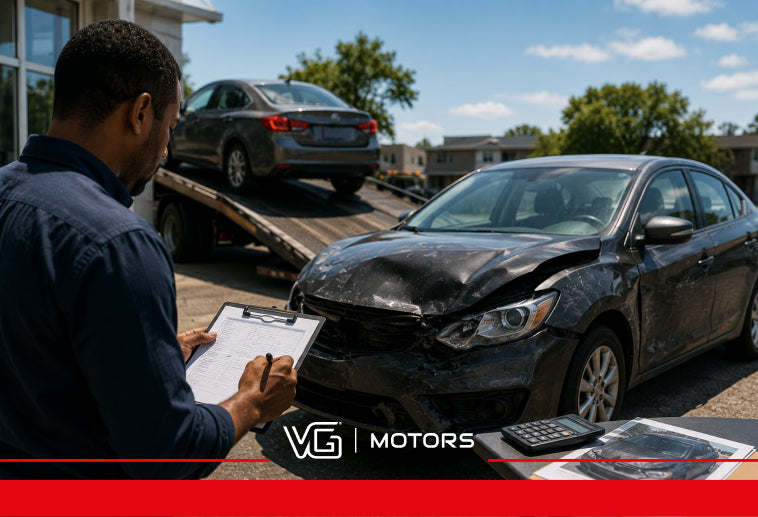
The insurer will usually assess whether the theft resulted in damage that affects the vehicle’s safety, reliability or value.
Common findings include:
Cosmetic Damage
Broken windows
Damaged locks
Scratched paint or vandalism.
These issues may be relatively straightforward to repair.
Mechanical Damage
Some vehicles are driven aggressively or modified during the theft.
Inspectors may evaluate components such as:
- suspension;
- steering;
- engine;
- transmission;
- brakes.
Missing Parts
Recovered vehicles are sometimes found with missing items, including:
- wheels;
- catalytic converters;
- infotainment systems;
- airbags;
- electronic modules.
Replacing these components can significantly affect repair costs.
Hidden Damage
Not every problem is immediately visible.
Water exposure, electrical issues or structural damage may require additional inspection before the insurer makes a final decision.
Can the Claim Still End in a Total Loss?
Yes. Recovery does not automatically mean the vehicle will be repaired.
If inspection shows severe damage, or if repair costs exceed the thresholds established by the insurer and applicable state regulations, the vehicle may still be declared a total loss.
For example, a vehicle recovered in Phoenix, Arizona, after weeks of being missing may have extensive mechanical, interior and electrical damage that wasn’t immediately apparent when it was found.
The key factor isn’t whether the vehicle was recovered.
It’s whether returning it to a safe and reliable condition is practical under the terms of the policy.
Can Recovery Make the Claim Faster?
Sometimes, but not always.
Recovery eliminates one major uncertainty: the vehicle’s location.
However, it also introduces new steps, including inspection, damage assessment and repair estimates.
In some situations, these evaluations are completed quickly.
In others, additional inspections or parts availability may extend the timeline.
Every claim follows its own path.
What Should You Do If Your Vehicle Is Recovered?
If you’re notified that your vehicle has been found:
- stay in contact with your insurance company;
- follow instructions from law enforcement regarding vehicle release;
- avoid making repairs before receiving approval from your insurer;
- keep copies of inspection reports and repair estimates;
- ask questions if you don’t understand the next steps.
Being organized helps prevent misunderstandings and unnecessary delays.

Bottom Line
Recovering a stolen vehicle is an important milestone, but it’s rarely the end of the insurance claim.
Whether your vehicle is recovered in Orlando, Florida, found damaged in Chicago, Illinois, or returned in good condition in Sacramento, California, the insurer still needs to determine how the theft affected the vehicle.
The final outcome depends on the inspection, your policy and the extent of any damage, not simply on the fact that the vehicle was recovered.
Understanding what happens next helps you set realistic expectations and navigate the remainder of the claims process with greater confidence.
FAQ - Does Recovering a Stolen Vehicle Change Your Insurance Claim?
Does recovering my vehicle automatically close the insurance claim?
No. Recovery usually leads to an inspection before the insurer decides whether repairs, additional evaluation or another outcome is appropriate.
Can I get my vehicle back immediately after it’s recovered?
That depends on law enforcement procedures, the insurance company and whether the vehicle needs to be inspected before being released.
What if my recovered vehicle has only minor damage?
If the damage is limited, the insurer may determine that repairs are appropriate under the terms of your policy.
Can missing parts affect the insurance claim?
Yes. Missing components such as wheels, airbags or catalytic converters may influence repair costs and the overall claim evaluation.
Does every recovered vehicle go through the same process?
No. The exact process varies depending on the insurer, the vehicle’s condition and applicable state regulations, which is why two recovered vehicles can have very different claim outcomes.

Leave a comment
This site is protected by hCaptcha and the hCaptcha Privacy Policy and Terms of Service apply.