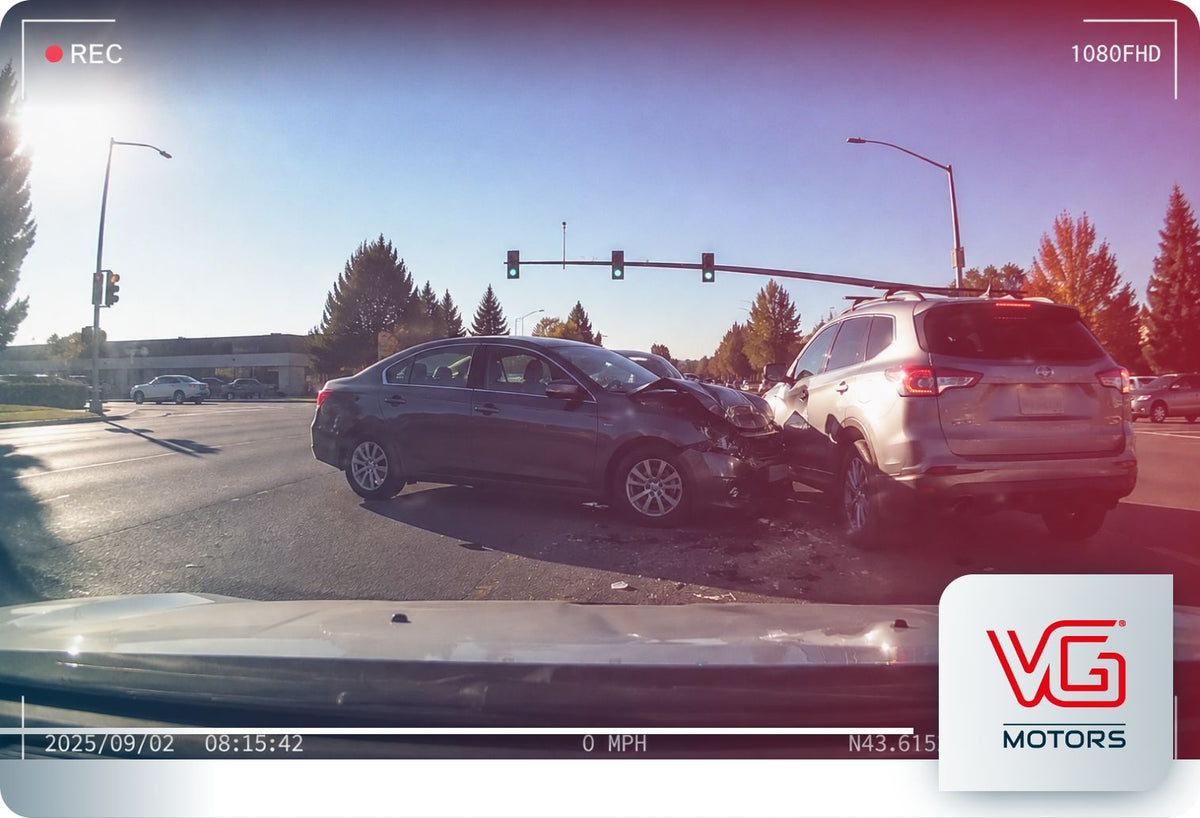
A traffic light changes.
Two vehicles enter the intersection.
Seconds later, there is a collision.
One driver remembers the other vehicle moving first. The other driver tells a different story.
Now the question isn't whether having a dash cam was worth it.
The accident already happened.
The question is:
What can the recording actually help with now?
Dash cam footage can preserve details that might otherwise depend on memory, witness accounts or other evidence gathered after the collision.
But having a video doesn't automatically settle every question about what happened.
Understanding that difference is what makes the footage useful.
How Can Dash Cam Footage Help After an Accident?
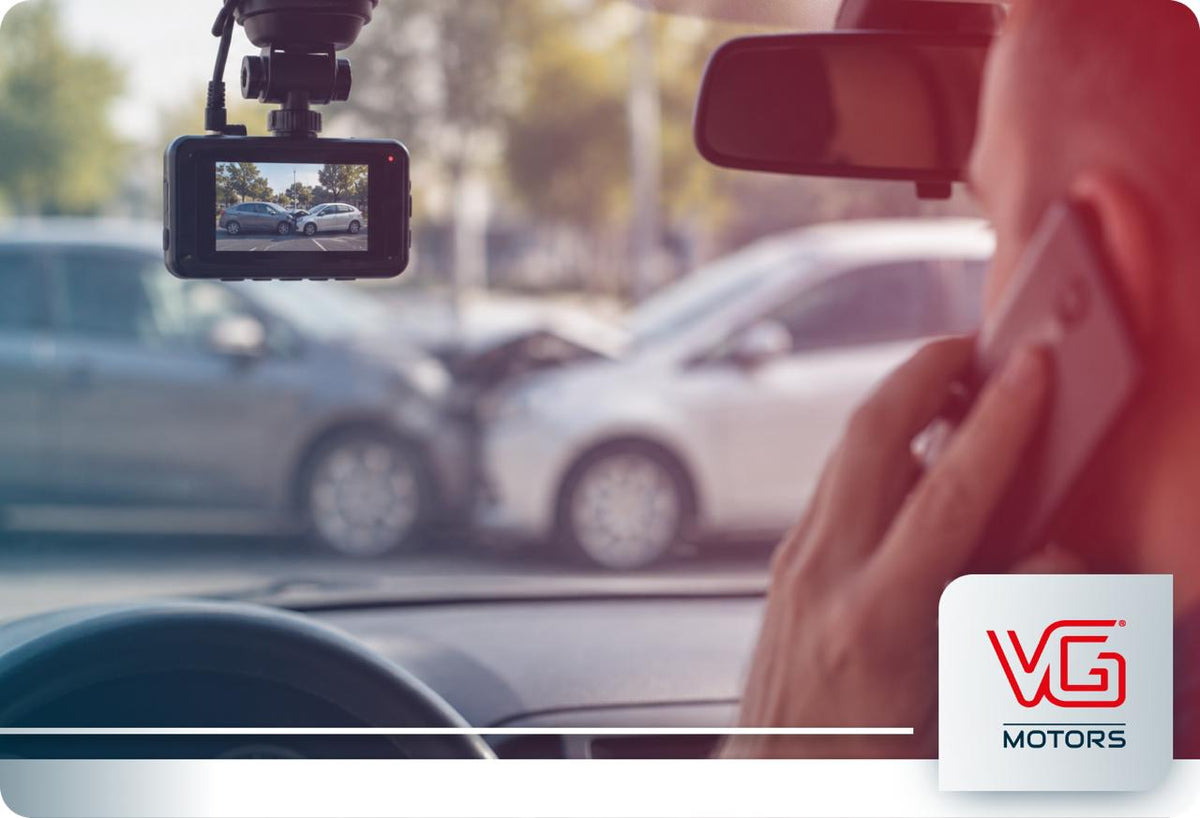
Dash cam footage can provide a visual record of events captured before, during or after a collision. Depending on what the camera recorded, it may help document vehicle movements, traffic conditions, signals or other context relevant to an insurance claim, police report or investigation.
Footage can be valuable evidence, but it does not automatically determine fault or prove every fact.
What Can Dash Cam Footage Show?
The strongest value of dash cam footage is often context.
After a collision, drivers may remember the event differently. That's not necessarily because someone is deliberately being dishonest.
Crashes happen quickly.
Attention is divided.
People see an event from different positions.
And memory doesn't work like a camera.
A recording may preserve details such as where vehicles were positioned, how traffic was moving, what happened immediately before impact and what occurred afterward provided those details were within the camera's field of view.
Consider an intersection collision in Houston.
A front-facing dash cam might show the vehicle approaching the intersection, surrounding traffic and the traffic signal visible from that perspective.
That footage doesn't necessarily answer every question about the accident. But it may preserve information that would otherwise have disappeared seconds after the collision.
The value of dash cam footage isn't that it remembers everything. It's that it preserves what the camera actually saw.

Footage Is Evidence, Not an Automatic Verdict
This distinction matters.
A video can feel definitive because you can watch an event happen. But what a recording establishes depends on what it actually captured.
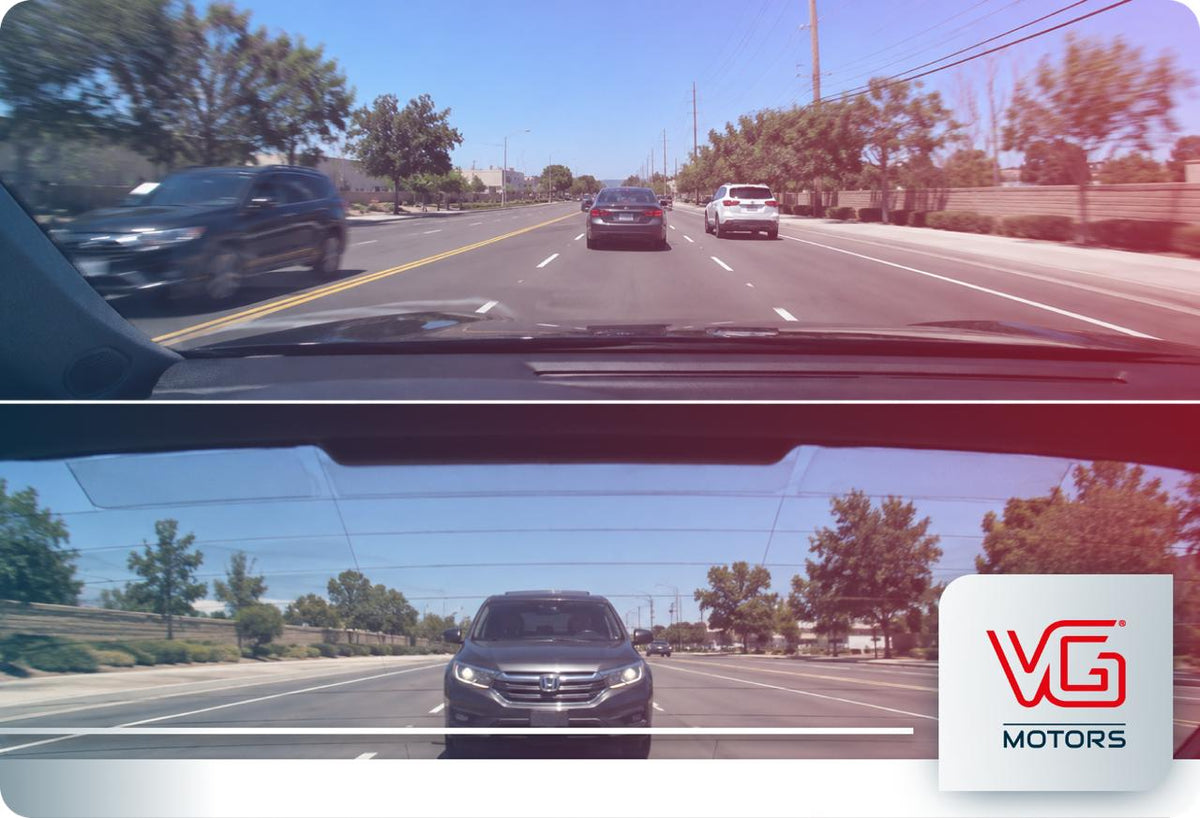
A front-facing camera may show the road ahead but not something happening beside or behind the vehicle.
A rear camera may add another perspective without showing every surrounding angle.
A traffic signal might be visible, or outside the frame.
Audio may provide context, or create new questions.
The footage may clearly show vehicle movement while saying little about another issue relevant to the incident.
That means:
A recording can be strong evidence without being the entire story.
Insurance companies, law enforcement, attorneys or courts may consider dash cam footage alongside other available information depending on the circumstances and applicable rules.
The existence of footage should therefore not be confused with an automatic determination of fault, liability or legal outcome.
What Should You Do With Dash Cam Footage After a Crash?
If you believe your camera recorded an accident, one of the most useful things you can do is preserve the relevant footage promptly.
Many dash cams use loop recording.
As storage fills, older recordings may eventually be overwritten by newer footage unless a file has been protected or exported.
So continuing to drive for days while assuming “the video will still be there” may create an unnecessary risk of losing relevant footage.
As soon as it is safe and practical, identify the recordings associated with the incident and follow your camera manufacturer's instructions for saving or exporting them.
Whenever possible, preserve the original recording rather than relying exclusively on a compressed copy, edited clip or screen recording.
A useful working copy can still be convenient for reviewing or sharing footage, but keeping the original file preserves the recording in the form produced by the camera.
After an accident, think: Find → Preserve → Copy
Find → Identify the relevant recording.
Preserve → Protect it from being overwritten or deleted.
Copy → Create a backup while retaining the original file.
The goal isn't to perform your own forensic investigation.
It's simply to avoid losing information you may need later.

Should You Edit Dash Cam Footage Before Sharing It?
Usually, preserving the original recording is the safer starting point.
You may eventually create a shorter copy because a relevant event occurs within a much longer recording.
But editing the only copy of the footage can remove context or information that later becomes relevant.
For example, the seconds before an apparent incident may show traffic movement, lane position or another detail that didn't initially seem important.
The same principle applies to adding annotations, filters or other alterations.
If you need a shorter or annotated version for convenience, keep the original file separately.
Preserve first. Edit a copy if necessary.
This is a practical evidence-preservation principle, not a substitute for legal advice about a specific case.
Can Dash Cam Footage Help With a Police Report?
Potentially.
If footage captures information relevant to a collision or another road incident, law enforcement may be interested in reviewing it depending on the circumstances.
The recording could provide additional context about vehicle movement, the sequence of events or other visible details.
But a dash cam recording doesn't replace the other information involved in documenting an accident.
A police report may incorporate statements, observations at the scene, vehicle information, witness accounts and other available evidence.
If an officer asks whether footage exists, tell them what you have and follow the appropriate process for providing it.
Avoid assuming that showing a video automatically determines how the incident will be documented or resolved.
Can Dash Cam Footage Help With an Insurance Claim?
Yes, it potentially can.
Footage may provide an insurer with additional information about how an accident occurred and can become one part of the evidence considered during a claim.
But the presence of a recording doesn't mean the insurance process disappears.
Claims may still involve statements from drivers, vehicle inspections, photographs, police reports, applicable policy terms and other information.
And footage that appears conclusive to the person who recorded it may still require interpretation within the broader claim.
The important point here is that footage can contribute evidence.
It does not replace the claim process.
What If the Dash Cam Didn't Capture the Impact Clearly?
The footage may still be useful. This is easy to overlook.
Drivers often think:
“If the camera didn't show the exact moment of impact, the video is useless.”
Not necessarily.
A recording might show what happened immediately before the collision.
It might establish traffic conditions.
It might show vehicle position or movement.
A rear camera might provide context that the front camera missed.
Or footage immediately afterward might preserve relevant details about the scene.
The usefulness of a recording therefore shouldn't be judged only by whether the impact itself appears perfectly in frame.
Evidence can provide context even when it doesn't capture the entire event.
What Can Make Dash Cam Footage Less Useful?
A camera can only preserve the information available to it.
Several factors may limit what a recording shows.
Field of view
Something important may have happened outside the camera's coverage.
Lighting and visibility
Darkness, glare, rain, obstructions and other conditions can affect visible detail.
Distance and movement
A vehicle, sign or license plate may appear in the recording without being clear enough to identify reliably.
Camera position
Installation angle affects what enters the frame.
Missing footage
An important moment may have been overwritten, not recorded or lost before it was preserved.
Incomplete context
A clip can show one part of an event without showing everything that happened before or around it.
These aren't reasons to dismiss dash cam footage.
They're reasons to evaluate the recording based on what it actually contains rather than what you expected it to contain.
Does Video Quality Determine Whether Footage Is Useful?
Video quality matters, but resolution alone doesn't determine whether a recording will answer the question you're asking.
Higher-resolution footage can preserve more visual detail under appropriate conditions. But useful evidence depends on the entire recording environment.
- Lighting matters.
- Distance matters.
- Motion matters.
- Camera angle matters.
- Weather matters.
- What was actually inside the frame matters.
A high-resolution recording cannot reconstruct something the camera never saw.
And a lower-resolution recording may still preserve important context about vehicle movement or the sequence of events.
That's why the practical question isn't simply:
“Was it recorded in 4K?”
It's:
“Does the recording clearly show information relevant to what happened?”
Can Dash Cam Footage Prove Who Was at Fault?
It can provide evidence relevant to determining what happened, but “prove fault” is too absolute as a general rule.
Fault and liability can depend on the circumstances of the collision, applicable state law and the complete body of available evidence.
A recording might clearly show one driver entering an intersection. But another question could involve right of way.
A video might show a lane change.
But the relevant issue could include what happened immediately before the visible portion of the clip.
In another incident, the footage may be unusually clear and highly informative.
The responsible approach is therefore:
Let the recording show what it shows. Don't ask it to establish more than it actually captured.
If an accident involves injuries, substantial losses, disputed liability or potential litigation, questions about the legal significance of particular footage are better addressed by a qualified professional familiar with the applicable jurisdiction.
Does It Matter Where the Accident Happened?
Potentially.
Traffic laws, insurance rules, privacy requirements, recording laws and rules governing evidence can vary between states and circumstances.
That's why broad claims such as “Dash cam footage is always admissible.”
or “If you have video, the other driver will automatically be found at fault.” should be treated cautiously.
A dash cam is widely useful as a documentation tool.
How a specific recording can or should be used in a legal dispute is a separate question.
For ordinary drivers, the most reliable general approach is much simpler: preserve relevant footage, avoid altering the original, and provide it through the appropriate channels when needed.
What If Your Dash Cam Recorded More Than the Accident?
This can happen easily.
The relevant collision may occupy only a few seconds of a much longer recording.
The footage may also contain conversations, other vehicles, pedestrians or events unrelated to the crash.
That is another reason to distinguish between preserving the original recording and deciding later what portion needs to be shared.
Don't delete surrounding footage simply because it doesn't initially seem important.
Context before or after the collision may become relevant once the incident is reviewed more carefully.
If privacy, audio recording or disclosure becomes a concern in a specific legal matter, seek guidance appropriate to the jurisdiction and circumstances rather than assuming one rule applies everywhere.
Dash Cam Footage Works Best as Part of the Record
A useful way to think about accident documentation is not video vs. everything else.
It's video plus everything else.
Depending on the incident, the broader record might include photographs of the vehicles and scene, driver information, witness details, a police report, insurance documentation and the dash cam recording.
Each source may answer a different question.
The dash cam's particular strength is that it may preserve part of the event as it unfolded, rather than documenting only what remained afterward.
That's valuable. But it doesn't make the other information irrelevant.

FAQ - Can Dash Cam Footage Help After a Car Accident? What Drivers Should Know
Can dash cam footage be used as evidence after a car accident?
It potentially can. Dash cam footage may provide relevant visual information about a collision, although how it is considered depends on what was recorded and the context in which the footage is being used.
Should I save dash cam footage immediately after an accident?
Yes. If relevant footage exists, preserving it promptly can help prevent the recording from being overwritten or accidentally deleted by the camera's normal storage behavior.
Should I give dash cam footage to my insurance company?
An insurer may request or consider relevant footage during a claim. Preserve the original recording and follow the appropriate claim process. For a deeper discussion, see Can Dash Cam Footage Help With a Car Insurance Claim?
Can dash cam footage prove another driver was at fault?
It may provide strong evidence about what occurred, but footage should not automatically be treated as a complete or universal determination of fault. Applicable laws and other evidence can also matter.
Can police use dash cam footage after an accident?
Law enforcement may review relevant footage depending on the incident and circumstances. The recording can provide additional information but does not replace other parts of accident documentation or investigation.
What should I do if my dash cam didn't record the entire accident?
Preserve what it did record. Footage immediately before or after an impact may still provide useful context even when the collision itself wasn't completely visible.
A Recording Can Preserve the Moment, Without Telling the Whole Story
After an accident, people naturally want certainty. They want to know exactly what happened, who was responsible and what comes next.
Dash cam footage can sometimes make those questions easier to answer because it preserves information that might otherwise disappear with the moment.
But the strongest way to use that footage is not to treat it as an automatic verdict.
Preserve it.
Keep the original.
Understand what the camera actually captured. And let the recording become part of the broader evidence surrounding the incident.
A dash cam doesn't have to tell the whole story to preserve an important part of it.


Leave a comment
This site is protected by hCaptcha and the hCaptcha Privacy Policy and Terms of Service apply.