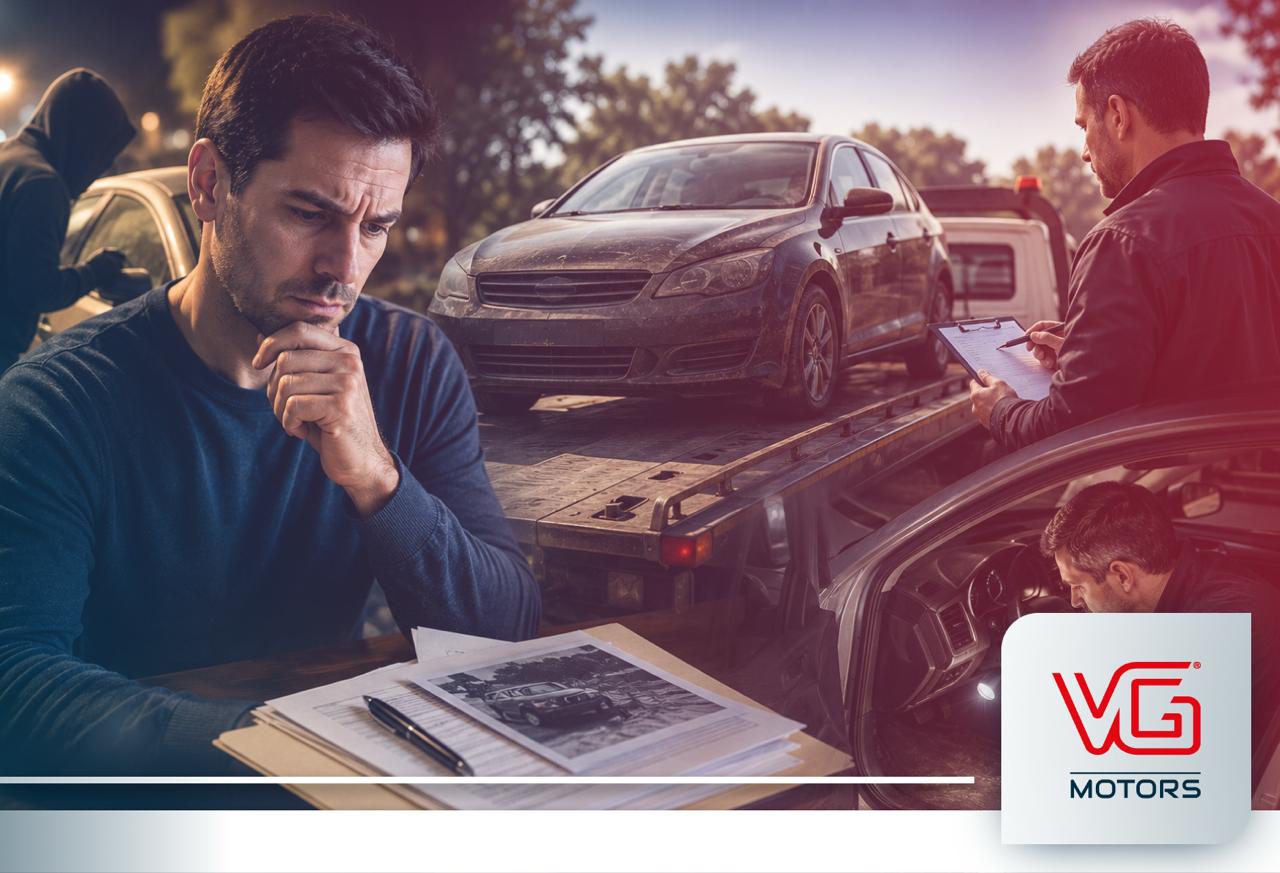
Finding the location of a stolen vehicle is not the same as recovering it. Once location information becomes available, it may need to be verified and communicated to the appropriate parties.
Law enforcement determines the response, the vehicle must be safely secured, and only then do the owner and insurer deal with what happens next.
You reported your car stolen.
Now you have something you didn’t have before: A location.
Maybe a recovery service provided an update. Your vehicle’s connected technology may show a location. Or perhaps law enforcement received new information during its investigation.
The immediate reaction is understandable: “We found it. Can I go get my car?”
Usually, that is the wrong next step.
A location can be extremely valuable, but it doesn’t tell you who may be with the vehicle, whether it is moving, whether the location corresponds to a parking structure or other complex environment, or whether approaching it would be safe.
That is why the period between locating a stolen vehicle and physically recovering it matters.
This guide begins at exactly that moment.
Don’t Try to Recover the Vehicle Yourself
If you can see the apparent location of your stolen vehicle, it can be tempting to go there.
Avoid assuming that is the safest or most appropriate response.
Consider a driver in Houston, Texas, whose stolen pickup suddenly appears at an apartment complex several miles away.
The owner recognizes the neighborhood. The map appears precise. Driving over to confirm the truck is there may seem reasonable.
But the owner doesn’t know whether the suspected thief is still nearby, whether other people are involved or whether approaching the vehicle could create a dangerous situation.
The safer approach is to provide relevant information through the appropriate recovery or law-enforcement channels rather than attempting a confrontation or retrieval yourself.
Knowing where your property may be does not make the situation safe.
1. The Location Has to Be Understood
A dot on a map can feel definitive.
Operationally, there may be more context to understand.
Location information can differ depending on the technology involved and the circumstances surrounding the vehicle. A car may be stationary when one location is received and moving minutes later.
Physical environments also matter.
Imagine a stolen vehicle appearing near a multi-level parking garage in Downtown Los Angeles.
The available location can dramatically narrow the search area, but it may not immediately identify which floor, parking space or access point is involved.
Similar challenges can occur around:
- apartment complexes;
- airport parking facilities;
- industrial areas;
- warehouses;
- shopping centers;
- dense downtown streets.
There is also an important distinction between a current location and a last known location.
If a vehicle continues moving, information that was accurate several minutes ago may describe where the vehicle was rather than where it is now.
Understanding what the available location actually represents is therefore one of the first practical steps toward recovery.

2. Location Information Has to Reach the Right People
Useful information only helps recovery when it reaches someone who can appropriately act on it.
Depending on the circumstances and the recovery solution involved, information may need to be communicated among a recovery provider, dispatch personnel and law enforcement.
This becomes particularly important when conditions change.
Suppose an SUV stolen in Phoenix, Arizona, is initially located in one neighborhood but later begins moving toward another municipality.
The information isn’t static.
The people involved in the recovery process may need updated information as the situation develops.
Where a Recovery Team Fits
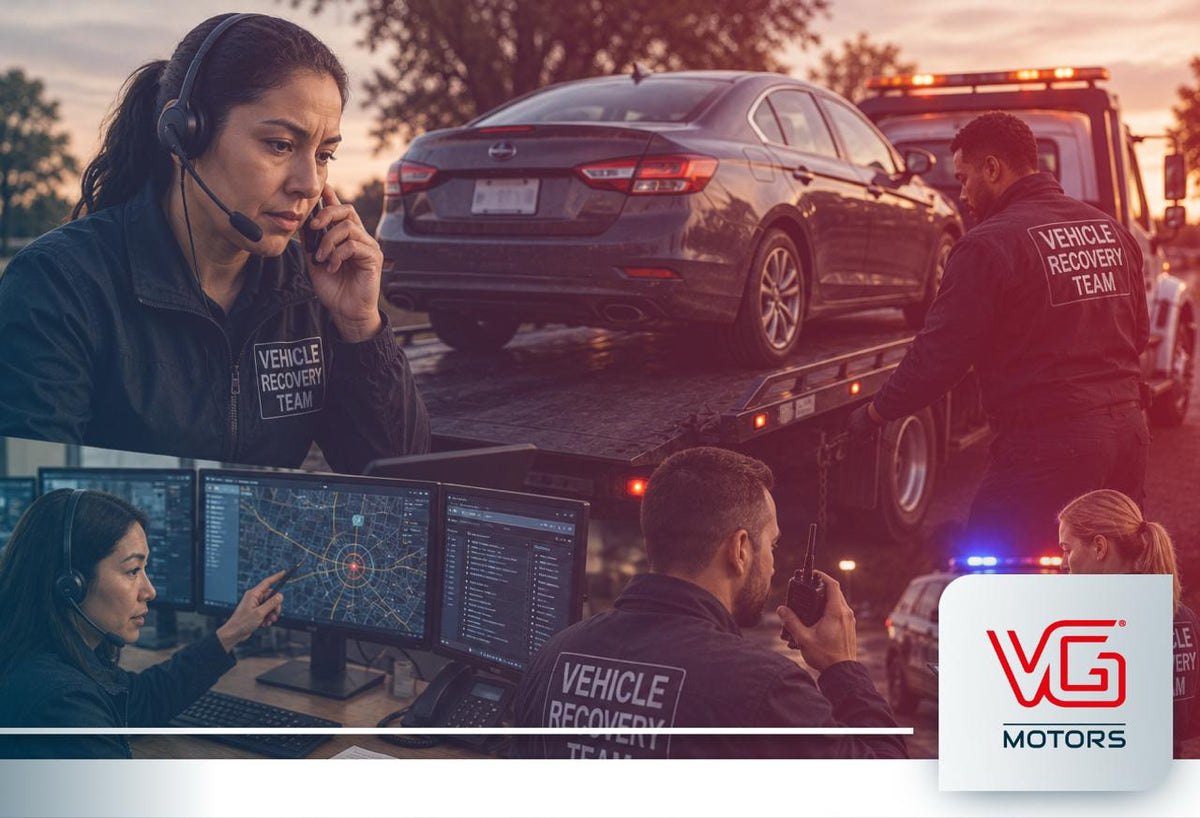
When a dedicated recovery service is involved, a recovery team may help manage information associated with the stolen vehicle and support communication during the recovery process according to the provider’s procedures.
That role should not be confused with law enforcement.
A recovery team does not replace police officers or control police response.
Its role is to help turn available vehicle information into useful recovery support.
3. Law Enforcement Determines the Response
Once police receive relevant information, they determine how to respond based on the circumstances.
Officers may need to consider factors that are invisible to an owner looking at a location on a phone:
- Is the vehicle moving?
- Is it parked on public or private property?
- Does someone appear to be occupying it?
- Which agency has jurisdiction?
- Are there immediate safety concerns?
- Does the location correspond with other investigative information?
This is also why an owner shouldn’t interpret a delay as evidence that nothing is happening.
The operational situation may be considerably more complex than the map marker suggests.
What If the Vehicle Crosses Into Another City or State?
Stolen vehicles do not remain neatly inside police jurisdiction boundaries.
Imagine a pickup stolen in Houston that later appears near San Antonio. Or a vehicle taken in Miami that moves north toward Fort Lauderdale.
The original theft report remains relevant, but another law-enforcement agency may become involved because of the vehicle’s current location.
Inter-jurisdiction situations can require additional communication as the vehicle moves.
Crossing a city or state boundary doesn’t mean recovery stops.
It means coordination can become more important.

4. What If the Location Changes Before Police Arrive?
This can be one of the most frustrating situations for a vehicle owner.
You receive a location.
The vehicle appears stationary.
Then the location changes.
That doesn’t necessarily mean the original information was wrong.
The vehicle may simply have moved.
A stolen vehicle can be:
- actively driven;
- moved between parking locations;
- taken into a garage;
- transported elsewhere;
- temporarily left somewhere before moving again.
Consider a vehicle that appears overnight near an apartment complex in Dallas, Texas, then later shows movement toward another part of the city.
The first location may have been completely accurate at the time it was received.
What changed was the vehicle.
This is particularly important because owners sometimes respond to changing locations by attempting to follow the vehicle themselves.
That can introduce significant safety risks and should be avoided.
Continue providing relevant updates through the appropriate recovery and law-enforcement channels.
5. Physical Recovery Is Not the End
Eventually, law enforcement may physically locate the vehicle.
That is a major milestone.
But located, secured and returned to the owner are not necessarily the same moment.
Depending on the circumstances, the vehicle may be:
- secured where it was found;
- towed;
- temporarily held;
- processed according to law-enforcement procedures;
- released according to local requirements.
A vehicle recovered during an active investigation may follow a different process from one found abandoned in a parking lot.
Local procedures can also vary.
The Vehicle’s Condition Matters
Once the vehicle is secured, its condition becomes important.
Some stolen vehicles are recovered with surprisingly little damage.
Others may have:
- broken windows or locks;
- interior damage;
- missing wheels or other components;
- electrical damage;
- mechanical problems;
- collision damage.
A vehicle recovered in Orlando, Florida, might have only a damaged lock and minor interior damage.
Another found outside Chicago, Illinois, could have missing components and evidence of a collision.
Damage isn’t always obvious, either.
A vehicle that looks relatively normal from the outside may still require inspection before anyone knows whether it is safe to drive.

6. What Should You Do Once Your Vehicle Is Recovered?
Once you’re notified that the vehicle has been found, focus on documentation and coordination rather than immediately trying to resume normal use.
Follow law-enforcement instructions about when and how the vehicle can be released. Notify your insurance company if it has not already been informed of the recovery.
If appropriate, document:
- visible damage;
- missing components;
- towing information;
- where the vehicle was recovered;
- police documentation;
- relevant insurance communications.
Photographs can also help document the vehicle’s condition.
If there is any question about mechanical, structural or electrical damage, don’t assume the vehicle is safe to drive simply because it starts.
7. Does Recovery End the Insurance Claim?
Not necessarily.
If an insurance claim is already open, finding the vehicle may change the direction of the claim rather than close it.
The insurer may need to inspect the vehicle and determine the extent of theft-related damage.
A vehicle recovered in Newark, New Jersey, for example, might be physically back in police custody but have substantial interior, electrical or mechanical damage.
Depending on the inspection and policy terms, the next step might involve repairs or further evaluation.
In more serious cases, a recovered vehicle can still be evaluated as a potential total loss.
The key distinction is simple:
Police recovery answers where the vehicle is. Insurance still has to determine what the theft did to it.
8. How LoJack Fits Into the Process
LoJack is designed around stolen vehicle recovery rather than simply providing an owner with a location to observe.
That distinction becomes relevant during the period covered by this article: after useful vehicle information becomes available but before physical recovery is complete.
Depending on the service and circumstances, recovery support can involve managing relevant vehicle information and supporting communication with law enforcement.
It is important not to overstate that role.
A recovery provider does not control police response, and no vehicle recovery system can guarantee that every stolen vehicle will be recovered.
The practical value of a recovery-focused approach is what happens after useful location information exists.
Seeing your stolen vehicle appear on a map can feel like the problem has been solved. It hasn’t, not yet.
The location is valuable because it can help the recovery process move forward. But safely securing the vehicle still depends on the circumstances, communication and law-enforcement response.
Seeing where a stolen vehicle is and safely getting it back are two different moments.
The space between those moments is where vehicle recovery actually happens.
FAQ - From Location to Recovery: What Actually Happens After a Stolen Car Is Found?
I can see my stolen car’s location. Should I go there?
You should generally avoid attempting to recover a stolen vehicle yourself. A location doesn’t tell you who may be with the vehicle or whether approaching it is safe. Share relevant information through the appropriate recovery and law-enforcement channels.
Why can’t police immediately retrieve a car if its location is known?
Police may need to evaluate the location information, whether the vehicle is moving, jurisdiction, safety considerations and other circumstances before determining the appropriate response.
What happens if my stolen vehicle keeps moving?
Changing locations may simply mean the vehicle is being moved. Continue following instructions from law enforcement and your recovery provider rather than attempting to follow the vehicle yourself.
Can a recovery team retrieve my vehicle instead of police?
A recovery team’s role is different from law enforcement. A recovery service may help manage and communicate relevant vehicle information, while law-enforcement agencies determine their own response.
What happens after police find my stolen car?
The vehicle may need to be secured, processed or towed before release. If an insurance claim is open, the insurer may also need to evaluate theft-related damage.
Does finding my stolen vehicle end my insurance claim?
No. Recovery may change the claim, but your insurer may still need to inspect the vehicle and determine whether repairs, further evaluation or a total loss determination is appropriate.


Leave a comment
This site is protected by hCaptcha and the hCaptcha Privacy Policy and Terms of Service apply.