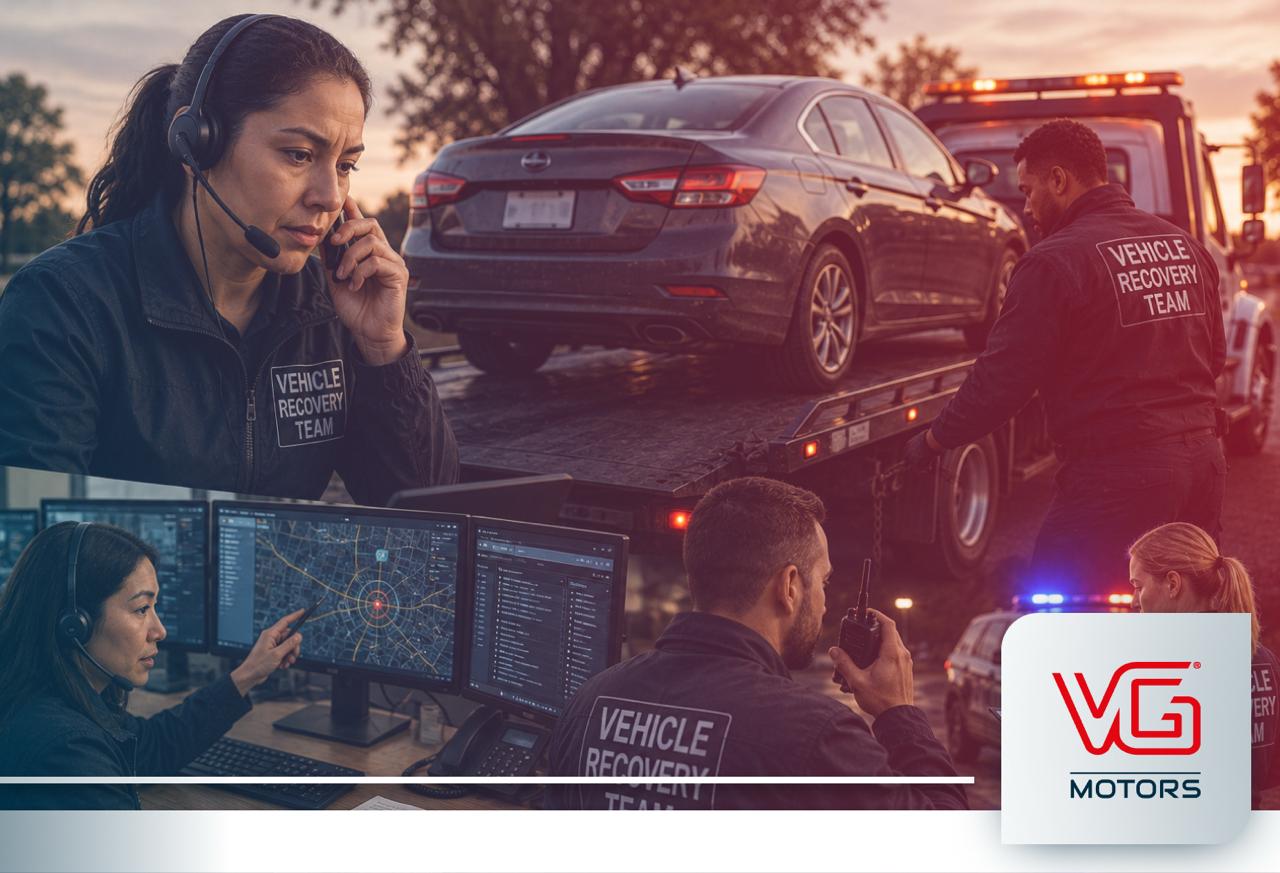
A vehicle recovery team helps turn stolen vehicle information into practical recovery support. Depending on the provider, specialists may review case details, manage location updates, escalate relevant changes and support communication with law enforcement.
They support the recovery process but do not replace police or control how law-enforcement agencies respond.
Vehicle recovery technology can generate valuable information.
But information alone doesn’t manage a recovery case.
Someone may still need to review what is available, understand what has changed, communicate relevant updates and help ensure the information reaches the appropriate parties.
That is where a vehicle recovery team comes in.
The team represents the human operational layer between recovery technology and the real-world response to a stolen vehicle.
Its role isn’t to chase stolen cars or conduct police investigations.
Its role is to help make vehicle information useful during the recovery process.
What Happens When a Recovery Case Begins?
The exact process varies depending on the recovery provider, technology and circumstances of the theft.
Once a recovery case is initiated, specialists may begin by reviewing information associated with the vehicle and theft report.
Depending on the system and provider, that may include:
- vehicle identification details;
- theft report information;
- available vehicle location data;
- status updates;
- relevant law-enforcement information.
Accuracy matters.
A recovery effort needs to involve the correct vehicle and reliable case information.
This can be especially important when several pieces of information are developing at once.
A stolen SUV that appears stationary at an apartment complex in Dallas, Texas, presents a different operational situation from a vehicle moving through Los Angeles County, California.
The team’s job is to work with what is actually known about the case rather than assume every theft follows the same pattern.
Turning Vehicle Information Into Recovery Support
This is where the human side of recovery becomes most visible.
Technology can produce information. Someone still has to understand what that information means within the context of a stolen vehicle case.
Suppose useful location information becomes available for a vehicle stolen in Phoenix, Arizona.
If the vehicle remains stationary, that is one situation.
If it begins moving, the circumstances have changed.
If it enters another jurisdiction, another operational consideration has appeared.
Recovery specialists may help manage those changes according to the provider’s procedures so that useful information does not simply remain isolated inside a system.
Communication Keeps Information Useful
A recovery case can involve several parties, including the recovery provider, law enforcement, dispatch personnel and the vehicle owner.
Not every party needs every piece of information, and circumstances can change quickly.
The human role is therefore partly about keeping relevant information organized and communicating appropriate updates through the recovery process.
This is fundamentally different from simply placing a location marker on a map and leaving the vehicle owner to decide what to do next.

What Does Escalation Mean in Vehicle Recovery?
Not every update has the same operational significance.
A new location, unexpected movement or change in jurisdiction may alter which information is relevant and who needs to receive it.
Depending on the provider’s procedures, specialists may need to route or escalate an update appropriately.
Consider a stolen vehicle that was initially located in Miami, Florida, but begins moving north toward Fort Lauderdale.
The recovery team doesn’t control what law enforcement does next.
But the changing circumstances may affect how relevant information needs to be managed or communicated.
That is what escalation means in this context: Recognizing that the situation has changed and handling the information accordingly.
It does not mean commanding a police response.
A Recovery Team Is Not the Police
This distinction is essential.
Recovery specialists support the recovery process.
Law-enforcement agencies exercise police authority and determine their own response.
A recovery team does not take over responsibilities such as:
- conducting traffic stops;
- making arrests;
- entering property under police authority;
- conducting criminal investigations;
- determining police priorities;
- deciding when or how officers respond.
Police decisions can depend on jurisdiction, available resources, safety, investigative circumstances and agency procedures.
The recovery team’s responsibility is therefore better understood as information and recovery support, not law enforcement.
Recovery Team vs. Law Enforcement

The roles can complement each other.
They are not interchangeable.
What a Recovery Team Cannot Guarantee
Professional recovery support does not eliminate the uncertainty involved in vehicle theft.
A recovery team cannot guarantee:
- that the vehicle will remain where it was located;
- how quickly law enforcement will respond;
- that every vehicle will be recovered;
- what condition a recovered vehicle will be in;
- how a police investigation will proceed.
- Many of these factors are outside the recovery provider’s control.
A vehicle can move. Jurisdictions can change. Physical environments can complicate location information. Law-enforcement agencies make independent operational decisions.
Being clear about those limitations isn’t a weakness.
It creates a more accurate picture of what professional vehicle recovery support can—and cannot—do.
How LoJack Fits Into the Human Side of Recovery
LoJack is designed around stolen vehicle recovery, so its value is not limited to displaying vehicle information.
The recovery process can also include human support that helps manage relevant information and communication while law enforcement retains control of its own response.
For the broader process that occurs after useful vehicle location information becomes available, read:
From Location to Recovery: What Actually Happens After a Stolen Car Is Found?
Bottom Line
A recovery team handles something technology cannot do by itself: Manage the human and operational context around vehicle information.
That can mean reviewing case details, understanding changing information, communicating relevant updates and escalating them when circumstances require it.
- Technology provides information.
- Recovery specialists help make that information useful.
- Law enforcement determines how to act on it.
Understanding those boundaries is the clearest way to understand what a vehicle recovery team actually does.
FAQ - What Does a Vehicle Recovery Team Actually Do?
Does a vehicle recovery team physically recover stolen cars?
A recovery team’s role depends on the provider, but it should not be confused with law enforcement. Recovery specialists support the process through information management and communication, while police exercise law-enforcement authority.
Does a recovery team tell police what to do?
No. Law-enforcement agencies make their own operational decisions. A recovery team may support communication of relevant vehicle information but does not control police response.
What information does a recovery team review?
Depending on the provider and system, specialists may work with vehicle identification, theft-report information, available location information and relevant case updates.
What does escalation mean during vehicle recovery?
Escalation generally means recognizing that new information or changing circumstances require an update to be handled or communicated differently. It does not mean directing law enforcement to take a particular action.
Is a recovery team the same as roadside assistance?
No. Roadside assistance generally addresses situations such as breakdowns, towing and lockouts. A vehicle recovery team supports processes associated with a vehicle reported stolen.
Can a recovery team guarantee that my vehicle will be recovered?
No. Vehicle recovery depends on multiple real-world factors, including available information, vehicle movement, jurisdiction and law-enforcement response. No recovery provider can guarantee every outcome.



Leave a comment
This site is protected by hCaptcha and the hCaptcha Privacy Policy and Terms of Service apply.