
A surprising number of drivers still ask the same question online:
“Does LoJack still exist?”
And honestly, the confusion makes perfect sense.
For years, LoJack became one of the most recognizable names in stolen vehicle recovery in the United States.
Many people still remember:
- dealership LoJack stickers on car windows;
- police recovery stories on TV;
- radio-tracking narratives from the early 2000s;
- news footage involving stolen vehicle recoveries.
Back then, LoJack felt futuristic.
Long before:
- connected cars;
- smartphone apps;
- live GPS tracking;
- app-based monitoring;
LoJack was already associated with stolen vehicle retrieval.
Which is exactly why the internet became so confused later.
Because the technology changed dramatically, but many online discussions never evolved with it.
Quick Answer: Does LoJack Still Exist?
Yes. LoJack still exists, but the current system is very different from the original version many drivers remember.
The classic LoJack system became famous for using VHF radio technology to help recover stolen vehicles.
Today’s systems rely much more heavily on:
- encrypted GPS technology;
- connected vehicle monitoring;
- smartphone app visibility;
- app-based recovery workflows.
So when people ask:
“Is LoJack still around?”
The real answer is: Yes, but the technology evolved significantly over time.
What Was the Original LoJack System?
The original LoJack system became widely known across the United States during the 1980s, 1990s, and early 2000s.
At the time, the technology genuinely felt advanced.
Instead of relying on GPS satellites or smartphone apps, the original system used:
- hidden VHF radio transmitters;
- radio-frequency recovery signals;
- police receiver infrastructure.
When a vehicle was reported stolen, the hidden transmitter could activate and help law enforcement locate the vehicle through RF tracking equipment.
That recovery model became one of the defining characteristics of the LoJack brand.
And for many Americans, LoJack became almost synonymous with:
“stolen vehicle recovery.”

Why Did the Original LoJack Become So Popular?
Because at the time, almost nothing else worked like it.
It’s important to remember the context.
Back then:
- smartphones did not exist;
- connected cars were rare;
- factory tracking apps were uncommon;
- GPS monitoring was not mainstream.
So the idea that a stolen vehicle could secretly transmit a hidden recovery signal sounded incredibly futuristic.
Many drivers still remember:
- dealership upsells;
- TV news recovery stories;
- police helicopter narratives;
- dramatic stolen vehicle recoveries.
For years, LoJack occupied a very unique place in automotive culture.
And that nostalgia still shapes how people think about the brand today.
Why Do So Many People Think LoJack Disappeared?
Because internet memory tends to freeze brands in time.
A huge percentage of online conversations about LoJack still come from:
- old YouTube videos;
- outdated Reddit threads;
- automotive forums from the 2000s;
- early discussions about RF technology.
At the same time, the automotive industry changed rapidly.
Connected vehicle technology became mainstream.
GPS infrastructure expanded.
Smartphones became central to everyday driving experiences.
And vehicle theft evolved too.
As connected cars became more common, theft-response systems gradually shifted toward:
- GPS-based architectures;
- app-connected monitoring;
- real-time visibility;
- connected recovery platforms.
But many online discussions never updated alongside that transition.
That created a strange internet phenomenon:
people started confusing the decline of older RF infrastructure with the idea that the LoJack brand itself disappeared.
A common comment you still see online is:
“I thought LoJack got discontinued years ago.”
In reality, what changed most was the underlying technology.
Why Did Recovery Technology Move Away From RF?
The shift away from classic RF systems happened gradually as vehicle technology changed.
The original radio-based approach worked well during an era when:
- connected cars were uncommon;
- GPS tracking was expensive;
- smartphones did not exist;
- real-time app visibility was not expected.
But driver expectations changed dramatically over the last 15 years.
People became accustomed to:
- live maps;
- app notifications;
- connected devices;
- real-time smartphone access.
At the same time, GPS infrastructure became more scalable and practical for connected vehicle ecosystems.
As a result, theft-response technology increasingly evolved toward:
- GPS-connected monitoring;
- smartphone integration;
- real-time tracking visibility;
- app-based recovery coordination.
The transition was less about the old technology “failing”, and more about the automotive world changing completely around it.

Does LoJack Still Use Radio Signals?
Not in the same way the original system did.
Modern LoJack platforms primarily rely on encrypted GPS technology and connected app-based monitoring instead of classic VHF-only radio tracking.
That’s one of the biggest reasons confusion still exists online.
Many drivers still associate LoJack exclusively with:
- police antennas;
- RF tracking;
- hidden radio transmitters.
But current-generation systems evolved alongside:
- connected vehicles;
- smartphone ecosystems;
- GPS infrastructure;
- app-based monitoring.
Which made the experience dramatically different from the original LoJack many people remember.
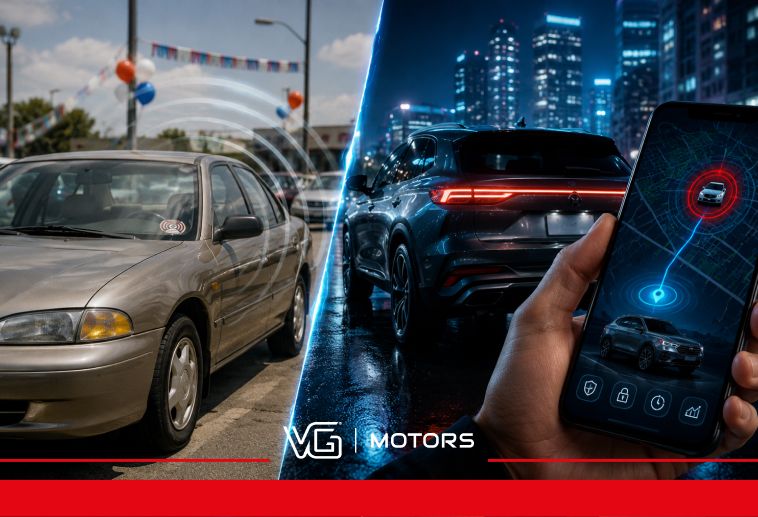
LoJack Old vs LoJack Today

Is LoJack a GPS Tracker, Anti-Theft System, or Recovery Platform?
This is another reason many people get confused.
Modern LoJack sits somewhere between:
- connected monitoring;
- anti-theft technology;
- recovery-oriented tracking;
- theft-response systems.
But the most accurate description today is probably this:
A connected vehicle recovery platform.
Because the primary goal is not simply:
“show the vehicle on a map.”
The larger purpose is helping improve vehicle retrieval outcomes after theft occurs.
That distinction matters because many basic GPS trackers were originally designed mainly for:
- route visibility;
- fleet management;
- trip monitoring.
Whereas current-generation recovery platforms are structured much more heavily around:
- post-theft response;
- recovery coordination;
- reducing recovery delays.
Why Factory Vehicle Apps Created More Confusion
Modern vehicles now commonly include:
- connected apps;
- smartphone integration;
- remote lock features;
- location visibility.
Which naturally caused many drivers to ask:
“If my car already has an app, why would I need anything else?”
That question became even more common as connected-car technology expanded.
But factory-connected apps were primarily designed around:
- convenience;
- connected experiences;
- remote controls;
- user comfort features.
Theft-response systems evolved specifically around stolen vehicle scenarios.
And those priorities become very different after a theft occurs.
Because once a vehicle disappears, drivers stop caring about:
- climate controls;
- remote start;
- convenience settings.
And start caring about:
- response timing;
- retrieval support;
- reducing disruption;
- improving recovery chances.
What’s the Difference Between LoJack and Basic GPS Trackers?
The difference is mostly about purpose.
Most GPS trackers focus primarily on:
- visibility;
- route monitoring;
- app-based tracking;
- location awareness.
Current-generation recovery platforms focus much more heavily on:
- theft response;
- post-theft coordination;
- reducing retrieval delays;
- helping improve recovery outcomes.
That distinction became increasingly important as organized vehicle theft evolved.
According to discussions referenced by the National Insurance Crime Bureau (NICB), organized theft groups increasingly prioritize:
- rapid relocation;
- electronic theft methods;
- fast movement;
- dismantling operations.
Which makes response timing much more important than many drivers realize.
So… Why Does This Matter Today?
Because millions of online searches about LoJack are still based on outdated assumptions.
People still ask:
- “Does LoJack still use radio?”
- “Did LoJack disappear?”
- “Is LoJack outdated?”
- “Does LoJack still work?”
And the answer to all those questions depends heavily on understanding one thing:
The automotive world changed dramatically over the last two decades.
Connected vehicles changed.
Theft changed.
Driver expectations changed.
And LoJack evolved alongside all of it.
LoJack Still Exists? — FAQ
Does LoJack still exist in 2026?
Yes. LoJack still exists, but the technology evolved significantly from the original radio-frequency recovery systems.
What was the original LoJack system?
The original LoJack used hidden VHF radio transmitters and police receiver infrastructure to help recover stolen vehicles.
Does LoJack still use radio tracking?
Modern systems primarily use encrypted GPS technology and connected tracking instead of classic RF-only recovery methods.
Why do people think LoJack disappeared?
Many online discussions still reference older RF systems and outdated internet content, creating confusion about how the technology works today.
Why did LoJack move away from RF technology?
As connected cars, GPS infrastructure, and smartphone ecosystems became mainstream, recovery technology gradually evolved toward app-connected GPS architectures.
Is LoJack now just a GPS tracker?
Not exactly. Current-generation systems focus more heavily on theft response and post-theft retrieval workflows rather than simple location visibility.
Do factory vehicle apps replace LoJack?
Factory-connected apps are primarily designed around convenience features, while dedicated recovery platforms focus specifically on theft-related scenarios.


Leave a comment
This site is protected by hCaptcha and the hCaptcha Privacy Policy and Terms of Service apply.