
Quick Answer
If your vehicle is stolen, reporting the theft quickly is one of the most important steps you can take. A vehicle recovery system such as LoJack can help by providing location information and supporting the recovery process, but successful recovery also depends on timely reporting, coordination with law enforcement and the circumstances surrounding the theft.
Most people never think about vehicle recovery until the day they need it.
One moment your car is parked where you left it.
The next, it’s gone.
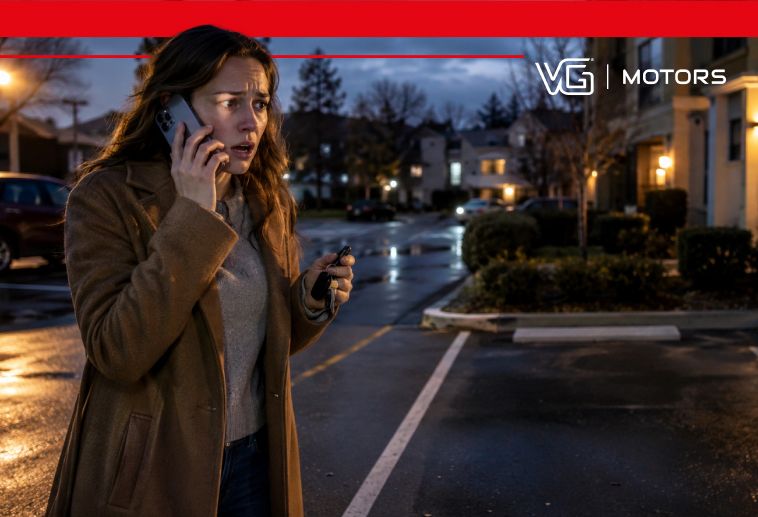
The first few minutes after discovering a theft are often filled with uncertainty.
Did you park somewhere else?
Was it towed?
Did a family member borrow it?
Once you realize the vehicle has actually been stolen, a different set of questions immediately follows.
“Who do I call?”
“Can the police find it?”
“Does my insurance cover this?”
“If I have LoJack, what happens now?”
Those questions all point toward the same concern:
How does a stolen vehicle actually get recovered?
Many people imagine recovery as a single event.
The vehicle is stolen.
Technology finds it.
Police recover it.
Problem solved.
Real-world vehicle recovery is rarely that simple. It involves people, technology, communication, verification and timing.
Most importantly, it involves a process.
That process begins long before a vehicle is actually located.
Recovery Is a Process, Not a Moment
One of the biggest misconceptions about stolen vehicle recovery is believing that finding a vehicle and recovering it are the same thing.
They aren’t.
Location is only one step in a much larger sequence of events.
A vehicle can be located but remain inaccessible.
Police may need to verify ownership before taking action.
Officers must recover the vehicle safely.
Insurance companies may become involved.
The vehicle itself often requires inspection before it returns to its owner.
Thinking about recovery as a single moment oversimplifies what actually happens.
A more accurate way to understand it is as a chain of connected events.
Each stage influences the next.
If one part of the chain is delayed or interrupted, the overall recovery process may become slower or more complicated.
Understanding that process helps explain where technology like LoJack fits—and where it doesn’t.
The Recovery Chain
Rather than viewing recovery as one event, consider it as a sequence.

Every successful recovery moves through these stages.
Some happen quickly.
Others take longer depending on how the theft occurred, how quickly it was reported and where the vehicle ultimately ends up.
Technology can support several parts of this process.
It cannot replace the process itself.
Location Is an Important Milestone, Not the Finish Line
Finding where a stolen vehicle may be located is valuable.
But recovery also requires verification, coordination with law enforcement, safe vehicle retrieval and post-recovery procedures.
That’s why vehicle recovery should be viewed as a process rather than a single event.

What Happens After a Vehicle Is Stolen?
No two vehicle thefts unfold exactly the same way.
A vehicle stolen from a residential driveway in Phoenix may follow a very different path than one taken from an airport parking garage near Dallas or from a shopping center outside Los Angeles.
Some vehicles remain within a few miles of where they were taken.
Others cross county or state lines within hours.
Some are abandoned.
Others are dismantled for parts or moved into organized criminal operations.
Because every theft develops differently, recovery always begins with gathering accurate information.
The sooner authorities understand what happened, the sooner they can begin responding.
That is why the first stage after a confirmed theft is not searching for the vehicle.
It is documenting the incident.
Law enforcement needs information such as:
- the vehicle identification;
- license plate number;
- location of the theft;
- estimated time the vehicle disappeared;
- distinguishing features;
- any available tracking information.
Only after the theft has been reported and verified can the broader recovery process begin.
This sequence is important.
Vehicle recovery is not simply about knowing where a vehicle might be.
It is about transforming information into coordinated action.
Every Minute Changes the Recovery Environment
Immediately after a theft, the vehicle remains part of what investigators sometimes describe as a rapidly changing environment.
The longer a vehicle remains missing, the more opportunities exist for circumstances to change.
For example:
- the vehicle may be moved several times;
- identifying characteristics may be altered;
- license plates may be replaced;
- the vehicle may be hidden indoors;
- it may be transported to another jurisdiction;
- it may become part of another criminal investigation.
None of these outcomes are guaranteed. But they illustrate why time matters during the recovery process.
Prompt reporting allows available information—including any vehicle recovery technology, to become useful sooner.
That doesn’t guarantee recovery.
It simply helps reduce unnecessary delays during the earliest stages of the investigation.
What Should You Do Immediately?
The moments immediately after discovering a vehicle theft are often confusing.
Many people spend valuable time questioning whether the vehicle was actually stolen.
Was it parked somewhere else?
Was it towed?
Did someone else have the keys?
Once you’ve confirmed the vehicle is missing, acting promptly is usually more valuable than trying to investigate the situation yourself.
Although every situation is different, the first priorities generally include:
- confirming the theft;
- contacting local law enforcement;
- filing an official police report;
- notifying your insurance company;
- activating any available vehicle recovery services.
If your vehicle is equipped with LoJack or another recovery system, reporting the theft quickly allows the recovery process to begin sooner.
That does not guarantee recovery.
It simply ensures that available information can be used as early as possible.
Attempting to recover the vehicle yourself is generally discouraged.
If location information becomes available, it should be shared with the appropriate authorities so they can determine the safest response.
What to Do Immediately After Your Car Is Stolen: The First 15 Minutes That Matter
The First Goal Isn’t Finding the Vehicle
The first goal is creating an accurate incident report.
A complete police report establishes the foundation for every step that follows, including insurance claims, law enforcement coordination and any recovery efforts supported by vehicle recovery technology.

Where LoJack Fits Into the Recovery Process
One of the most common misconceptions about LoJack is that it replaces the recovery process.
It doesn’t.
Instead, LoJack is designed to support one part of that process by helping provide information that can assist recovery efforts after a theft has been reported.
This distinction matters.
Technology alone does not recover a stolen vehicle.
Recovery happens when information, trained personnel and law enforcement work together within an established process.
Understanding that role helps set realistic expectations.
LoJack is not intended to eliminate the need for police reports, insurance claims or law enforcement involvement.
It exists to contribute information that may support those activities.
From Theft Report to Recovery Support
While specific procedures may vary depending on the provider, jurisdiction and circumstances of the theft, a typical recovery process may look something like this:

This process illustrates an important principle:
Technology generates information.
People make decisions.
Law enforcement performs the recovery.
Each stage depends on the others.
Why Recovery Teams Matter
Modern vehicle recovery systems are more than hardware installed inside a vehicle.
They also involve people.
Recovery specialists help interpret available information, communicate with law enforcement and support the recovery process according to established procedures.
Their role is not to replace police investigations.
Instead, they help organize and communicate information that may assist responding agencies.
That distinction becomes particularly important when vehicles move across multiple jurisdictions or when information changes as an investigation develops.
Technology Supports Decisions
Vehicle recovery technology can contribute in several ways during an investigation.
Depending on the circumstances, it may help:
- identify possible vehicle location information;
- monitor changes over time;
- provide updates that assist coordination efforts;
- support communication between recovery specialists and responding agencies.
Exactly how useful that information becomes depends on many factors, including the nature of the theft, reporting time, environmental conditions and operational circumstances.
Technology provides another source of information. It does not remove the need for investigation.
Information Is Only Valuable If Someone Can Act On It
Location data alone does not recover a vehicle.
Information becomes useful when it can be verified, communicated and acted upon safely by the appropriate authorities.
That is why vehicle recovery depends on coordination, not technology alone.
How Does Law Enforcement Use Vehicle Recovery Technology?
Contrary to what movies often suggest, recovering a stolen vehicle is rarely a matter of immediately driving to the vehicle’s last reported location.
Officers first need to evaluate the available information within the context of the investigation.
Questions may include:
- Has the theft been officially reported?
- Has ownership been verified?
- Is the reported location current?
- Is the vehicle moving?
- Are there potential safety concerns?
- Does another law enforcement agency have jurisdiction?
These questions help determine the safest and most appropriate response.
Vehicle recovery technology contributes by providing information that investigators may use alongside other evidence and investigative resources.
It does not replace professional judgment.

Recovery Often Requires Coordination Across Agencies
Vehicle theft investigations sometimes extend beyond the jurisdiction where the theft originally occurred.
For example, a vehicle stolen in Phoenix may later appear in Las Vegas.
A pickup truck taken from Houston could be transported across county lines within hours.
When that happens, recovery may involve communication between multiple agencies.
Vehicle recovery systems can support this coordination by helping ensure that relevant information reaches the appropriate authorities as investigations evolve.
The recovery process therefore becomes a coordinated effort rather than a single response by one officer or one department.
Does Vehicle Recovery Improve Recovery Chances?
This is one of the most common questions people ask after learning about vehicle recovery systems.
The honest answer is:
Vehicle recovery technology can improve the recovery process, but no technology can guarantee that every stolen vehicle will be recovered.
That’s because every theft develops differently.
Some vehicles remain close to where they were stolen.
Others are moved quickly across multiple jurisdictions.
Some are abandoned within hours.
Others become part of organized criminal operations.
Technology can contribute valuable information throughout an investigation, but the final outcome always depends on many variables beyond any single device or service.
Understanding those variables helps set realistic expectations.
Why Some Stolen Vehicles Are Never Recovered
People often assume that if a stolen vehicle isn’t recovered, the technology must have failed.
In reality, recovery depends on a much broader set of circumstances.
For example, investigators may encounter situations where:
- the theft is reported hours after it occurred;
- the vehicle has already crossed into another jurisdiction;
- identifying features have been altered;
- the vehicle has been dismantled for parts;
- it has been hidden inside a warehouse or shipping container;
- organized criminal groups intentionally move the vehicle multiple times before storing it.
Each of these situations creates additional challenges for investigators.
Technology can help support recovery efforts. It cannot eliminate every obstacle that exists after a theft.
Why Timing Matters
One of the strongest influences on any recovery effort is time.
Immediately after a theft, investigators often have more opportunities to gather useful information while circumstances are still developing.
As more time passes, the recovery environment becomes increasingly complex.
Vehicles may change locations several times.
Evidence may become more difficult to verify.
Additional agencies may become involved.
This is one reason why reporting a theft promptly is consistently recommended.
Earlier reporting allows every part of the recovery process—from law enforcement to recovery services—to begin working with the most current information available.
The Recovery Chain Is Only as Strong as Its Weakest Link
Think back to the framework introduced earlier in this article.

Every stage depends on the previous one.
- If reporting is delayed, the search begins later.
- If information cannot be verified, investigators may need additional time before responding.
- If recovery conditions present safety concerns, officers may adjust their approach.
Technology strengthens part of the chain.
It does not replace the chain.
Understanding that distinction is one of the most important lessons in vehicle recovery.
Recovery Is Built on Coordination
The strongest vehicle recovery systems are not defined only by the technology they use.
They are defined by how effectively information moves between the vehicle owner, recovery specialists and law enforcement throughout the recovery process.
What Happens After the Vehicle Is Found?
Finding a stolen vehicle is a major milestone.
It is not the end of the recovery process.
Before the vehicle returns to its owner, several additional steps usually take place.
Although procedures vary between jurisdictions and insurance companies, post-recovery activities commonly include:
- confirming vehicle identity;
- documenting the recovery;
- notifying the registered owner;
- evaluating visible damage;
- determining whether forensic evidence should be preserved;
- coordinating with the insurance company if a claim has been opened.
Only after these steps are completed can the vehicle typically move toward being returned to its owner or repaired.
Vehicle Inspection Is More Important Than Many Owners Realize
Even when a recovered vehicle appears undamaged, a thorough inspection is usually recommended.
Depending on how the vehicle was used while stolen, inspectors may evaluate areas such as:
- locks and ignition components;
- electronic systems;
- body damage;
- tires and wheels;
- interior condition;
- mechanical systems.
Some thefts result in very little damage.
Others may involve extensive repairs.
Because every recovery is different, inspection helps establish the vehicle’s condition before it returns to regular use.
Insurance May Still Play an Important Role
If an insurance claim was opened after the theft, the recovery process often continues even after the vehicle has been located.
The insurer may need to:
- inspect the vehicle;
- estimate repair costs;
- determine coverage;
- coordinate repairs;
- update the claim status.
Recovery therefore represents an important milestone within the insurance process rather than its conclusion.
Returning the Vehicle to the Owner
After inspections and administrative procedures have been completed, the vehicle can typically be released back to its owner if appropriate.
For many owners, this is the moment they remember most.
But from an operational perspective, it represents the final stage of a process that began the moment the theft was discovered.
Every previous step—from reporting the theft to coordinating with law enforcement—helped make that outcome possible.
Recovery Doesn’t End at Location
A vehicle is not truly recovered simply because someone knows where it is.
Recovery is complete only after the vehicle has been safely located, verified, inspected and returned through the appropriate legal and administrative processes.

Bottom Line
When a vehicle is stolen, it’s natural to focus on one question: “How do I get my car back?”
The answer rarely depends on a single factor.
Successful vehicle recovery is built on a sequence of connected actions.
- The theft must be reported.
- Information must be verified.
- Law enforcement must evaluate the situation.
- Recovery specialists may coordinate available information.
- Authorities determine the safest response.
- The vehicle is located, recovered, inspected and ultimately returned to its owner.
Each stage builds upon the previous one.
That is why vehicle recovery should never be viewed as a single moment.
It is a process.
Technology plays an important role within that process, but it is only one part of a much larger recovery chain.
Understanding how the entire system works allows vehicle owners to make better decisions before a theft occurs and to respond more effectively if one ever does.
The goal of a vehicle recovery system isn’t to replace law enforcement or eliminate uncertainty.
Its purpose is to support the recovery process by helping transform available information into coordinated action.
Ultimately, the strongest recovery strategy is not defined by one piece of technology.
It is defined by how effectively people, information and law enforcement work together when every minute matters.
The Recovery Chain
To summarize everything covered in this guide, remember this simple framework.
Every successful recovery moves through this chain.
Some stages happen quickly.
Others require additional time and coordination.
The important lesson is that location is only one milestone. Recovery is the complete process.
The moment a vehicle disappears, recovery doesn’t begin with technology.
It begins with information.
Technology strengthens the process.
People move the process.
Coordination completes the process.
Frequently Asked Questions - Stolen Car: How Does LoJack Help Recover Your Vehicle?
How quickly should I report a stolen vehicle?
As soon as you have confirmed the vehicle has been stolen.
Prompt reporting allows law enforcement, your insurance company and any available recovery services to begin working with the most current information available.
Does LoJack automatically recover a stolen vehicle?
No.
LoJack is designed to support the recovery process by providing information that may assist recovery efforts after a theft has been reported.
Recovery itself depends on coordination between technology, recovery specialists and law enforcement.
Can police recover a stolen vehicle without LoJack?
Yes.
Law enforcement uses many investigative resources during stolen vehicle investigations.
Vehicle recovery technology can provide additional information that may support those efforts, but it is not the only investigative tool available.
What factors influence whether a stolen vehicle is recovered?
Several factors may affect the recovery process, including:
- how quickly the theft is reported;
- where the vehicle is taken;
- whether the vehicle is moved between jurisdictions;
- the availability of actionable information;
- coordination between responding agencies;
- the circumstances surrounding the theft itself.
No single factor determines the outcome.
Does finding the vehicle mean the recovery process is finished?
Not usually.
After a vehicle is located, authorities may still need to verify ownership, document the recovery, preserve evidence when appropriate, coordinate with insurance companies and complete inspections before the vehicle is returned.
Can a recovered vehicle still be declared a total loss?
Yes.
Recovery does not automatically mean the vehicle is economically repairable.
Depending on the extent of damage and the insurance company’s assessment, a recovered vehicle may still be declared a total loss.
Should I try to recover my stolen vehicle myself if I know where it is?
Generally, no.
If location information becomes available, it is usually safest to share that information with law enforcement rather than attempting to recover the vehicle yourself.
Responding officers can evaluate the circumstances and determine the most appropriate course of action.
Does every stolen vehicle follow the same recovery process?
No.
Every theft presents unique circumstances.
Some vehicles are recovered quickly.
Others involve multiple jurisdictions, changing locations or extended investigations.
The recovery process adapts to each individual case.
Continue Learning About Vehicle Recovery
Understanding the recovery process is only one part of protecting yourself against vehicle theft.
You may also find these guides helpful:
What to Do Immediately After Your Car Is Stolen: The First 15 Minutes That Matter
How Police Track Stolen Cars: Technology, Investigation and Recovery
What Happens After a Stolen Vehicle Is Recovered?
Does Vehicle Recovery Improve Insurance Claims?
Together, these guides explore every stage of the vehicle recovery journey—from the first moments after a theft through the return of the vehicle and the insurance process.
They are designed to help you understand not only what happens after a vehicle is stolen, but why each stage of the recovery process matters.


Leave a comment
This site is protected by hCaptcha and the hCaptcha Privacy Policy and Terms of Service apply.